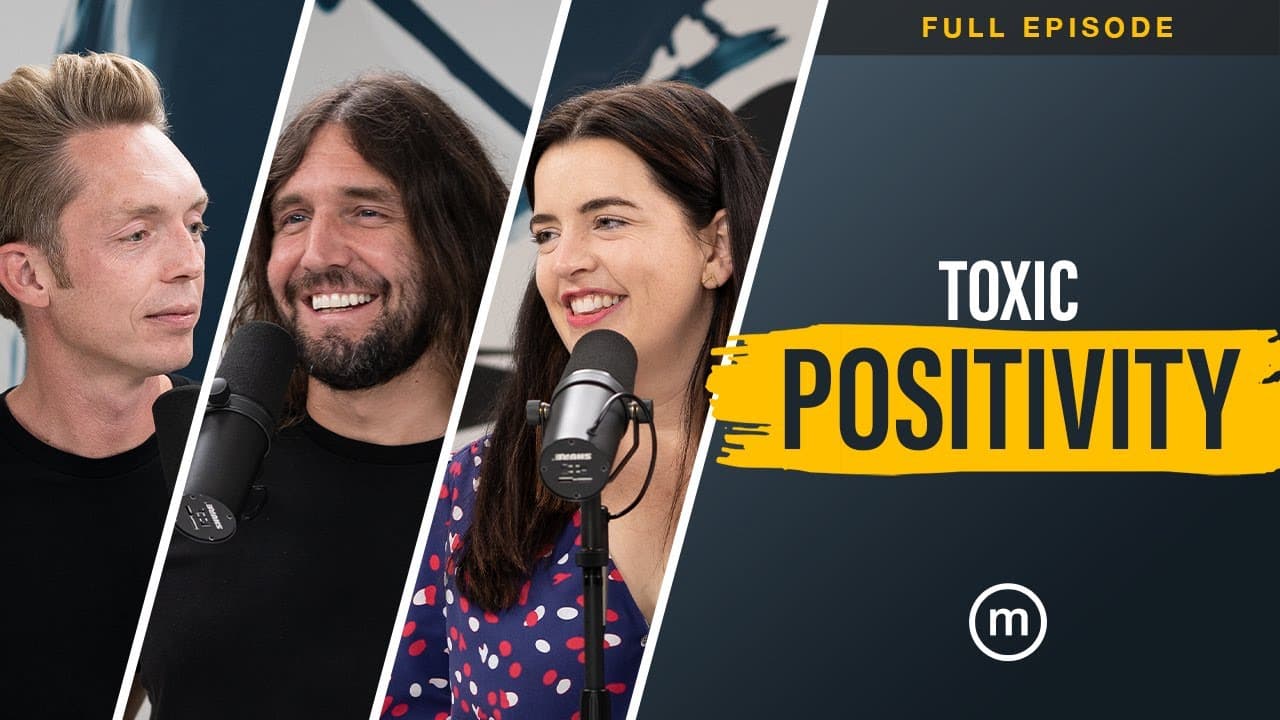
Ep. 304 | Toxic Positivity (with Kate Bowler)
TL;DR
Exploring the pitfalls of toxic positivity and embracing intentional living.
Transcript
this podcast has bad words hello minimizers welcome to the minimalist podcast where we discuss what it means to live a meaningful life with les my name is Joshua Fields Milburn and I'm Ryan Nicodemus and together we are the minimalists it's hard to give up on the feeling that the life you really want is Out Of Reach a new IG worthy home a promotion... Read More
Key Insights
- The self-help industry often promotes an exhausting positivity, suggesting we can out-perform our human limitations, which can lead to feelings of inadequacy and misery.
- Toxic positivity can be harmful as it prevents honest expression of emotions, forcing people to only project optimism, which can be burdensome.
- The concept of 'choice poor' describes how limited resources force people to make difficult decisions, often leading to exhaustion and poor decision-making.
- Minimalism, or intentional living, is about using resources deliberately, which can benefit anyone questioning societal norms, not just the privileged.
- Elitism is often used pejoratively to shut down discussions, but it can be seen as performing above a standard; it's important to focus on intentionality rather than control.
- The pursuit of constant happiness can create deeper valleys of unhappiness; embracing both positive and negative emotions is essential for a balanced life.
- Experiencing negative emotions can lead to deeper understanding and appreciation of joy, as they are part of the human experience.
- Limited agency suggests focusing on what is possible today, offering freedom without the illusion of total self-mastery.
Install to Summarize YouTube Videos and Get Transcripts
Explore YouTube Video Summarizer or Get YouTube Transcript Extractor
Questions & Answers
Q: What is the 'gospel of hustle'?
The 'gospel of hustle' refers to the societal pressure to constantly improve and achieve more, often driven by capitalist forces. This mindset suggests that personal worth is tied to productivity, leading individuals to believe they must continually strive for more, which can result in exhaustion and a sense of inadequacy.
Q: What are the signs that positivity has become toxic?
Positivity becomes toxic when it prevents honest emotional expression, forcing individuals to only project optimism. This can be burdensome, as it denies the complexity of human emotions and experiences. Signs include feeling pressured to always appear positive and ignoring or invalidating negative feelings in oneself or others.
Q: Where did the 'good vibes only' orthodoxy originate?
The 'good vibes only' orthodoxy is rooted in a long tradition that values the power of positive thinking, often linked to American religious and psychological culture. It suggests that our minds can control our reality, leading to the belief that expressing only positive thoughts will lead to positive outcomes, which can be limiting and unrealistic.
Q: Why does complaining seem to encourage camaraderie?
Complaining can foster camaraderie as it creates a shared experience of frustration or dissatisfaction, which can bond people together. It allows individuals to express vulnerability and find common ground in their struggles, often leading to a sense of solidarity and mutual understanding.
Q: What is the problem with the language of positivity?
The language of positivity can be problematic when it becomes prescriptive, suggesting that only positive expressions are acceptable. This can lead to a denial of genuine emotions and experiences, creating a binary view where positivity is seen as good and negativity as bad, which oversimplifies the complexity of human emotions.
Q: What is 'horizon work'?
'Horizon work' refers to the concept of having a longer-term perspective or runway to achieve goals. It is often associated with the middle class, who have the resources to plan for the future, allowing for a sense of stability and predictability. This contrasts with those who are 'choice poor' and must make immediate, often difficult decisions.
Q: What is 'choice poor'?
'Choice poor' describes a situation where individuals have limited resources, forcing them to make difficult and often suboptimal decisions. This can lead to exhaustion and a sense of chaos, as every choice feels significant and fraught, making it challenging to create predictability and stability in life.
Q: How do you define 'elitism'?
Elitism is often used pejoratively to describe individuals or groups perceived as superior due to wealth, education, or status. It can imply a disconnect from the experiences of the average person. However, in a positive sense, it can also mean performing above a standard. The term is frequently used to shut down discussions rather than foster understanding.
Summary & Key Takeaways
-
The podcast discusses toxic positivity, where relentless optimism can prevent genuine emotional expression and lead to misery. The self-help industry often promotes this, suggesting we can out-perform our human limitations.
-
Minimalism, or intentional living, is explored as an antidote to societal pressures. It's about using resources deliberately, benefiting anyone questioning societal norms, not just the privileged.
-
The discussion emphasizes embracing both positive and negative emotions as essential for a balanced life. Experiencing negative emotions can lead to a deeper understanding and appreciation of joy.
Read in Other Languages (beta)
Share This Summary 📚
Summarize YouTube Videos and Get Video Transcripts with 1-Click
Try YouTube Summary with ChatGPT & Claude or YouTube Transcript Generator
Explore More Summaries from The Minimalists Podcast 📚





Summarize YouTube Videos and Get Video Transcripts with 1-Click
Try YouTube Summary with ChatGPT & Claude or YouTube Transcript Generator