1032: How to Get an Impressive 6-Pack

TL;DR
Learn effective strategies for developing a visible six-pack quickly.
Transcript
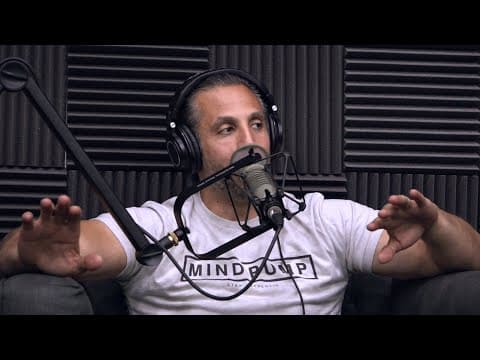
if you want to pump your body and expand your mind there's only one place to go mind with your hosts Sal de Stefano Adam Schaefer and Justin Andrews in this episode what we wanted to do is we wanted to give some people a concrete specific way to maximize the aesthetics the appearance the looks of their midsection their abs their obliques shrink the... Read More
Key Insights
- Abs are universally admired as a symbol of health and fitness, often being the most inquired about body part.
- Achieving a defined midsection involves two main factors: proper training and nutrition, with a focus on reducing body fat.
- Common myths about ab training include the belief that high reps are necessary and that abs are made only in the kitchen.
- The transverse abdominis, a lesser-known muscle, plays a crucial role in waist shrinkage and should be targeted in workouts.
- Anti-rotational exercises are essential for functional strength and injury prevention, yet they are often overlooked.
- Proper ab training involves a combination of strength, hypertrophy, and endurance exercises to maximize muscle development.
- Effective exercises include reverse crunches, cable chops, and planks, with varying rep ranges to prevent plateaus.
- Waist trainers are discouraged as they can weaken core muscles and lead to health issues, instead focus on strengthening exercises.
Install to Summarize YouTube Videos and Get Transcripts
Explore YouTube Video Summarizer or Get YouTube Transcript Extractor
Questions & Answers
Q: Why are abs considered the most popular body part to develop?
Abs are often seen as a visual representation of health and fitness. A well-defined midsection suggests a person is lean overall and possesses good movement and athleticism. This is why abs are commonly admired and sought after, especially as they are less frequently seen due to the effort required to attain them.
Q: What are the two major factors that contribute to ab definition?
The two major factors are proper training and nutrition. Proper training involves exercises that target the abs and obliques effectively, while nutrition focuses on reducing body fat to make the muscles more visible. Both factors are crucial for achieving a well-defined midsection.
Q: What is the role of the transverse abdominis in ab training?
The transverse abdominis is a deep core muscle that acts like the body's weight belt. It is responsible for shrinking the waist and providing stability. Strengthening this muscle can lead to a tighter midsection and improved posture, contributing significantly to the aesthetics and function of the core.
Q: Why are anti-rotational movements important in ab training?
Anti-rotational movements are crucial for building functional strength and preventing injuries. They help the body stabilize during rotational movements, which are common in everyday activities. Incorporating these exercises into ab training enhances both aesthetics and functional capabilities.
Q: What is the biggest myth about ab training?
One of the biggest myths is that you can target upper or lower abs with specific exercises. In reality, the abs contract as a whole, and exercises like leg raises or sit-ups engage the entire abdominal muscle group. Focusing on comprehensive training rather than segmenting upper and lower abs is more effective.
Q: How should one approach the frequency of ab workouts?
Ab workouts should be performed about three times a week, with varying rep ranges to target different aspects of muscle development. This approach helps prevent plateaus and ensures balanced development of the core muscles, leading to better aesthetics and functionality.
Q: What are some effective exercises for building abs?
Effective exercises include reverse crunches, cable chops, and planks. Reverse crunches target the abs through a full range of motion, cable chops engage the obliques, and planks focus on stabilization. Each exercise should be performed with proper form to maximize muscle engagement and development.
Q: Why are waist trainers discouraged in ab training?
Waist trainers are discouraged because they can lead to muscle atrophy and weaken the core muscles. Instead of providing real strength and stability, they compress the midsection and can cause health issues, such as bowel obstructions. Focusing on strengthening exercises is a healthier and more effective approach.
Summary & Key Takeaways
-
This episode delves into the allure of a well-defined six-pack, emphasizing the importance of both nutrition and proper training. The hosts dispel common myths, such as the necessity of high reps and the idea that abs are solely made in the kitchen.
-
Key exercises for developing abs include reverse crunches, cable chops, and planks, each targeting different aspects of the core. The transverse abdominis is highlighted for its role in waist shrinkage, a muscle often neglected in traditional ab workouts.
-
Anti-rotational and stabilization exercises are stressed for their functional benefits, helping prevent injuries and improve overall aesthetics. Waist trainers are discouraged, as they can lead to weakened muscles and health issues.
Read in Other Languages (beta)
Share This Summary 📚
Summarize YouTube Videos and Get Video Transcripts with 1-Click
Try YouTube Summary with ChatGPT & Claude or YouTube Transcript Generator
Explore More Summaries from Mind Pump Show 📚



Summarize YouTube Videos and Get Video Transcripts with 1-Click
Try YouTube Summary with ChatGPT & Claude or YouTube Transcript Generator