What Were Those Weird Metal Things on the Beaches During the Normandy Invasion?
TL;DR
The Atlantic Wall, a network of complex defenses constructed by the Nazis, was designed to thwart an Allied invasion but ultimately failed when the Allies bypassed it in a matter of hours during the Normandy Invasions.
Transcript
The Normandy Invasions represented one of the single largest military maneuvers in history. Beginning on June 6, 1944, D-Day (see, What does the “D” in D-Day stand for?), the invasion was the largest amphibious assault of all time and involved what basically amounted to the collective might of a large percentage of the nations in the industrialized... Read More
Key Insights
- 🌥️ The Normandy Invasions, specifically the Atlantic Wall, represented a significant military maneuver and the largest amphibious assault in history.
- 😀 The Atlantic Wall was a complex network of defenses constructed under Hitler's orders, stretching 2000 miles along the European coast.
- 🌍 The Atlantic Wall consisted of gun batteries, mines, soldiers, bunkers, and fortresses, aiming to make the coast of Europe impregnable.
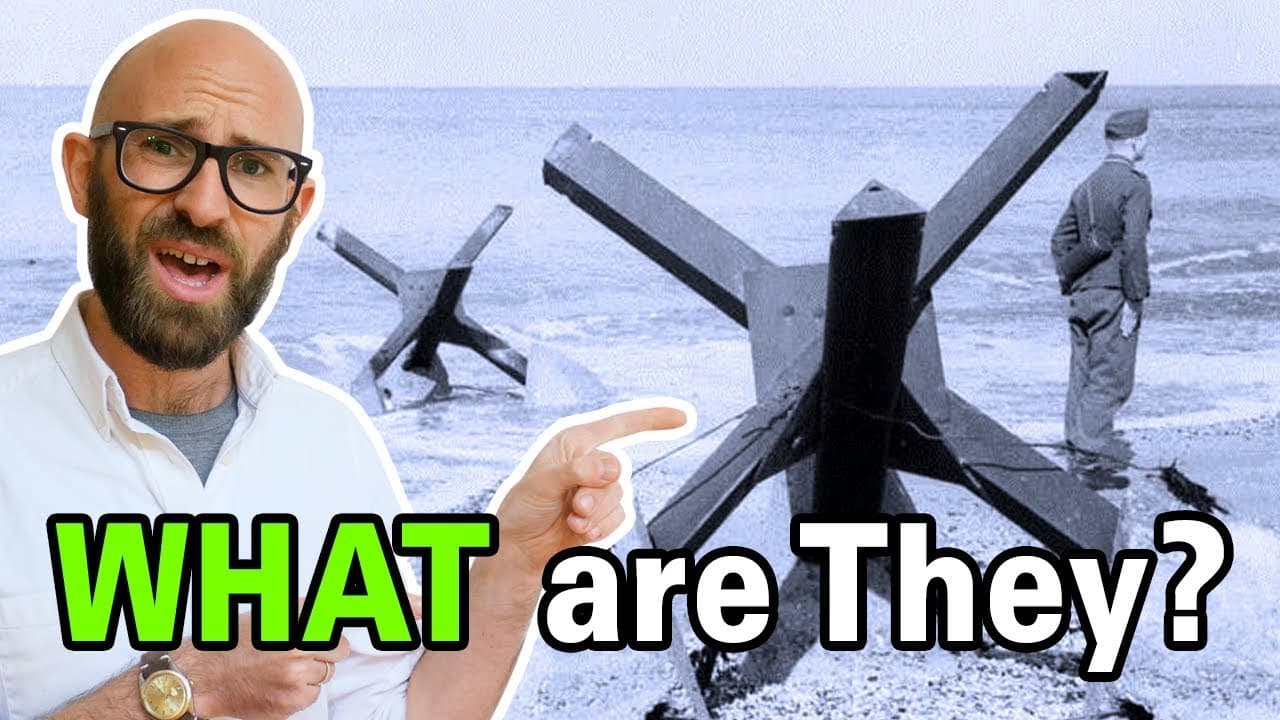
- 👍 Czech hedgehogs, initially designed as anti-tank fortifications, proved to be effective obstacles for tanks and ships during the invasions.
- 🇼🇫 The Allies successfully bypassed the Atlantic Wall through a combination of bombardment, commando strikes, and the bravery of troops.
- 🫱 After securing the beaches, the Allies repurposed the materials from the Atlantic Wall, including Czech hedgehogs, for their war efforts.
- 🇼🇫 The Atlantic Wall was a formidable defense system but ultimately failed to prevent the successful invasion by the Allies.
Install to Summarize YouTube Videos and Get Transcripts
Explore YouTube Video Summarizer or Get YouTube Transcript Extractor
Questions & Answers
Q: What was the purpose of the Atlantic Wall?
The Atlantic Wall was constructed by the Nazis to create a formidable defense system against an Allied invasion, consisting of gun batteries, mines, soldiers, and fortifications along the European coast.
Q: How did the Allies manage to bypass the Atlantic Wall?
The Allies bypassed the Atlantic Wall through a combination of strategic bombardment, commando strikes, and the bravery of troops who physically stormed the beaches, resulting in the defenses being overcome in a matter of hours.
Q: What were Czech hedgehogs and how were they used in the Atlantic Wall defenses?
Czech hedgehogs were anti-tank fortifications designed to deter tanks and ships from landing. They were anchored in the sand and had steel I-beams capable of immobilizing tanks. After the beaches were secured, the Allies repurposed them for the war effort.
Q: How did the Atlantic Wall defenses contribute to the war efforts of the Allies?
While initially a deterrent, the steel and concrete used in the construction of the Atlantic Wall, including Czech hedgehogs, were repurposed by the Allies. Steel beams were welded to tanks, making them effective mobile battering rams, and concrete was used to halt German armored divisions.
Summary & Key Takeaways
-
The Normandy Invasions, known as D-Day, were the largest amphibious assault in history and aimed to defeat the Nazi war machine.
-
The Atlantic Wall, constructed under Hitler's orders, stretched 2000 miles and consisted of gun batteries, mines, soldiers, bunkers, and fortresses.
-
The Allies successfully bypassed the Atlantic Wall through a massive bombardment effort, commando strikes, and the bravery of troops, resulting in the cost of several thousand lives.
Read in Other Languages (beta)
Share This Summary 📚
Summarize YouTube Videos and Get Video Transcripts with 1-Click
Try YouTube Summary with ChatGPT & Claude or YouTube Transcript Generator
Explore More Summaries from Today I Found Out 📚






Summarize YouTube Videos and Get Video Transcripts with 1-Click
Try YouTube Summary with ChatGPT & Claude or YouTube Transcript Generator