Did Ancient Egyptians Really Walk Like We Think They Did?
TL;DR
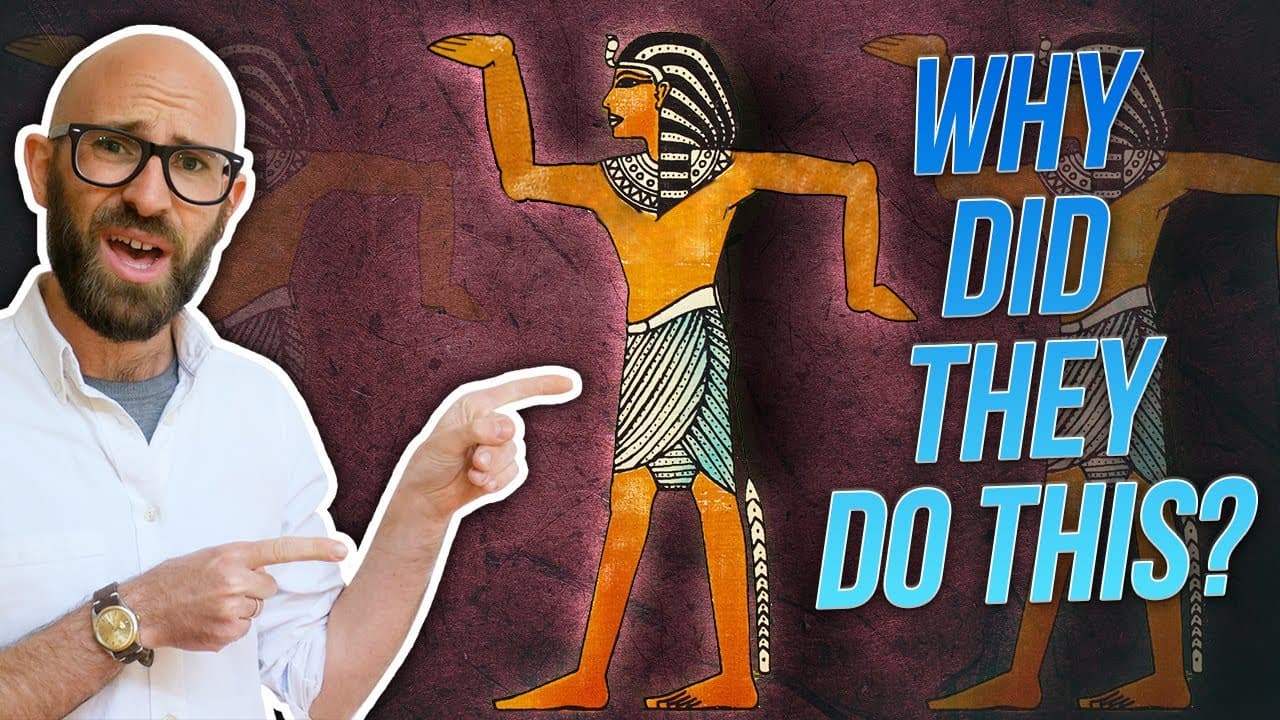
The iconic Egyptian walk pose, often portrayed in modern culture, did not actually exist in ancient Egypt. Instead, ancient Egyptian art followed strict conventions that prioritized clarity and idealized forms over realism. The pose likely originated from early 20th-century choreographers rather than any authentic ancient practice.
Transcript
have you ever wondered what's next for you in this ever-changing world of work well I've got some exciting news for you because today's sponsor is skillshare here to help you redefine work and find new possibilities in your creative career you know the old ways of working aren't cutting it anymore you've been hustling and sacrificing your work-life... Read More
Key Insights
- 🥰 Ancient Egyptian art followed specific conventions and prioritized narrative clarity over realism.
- 😑 Artists in ancient Egypt served religious and political purposes rather than expressing personal creativity.
- 👨🎨 Egyptian sculptures were more realistic compared to painted artwork, as they served as vessels for the effective spirit in the afterlife.
- 🚶 The iconic Egyptian walk pose originated from a 20th-century choreographer and has no roots in ancient Egyptian culture.
- ❓ The Amana period under Pharaoh Akhenaten brought about significant artistic innovation and a shift in style.
- 🥰 The rigid formulaic style of Egyptian art was quickly restored after Akhenaten's death and the restoration of the old Egyptian Pantheon.
- 🥰 Egyptian art served practical functions, such as guiding the spirit of the deceased and glorifying pharaohs and gods.
Install to Summarize YouTube Videos and Get Transcripts
Explore YouTube Video Summarizer or Get YouTube Transcript Extractor
Questions & Answers
Q: Why were ancient Egyptian figures depicted with their chest facing outward?
Ancient Egyptian art prioritized narrative clarity, and having figures' chests face forward allowed the most important features to be recognizable at a glance. It was a stylistic choice, not a reflection of how ancient Egyptians actually walked.
Q: What were the practical functions of Egyptian art?
Egyptian art served various purposes, such as glorifying the pharaohs, praising the gods, guiding the deceased to the afterlife, and conveying religious and political messages. Artists were seen as skilled craftsmen rather than individuals expressing personal creativity.
Q: How did Egyptian artists depict male and female figures differently?
Male figures were typically shown in a rigid striding pose, while female figures were depicted with their feet together, emphasizing their passive and supportive role in Egyptian society. These depictions reflected the societal roles and ideals of ancient Egypt.
Q: Why did Egyptian sculptures have more realistic details compared to painted artwork?
The Egyptians believed that a person's effective spirit required a vessel to inhabit in the afterlife. Sculptures were created to serve as a substitute body, and thus, they were made more realistic and recognizable so that the spirit could identify and inhabit them if the preserved body was damaged or lost.
Summary & Key Takeaways
-
Ancient Egyptian art followed specific conventions, with figures depicted with their chest facing outward and their head, legs, and arms in profile, prioritizing clarity and idealized forms.
-
Egyptian art served religious and political purposes, glorifying pharaohs, praising gods, and guiding the spirits of the deceased to the afterlife.
-
The iconic Egyptian walk pose, popularized in 20th-century entertainment, did not actually exist in ancient Egyptian culture.
Read in Other Languages (beta)
Share This Summary 📚
Summarize YouTube Videos and Get Video Transcripts with 1-Click
Try YouTube Summary with ChatGPT & Claude or YouTube Transcript Generator
Explore More Summaries from Today I Found Out 📚






Summarize YouTube Videos and Get Video Transcripts with 1-Click
Try YouTube Summary with ChatGPT & Claude or YouTube Transcript Generator