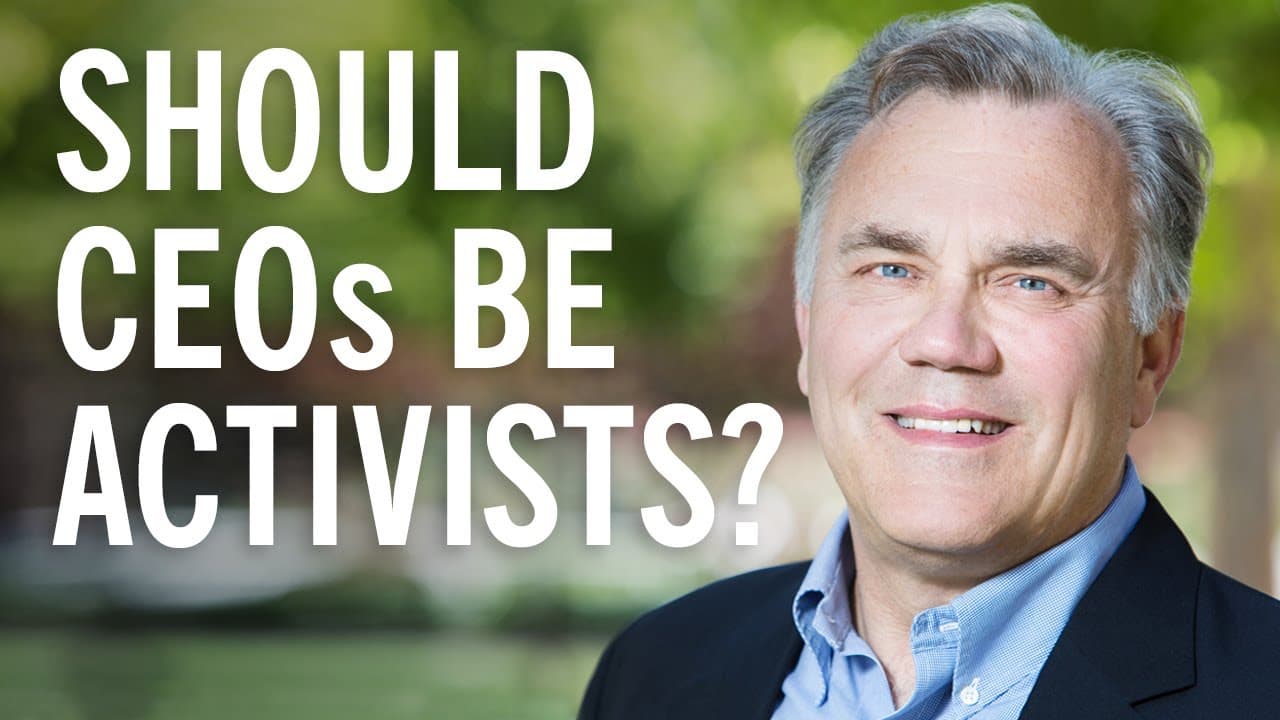
Should CEOs Take a Stance on Controversial Topics?
TL;DR
CEO activism can have both positive and negative consequences on a company, with potential effects on sales, customer loyalty, and employee retention.
Transcript
[MUSIC] One of the topics that we think is really interesting is what happens when CEOs take a very controversial but personal position on topics related to the environment or society or even even political. And it gets a lot of attention, and customers and employees see this and it could have some either positive or negative consequences on the co... Read More
Key Insights
- 🥺 CEO activism can lead to immediate and significant attention on social media, which can have both positive and negative consequences for a company.
- 🧘 It is important for companies to consider the potential impact on sales and employee retention when CEOs take controversial positions.
- 🧘 CEO activism can shift customer purchases based on their agreement or disagreement with the position taken.
- 🏂 Boards should anticipate potential CEO activism and discuss their stance ahead of time to avoid being blindsided.
- 💗 There is a growing push for companies to consider stakeholder interests beyond just shareholders.
- 💪 The role of boards and CEOs is evolving, and there may be a stronger focus on social and environmental issues in the future.
- ❓ Customers and employees may demand CEOs to take a stance on certain topics they feel strongly about.
Install to Summarize YouTube Videos and Get Transcripts
Explore YouTube Video Summarizer or Get YouTube Transcript Extractor
Questions & Answers
Q: How does CEO activism affect a company's bottom line?
CEO activism can lead to a loss or gain of sales depending on whether customers agree with the position taken. It can also impact employee retention and attraction.
Q: Are customers more likely to support companies that align with their own beliefs?
Yes, consumers are more likely to purchase from companies that take activist positions aligned with their own beliefs. Conversely, they may buy less from companies that take positions they disagree with.
Q: How should boards of directors handle CEO activism?
Boards should anticipate potential CEO activism and have discussions about their stance as an organization. They should consider whether they want CEOs to make personal statements and weigh the cost and benefits of taking a position.
Q: How is the role of boards and CEOs changing regarding stakeholder interests?
There is a shift from a strict focus on shareholder value to considering stakeholders' interests. Boards are now expected to take into account customers, employees, society, and the environment in decision-making.
Summary & Key Takeaways
-
CEO activism is the act of a CEO taking a personal position on a controversial topic related to the environment, society, or politics.
-
Only a small percentage of CEOs engage in activism, but those who do are typically well-known and influential.
-
Society generally prefers CEOs to weigh in on topics like healthcare and clean energy, while topics like abortion and politics are seen as areas for CEOs to stay out of.
Read in Other Languages (beta)
Share This Summary 📚
Summarize YouTube Videos and Get Video Transcripts with 1-Click
Try YouTube Summary with ChatGPT & Claude or YouTube Transcript Generator
Explore More Summaries from Stanford Graduate School of Business 📚






Summarize YouTube Videos and Get Video Transcripts with 1-Click
Try YouTube Summary with ChatGPT & Claude or YouTube Transcript Generator