Experience on Demand
TL;DR
Virtual reality technology has evolved and become more accessible, allowing for the creation of immersive experiences in various fields such as education and athletics.
Transcript
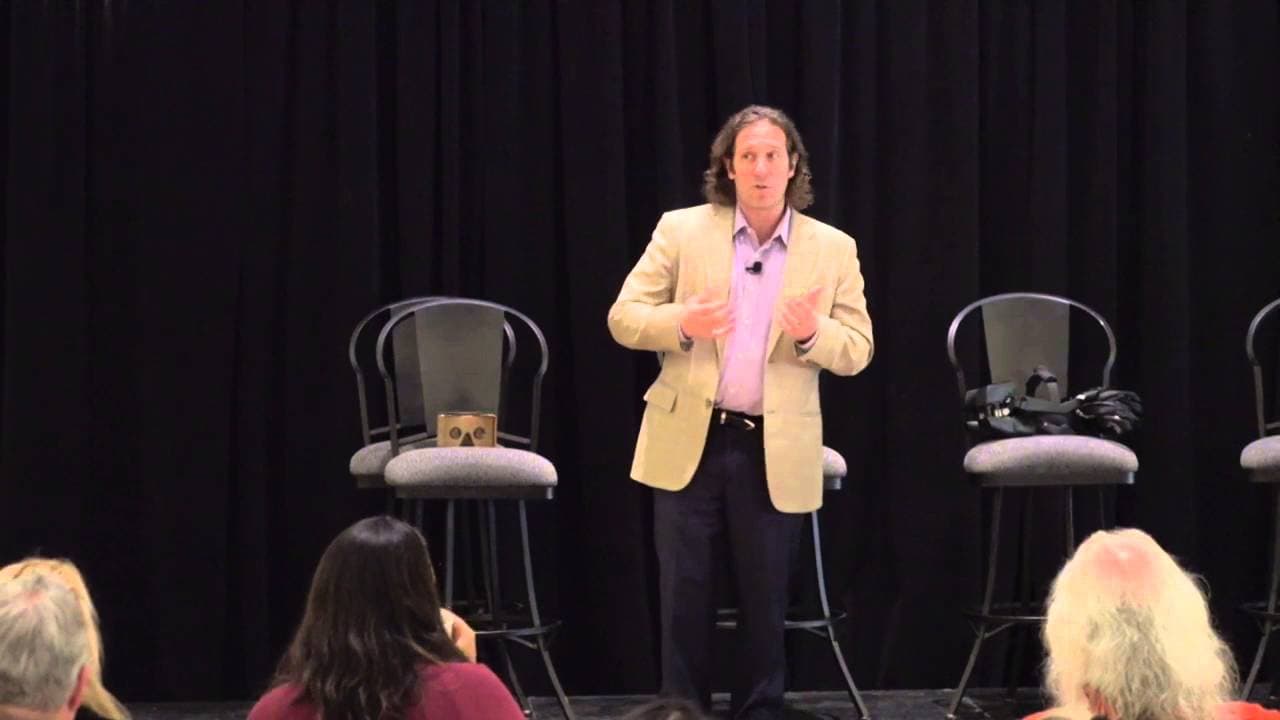
so let me introduce our first speaker and it's a pleasure to do so Jeremy bailenson is the founding director of Stanford's virtual human interaction lab he's an associate professor in the department of communication and a senior fellow at the woods Institute for the environment he and his lab design and study virtual virtual reality systems that al... Read More
Key Insights
- 🥺 Virtual reality technology has become more affordable and accessible, leading to an increase in its applications in various fields.
- 👻 Psychological presence in VR allows for immersive experiences that feel real, providing unique opportunities for education and training.
- 🤨 Virtual reality can be a powerful tool for raising awareness about complex issues such as climate change and ocean acidification.
- 👟 VR training simulations have proven to be effective in improving athletic performance, as evidenced by their adoption in professional sports teams.
- ❓ The advancements in VR technology and its commercial success indicate that we are in a transformative phase for this technology.
- 💨 Carefully crafted virtual reality educational experiences can supplement traditional learning methods and provide a more engaging and immersive way of understanding complex subjects.
- 🥺 VR training can provide athletes with extra repetitions and enhance their mental visualization, leading to improved decision-making skills and overall performance.
Install to Summarize YouTube Videos and Get Transcripts
Explore YouTube Video Summarizer or Get YouTube Transcript Extractor
Questions & Answers
Q: What is psychological presence in virtual reality?
Psychological presence refers to the sensation of feeling present in a virtual environment, as if it were real. In VR, the brain is unable to differentiate between a compelling media experience and an actual experience, leading to the immersive nature of VR.
Q: How is VR being used to teach about ocean acidification?
The project involves creating a scientifically accurate virtual reef that demonstrates the effects of increased acidity on marine life. Users can explore the reef, witness the consequences of ocean acidification, and gain a deeper understanding of the issue.
Q: How has virtual reality been applied to athletic training?
Virtual reality simulations have been used to train football players by providing them with extra repetitions and enhancing mental visualization. Players can review plays and improve decision-making skills, ultimately leading to improved performance on the field.
Q: Is virtual reality training effective for athletes?
Yes, virtual reality training has proven to be effective in improving performance. The system developed by a Stanford graduate has been implemented in several NFL and college teams, with metrics showing player improvement.
Summary & Key Takeaways
-
Jeremy Bailenson, the director of Stanford's Virtual Human Interaction Lab, discusses the evolution of virtual reality technology, from expensive devices to more affordable options like Google Cardboard.
-
He highlights the concept of psychological presence, which makes VR experiences feel real, and discusses two projects: teaching about ocean acidification and training athletes using VR simulations.
-
The ocean acidification project aims to raise awareness of the impact of carbon dioxide absorption on the oceans, while the athletic training project has been successful in improving players' performance and has become a commercial venture.
Read in Other Languages (beta)
Share This Summary 📚
Summarize YouTube Videos and Get Video Transcripts with 1-Click
Try YouTube Summary with ChatGPT & Claude or YouTube Transcript Generator
Explore More Summaries from Stanford 📚




Summarize YouTube Videos and Get Video Transcripts with 1-Click
Try YouTube Summary with ChatGPT & Claude or YouTube Transcript Generator