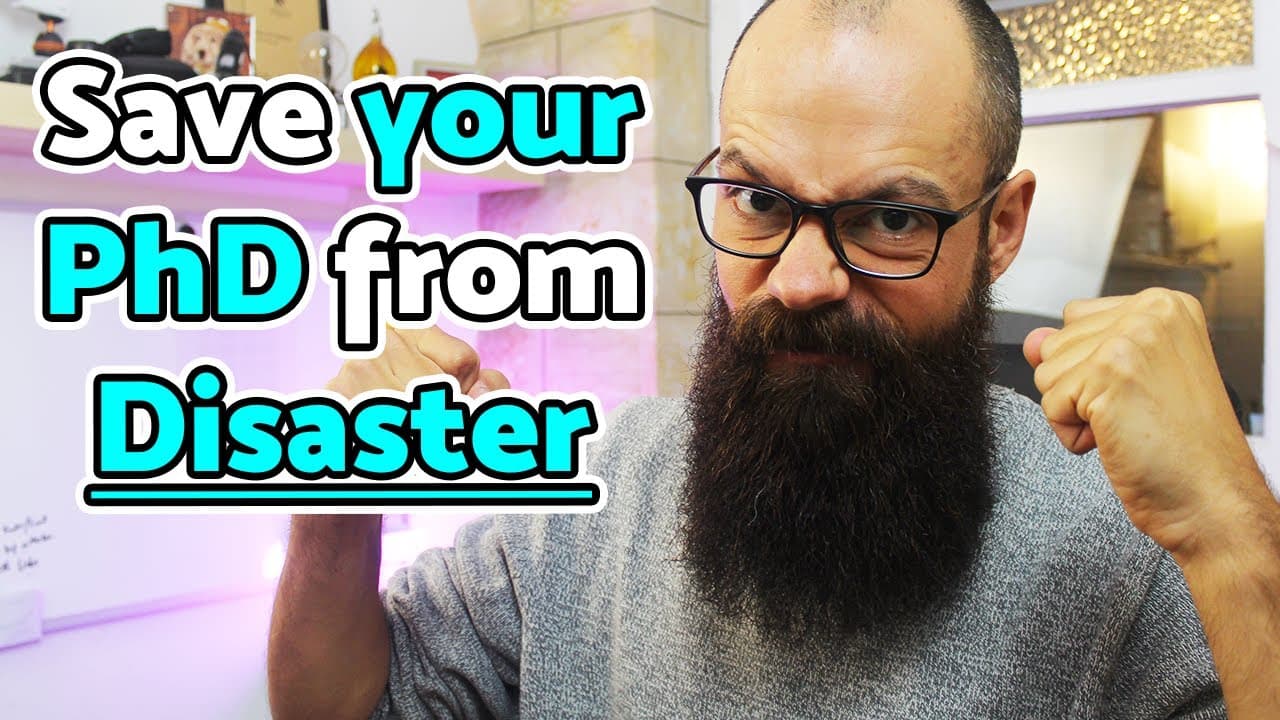
Save your PhD from disaster - it's not as bad as you think!
TL;DR
When feeling overwhelmed and fearing a PhD disaster, take a step back, be objective, and seek help to find solutions.
Transcript
if you think your phd is a disaster just relax the first thing you should do is stop stop acting stop doing stop panicking just relax now it's easier said than done but i think everyone at some point has felt like a project they are doing and definitely someone in a phd has felt that their phd is going to be a disaster and you can't help those runn... Read More
Key Insights
- 🛠️ Reflection: When feeling overwhelmed by your PhD, take a step back and objectively assess the situation. Brainstorming and identifying what is objectively true can help alleviate feelings of disaster.
- 🔎 Change and Growth: The word "yet" is powerful in reminding yourself that things can change. It helps to shift your mindset from believing the disaster is imminent and permanent to recognizing that there is potential for improvement and resolution.
- 💡 Identifying Issues: Take the time to identify the root causes of your feelings, whether it's supervisor issues, data-related problems, timing issues, or procrastination. By pinpointing the problem, you can develop strategies to address and overcome it. ⏰ Acting Sooner: Acting on identified issues as soon as possible is crucial. Develop a plan to prevent repeating the same mistakes, whether it's by doubling down on what's working or seeking support to engineer a better situation.
- 🔄 Engineering Your PhD: Create routines, block distractions, and engineer your surroundings to optimize productivity and avoid repeating mistakes. Extend your PhD if necessary, as there are always ways to accommodate additional time for resolving issues.
- 🌟 PhD Approval: Remember that completing a PhD does not require groundbreaking results. It's about contributing something new and interesting to your field. Focus on collecting and analyzing data, as well as exploring deeper avenues for research.
- 💪 Seek Support: Don't hesitate to seek help from your peers, co-supervisors, postdocs, or senior researchers when feeling overwhelmed. They can provide guidance, offer different perspectives, and boost your confidence. Addressing challenges collectively can lead to creative solutions.
Install to Summarize YouTube Videos and Get Transcripts
Explore YouTube Video Summarizer or Get YouTube Transcript Extractor
Questions & Answers
Q: How can brainstorming and writing down your fears and anxieties help in managing the fear of a PhD disaster?
Brainstorming and writing down your fears and anxieties can help in managing the fear of a PhD disaster by allowing you to externalize your thoughts and get them out of your mind. This process can help you see what is objectively true and what might be exaggerated or imagined in your mind. It provides a clearer perspective and can help you realize that not everything is as catastrophic as it seems.
Q: How can the word "yet" be helpful in alleviating the fear of a PhD disaster?
The word "yet" can be helpful in alleviating the fear of a PhD disaster by reminding you that things can change and improve over time. It allows you to pause and acknowledge that the current situation is not permanent. By using the word "yet," you shift your mindset from a sense of impending doom to a more optimistic outlook, giving yourself room to find solutions and overcome challenges.
Q: Why is it important to identify the root causes of feeling like your PhD is going to be a disaster?
Identifying the root causes of feeling like your PhD is going to be a disaster is important because it helps you understand the specific issues that are contributing to this fear. Whether it's supervisor issues, data problems, timing, or procrastination, pinpointing the underlying factors allows you to strategize and make a plan to address them. By taking action, you can prevent the disaster scenario and find solutions to mitigate the challenges you're facing.
Q: How can collecting data early on in a PhD help prevent a sense of disaster?
Collecting data early on in a PhD is crucial because it provides a solid foundation for your research and helps you stay on track. When you have sufficient data, you can analyze and draw conclusions, which helps build confidence and reduces the fear of failure. Data collection also allows you to explore opportunities and go deeper into specific areas, contributing to the novelty and significance of your research. It's a proactive approach that prevents the feeling of falling behind and sets a strong groundwork for your PhD journey.
Q: How can seeking help from peers and supervisors alleviate the fear of a PhD disaster?
Seeking help from peers and supervisors can alleviate the fear of a PhD disaster by providing support, guidance, and reassurance. Peers who are going through similar experiences can empathize and offer practical advice. Supervisors, as key mentors, can provide insights, help you develop a plan, and address any concerns or challenges. Their expertise and perspective can help you navigate the difficulties and instill confidence, leading to a more positive PhD experience.
Summary & Key Takeaways
-
Feeling like your PhD is a disaster is common, but it's important to be objective and reflect on the situation.
-
Use techniques like brain spill and the word "yet" to gain perspective and remind yourself that things can change.
-
Act promptly by identifying the issues, making a plan, and seeking help from peers and supervisors to engineer a better outcome.
Read in Other Languages (beta)
Share This Summary 📚
Summarize YouTube Videos and Get Video Transcripts with 1-Click
Try YouTube Summary with ChatGPT & Claude or YouTube Transcript Generator
Explore More Summaries from Andy Stapleton 📚

Summarize YouTube Videos and Get Video Transcripts with 1-Click
Try YouTube Summary with ChatGPT & Claude or YouTube Transcript Generator