Solving Real-World Problems: Bringing Authentic Context to Learning
TL;DR
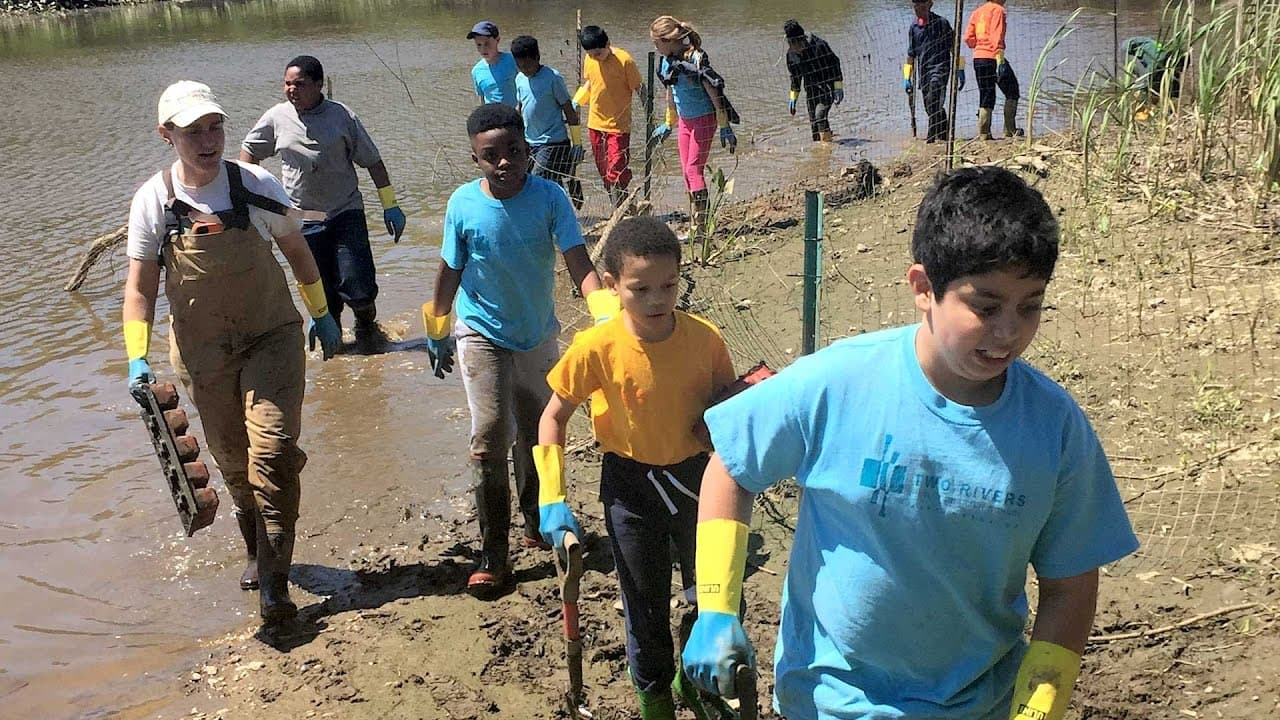
Students at Two Rivers School engage in problem-based learning to develop critical thinking skills and solve real-world problems.
Transcript
Julia: So how can we improve it so that it's clear that there's more than one thing? >>Quimiah: You could just go to the tab that says that category. >>Student: The cats, some cats are what makes the ecosystem healthy. >>Julia: Awesome ideas. We're going to share with-- >>Jessica: Because our students solve real world problems, they see themselve... Read More
Key Insights
- 🤔 Problem-based learning helps students develop critical thinking, problem-solving, and research skills.
- 💦 By working on projects that are important to them, students become more engaged and motivated to learn.
- 👻 Problem-based learning allows students to see the connection between what they learn in school and real-world issues.
- 🧑🎓 Students gain confidence and a sense of purpose by solving real-world problems and making a difference in their communities.
- ⚾ Problem-based learning can be implemented across different grade levels and subjects.
- 🌍 Authentic context, such as partnering with organizations, enhances the learning experience and adds real-world relevance.
- 💁 Problem-based learning encourages students to consider multiple perspectives and weigh information to come up with well-informed solutions.
Install to Summarize YouTube Videos and Get Transcripts
Explore YouTube Video Summarizer or Get YouTube Transcript Extractor
Questions & Answers
Q: What is problem-based learning?
Problem-based learning is an approach to education where students work on projects that require them to solve real-world problems. It helps them develop critical thinking and problem-solving skills.
Q: What are some examples of problems that students solve in Two Rivers School?
Examples of problems that students tackle include changing perceptions about spiders, creating a website to educate about the Anacostia River ecosystem, and exploring ethical dilemmas like gene editing.
Q: How does problem-based learning benefit students?
Problem-based learning benefits students by making learning purposeful. It teaches them to research, gather information, analyze multiple perspectives, and come up with solutions, skills that are valuable in real-world situations.
Q: How does problem-based learning foster a love of learning?
Problem-based learning fosters a love of learning by making it relevant and meaningful to students. They see themselves as important and thoughtful individuals who can grapple with tough problems and make decisions that have real impact.
Summary & Key Takeaways
-
Two Rivers School is a preschool through eighth-grade public charter school that focuses on problem-based learning to help students develop a lifelong love of learning.
-
Students engage in projects that allow them to solve problems important to them, such as changing perceptions about spiders and creating a website to educate about the Anacostia River ecosystem.
-
Problem-based learning helps students become critical thinkers and problem solvers, teaching them how to research, create stories, and work towards solutions.
Read in Other Languages (beta)
Share This Summary 📚
Summarize YouTube Videos and Get Video Transcripts with 1-Click
Try YouTube Summary with ChatGPT & Claude or YouTube Transcript Generator
Explore More Summaries from Edutopia 📚


Summarize YouTube Videos and Get Video Transcripts with 1-Click
Try YouTube Summary with ChatGPT & Claude or YouTube Transcript Generator