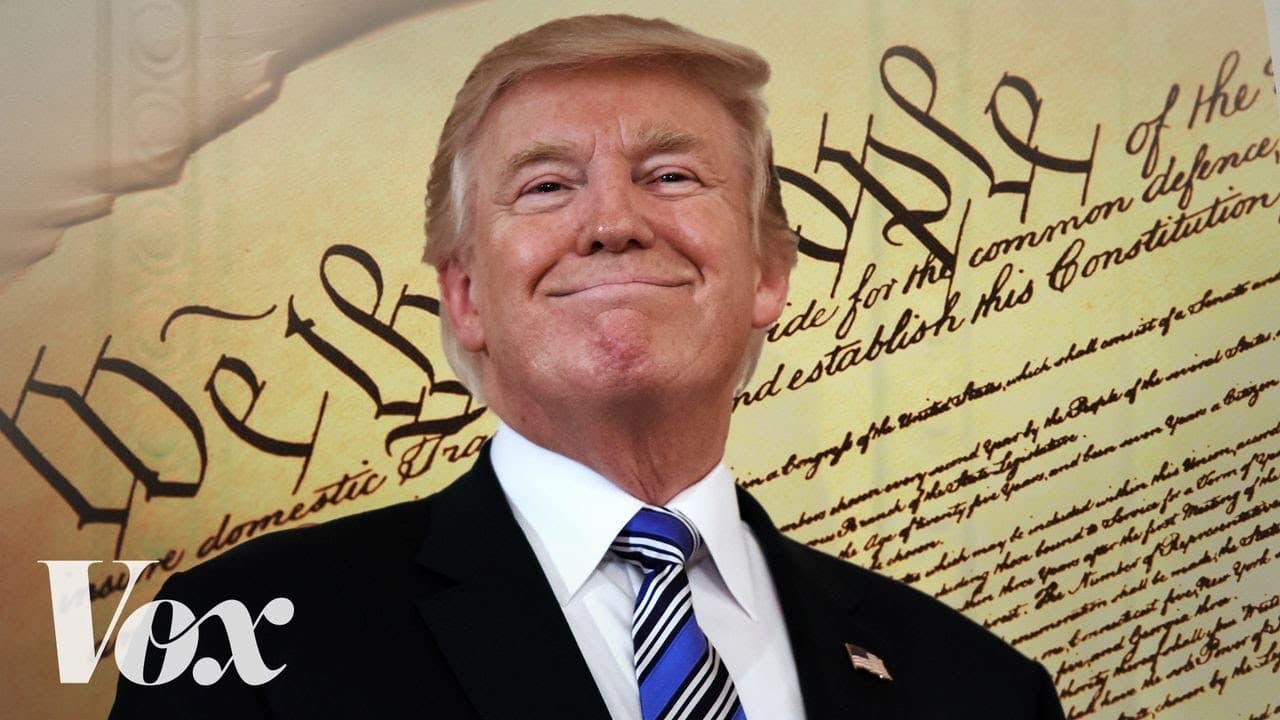
Can Trump really pardon himself?
TL;DR
Trump claims he can pardon himself, but faces checks.
Transcript
So recently, President Trump made an odd comment about the presidential pardon. “The pardons are a very positive thing for a president. I think you see the way I’m using them. And yes, I do have an absolute right to pardon myself. But I'll never have to do it because I didn't do anything wrong." As bizarre as that may sound, Trump isn’t entirely wr... Read More
Key Insights
- President Trump has used his pardoning power early in his term, which is unusual compared to previous presidents who waited until later in their terms.
- The US Constitution grants the president the power to pardon federal offenses, but pardons cannot prevent impeachment.
- Checks and balances in the US system may limit the president's ability to use pardons for self-serving purposes.
- The judicial branch could challenge a self-pardon if it violates the Constitution's requirement for faithful execution of office duties.
- Congress has the power to enact laws ensuring constitutional compliance, potentially limiting corrupt or unconstitutional pardons.
- A self-pardon or pardons perceived as corrupt could trigger impeachment proceedings by Congress.
- Voter sentiment and elections act as a check on the president's use of pardoning power.
- Legal experts argue that claiming absolute pardon power is politically risky and contradicts democratic principles.
Install to Summarize YouTube Videos and Get Transcripts
Explore YouTube Video Summarizer or Get YouTube Transcript Extractor
Questions & Answers
Q: What is unusual about Trump's use of pardoning power compared to previous presidents?
Unlike previous presidents who typically waited until later in their terms to issue pardons, President Trump has used his pardoning power early in his presidency. This early use of pardons is seen by some as a signal to his political allies that he is willing to pardon them if they face convictions related to the investigations surrounding the 2016 elections.
Q: What does the US Constitution say about the president's power to pardon?
The US Constitution grants the president the power to pardon individuals for federal offenses. However, this power does not extend to state offenses, nor can it be used to prevent impeachment. The Constitution provides a framework of checks and balances, ensuring that no branch of government, including the presidency, can operate without oversight or accountability.
Q: How could the judicial branch challenge a presidential self-pardon?
The judicial branch could challenge a presidential self-pardon by arguing that it violates the Constitution's requirement for the president to faithfully execute the office's duties. This requirement is derived from the oath of office, which mandates that the president cannot use powers for personal benefit at the expense of others, thus potentially invalidating a self-serving pardon.
Q: What role does Congress play in checking the president's pardoning power?
Congress has the authority to enact laws ensuring that the Constitution is followed by all branches of government. While Congress cannot take away the president's pardoning power, it can regulate its use to prevent corrupt or unconstitutional pardons. For instance, Congress could legislate against pardons issued for discriminatory or self-serving reasons, providing a legislative check on the president's actions.
Q: What are the potential consequences of a president pardoning themselves?
If a president were to pardon themselves, it would likely lead to impeachment proceedings by Congress. Such an action would be seen as unthinkable and contrary to democratic principles, as it suggests that the president is above the law. Impeachment would serve as a constitutional response to an abuse of the pardoning power, reinforcing the checks and balances system.
Q: How do voter sentiment and elections act as a check on the president's pardoning power?
Voter sentiment and elections serve as a democratic check on the president's use of pardoning power. Since government officials, including the president, are ultimately accountable to the people, public opinion can influence congressional actions, such as impeachment proceedings, if the president's use of pardons is perceived as corrupt or self-serving. Elections allow voters to express their approval or disapproval of presidential actions.
Q: Why do legal experts consider claiming absolute pardon power a political mistake?
Legal experts view the claim of absolute pardon power as a political mistake because it contradicts the democratic principle that no one, including the president, is above the law. Such a claim risks alienating voters and Congress, potentially leading to impeachment. It also undermines the system of checks and balances designed to prevent any branch of government from wielding unchecked power.
Q: What are the implications of Trump's early use of pardons for his political allies?
Trump's early use of pardons is interpreted by some as a signal to his political allies that he is willing to protect them from legal consequences related to investigations, such as those concerning the 2016 elections. This use of pardons could be seen as an attempt to maintain loyalty and support among his allies, but it also raises concerns about the potential for abuse of power and the undermining of judicial processes.
Summary & Key Takeaways
-
President Trump has asserted his right to pardon himself, though this claim is controversial and could lead to impeachment proceedings if acted upon. The US Constitution grants the president broad pardoning powers for federal offenses, but these powers are subject to checks and balances.
-
The judicial branch could invalidate a self-pardon if it violates the Constitution's requirement for the president to faithfully execute office duties. Congress also has the authority to regulate the use of pardons to prevent corrupt or unconstitutional actions.
-
The most significant check on the president's pardoning power is the potential for impeachment by Congress. Voter sentiment and elections serve as additional checks, emphasizing the democratic principle that no one, including the president, is above the law.
Read in Other Languages (beta)
Share This Summary 📚
Summarize YouTube Videos and Get Video Transcripts with 1-Click
Try YouTube Summary with ChatGPT & Claude or YouTube Transcript Generator
Explore More Summaries from Vox 📚

Summarize YouTube Videos and Get Video Transcripts with 1-Click
Try YouTube Summary with ChatGPT & Claude or YouTube Transcript Generator