The US broke voting records in a pandemic
TL;DR
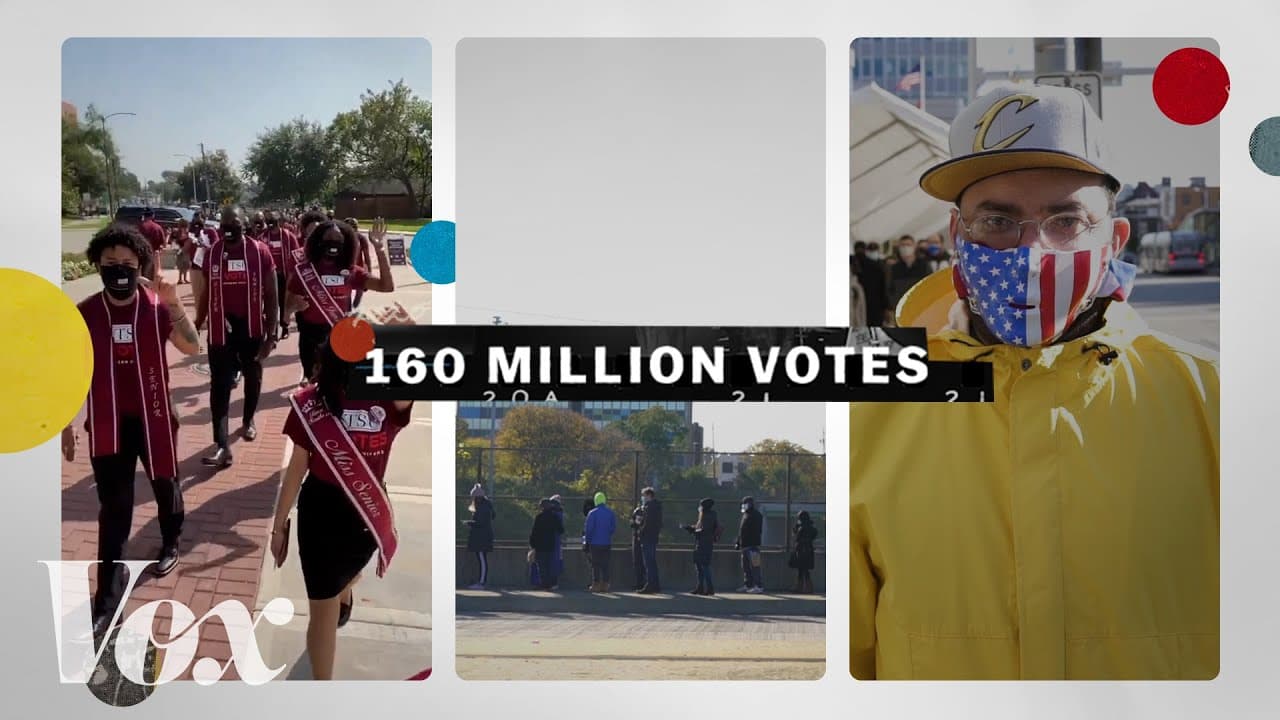
Record 160 million Americans voted despite pandemic challenges.
Transcript
Hey Lisa, what are we going to go do? We’re going to go, vote! We’re going to vote. We marching. Goes on and on and on. The line stretched outside of the school. Millions of people mailing in their ballots and finding hours long waits at the polls. For what’s to come, I can only trust god. We are tracking what could be the largest election turnout ... Read More
Key Insights
- The 2020 election saw a record-breaking turnout with 160 million Americans voting, despite the ongoing pandemic.
- Voters faced challenges such as hours-long waits, misinformation on social media, and safety concerns at the polls.
- Many voters opted for mail-in ballots or early voting to avoid long lines and potential exposure to COVID-19.
- Voter motivation was high due to the perceived importance of the election, with many seeing it as a pivotal moment in history.
- Despite fears of violence or unrest, voters were determined to cast their ballots and make their voices heard.
- The pandemic paradoxically motivated more people to vote, as government responses fueled a desire for change.
- Safety measures like mask-wearing were emphasized at polling stations to protect voters and poll workers.
- Concerns about mail-in ballot delays and the legitimacy of election results were prevalent among voters.
Install to Summarize YouTube Videos and Get Transcripts
Explore YouTube Video Summarizer or Get YouTube Transcript Extractor
Questions & Answers
Q: What motivated voters to participate in the 2020 election despite the pandemic?
Voters were motivated by the high stakes and significance of the 2020 election, viewing it as one of the most important in their lifetimes. The government's response to the pandemic and the desire for change also played significant roles in driving voter turnout.
Q: How did the pandemic affect voting methods in the 2020 election?
The pandemic led many voters to opt for mail-in ballots or early voting to reduce the risk of exposure to COVID-19. This shift was facilitated by states expanding mail-in voting options and extending early voting periods to accommodate safety concerns.
Q: What were some challenges voters faced during the 2020 election?
Voters encountered several challenges, including hours-long waits at polling stations, navigating misinformation on social media, and concerns about the safety of voting in person due to the pandemic. Despite these obstacles, many were determined to cast their ballots.
Q: What safety measures were implemented at polling stations during the 2020 election?
Polling stations implemented safety measures such as requiring masks for voters and poll workers, encouraging social distancing, and providing hand sanitizers. These measures aimed to protect individuals from COVID-19 while ensuring a safe voting experience.
Q: Why was there concern about the legitimacy of mail-in ballots in the 2020 election?
Concerns about the legitimacy of mail-in ballots stemmed from fears of delays in counting, potential fraud, and misinformation spread on social media. These concerns led to heightened scrutiny and debates over the security and reliability of mail-in voting.
Q: How did the 2020 election impact voter turnout compared to previous elections?
The 2020 election saw a record-breaking voter turnout, with 160 million Americans participating. This marked a significant increase compared to previous elections, driven by the perceived importance of the election and the expansion of voting options due to the pandemic.
Q: What role did social media play in the 2020 election?
Social media played a dual role in the 2020 election by spreading both information and misinformation. While it served as a platform for voter mobilization and awareness, it also contributed to the dissemination of false information, impacting voter perceptions and behavior.
Q: What were voters' concerns about the aftermath of the 2020 election?
Voters were concerned about potential violence, unrest, and efforts to undermine the legitimacy of the election results. These fears were fueled by the polarized political climate and uncertainties surrounding the handling of mail-in ballots and the overall election process.
Summary & Key Takeaways
-
The 2020 U.S. presidential election was marked by a record turnout of 160 million voters, despite the challenges posed by the COVID-19 pandemic. Voters were motivated by the significance of the election and navigated long lines, misinformation, and safety concerns to cast their ballots.
-
Many Americans chose to vote early or by mail to avoid potential exposure to the virus, while others braved hours-long waits at polling stations. The election was seen as a critical moment in history, driving people to participate despite fears of unrest or violence.
-
Safety measures, such as mask-wearing, were implemented at polling places to protect voters and workers. Concerns about the legitimacy of mail-in ballots and election results were widespread, but voters remained determined to make their voices heard.
Read in Other Languages (beta)
Share This Summary 📚
Summarize YouTube Videos and Get Video Transcripts with 1-Click
Try YouTube Summary with ChatGPT & Claude or YouTube Transcript Generator
Explore More Summaries from Vox 📚



Summarize YouTube Videos and Get Video Transcripts with 1-Click
Try YouTube Summary with ChatGPT & Claude or YouTube Transcript Generator