What Made the B-17 Ball Turret Gunner So Risky?
TL;DR
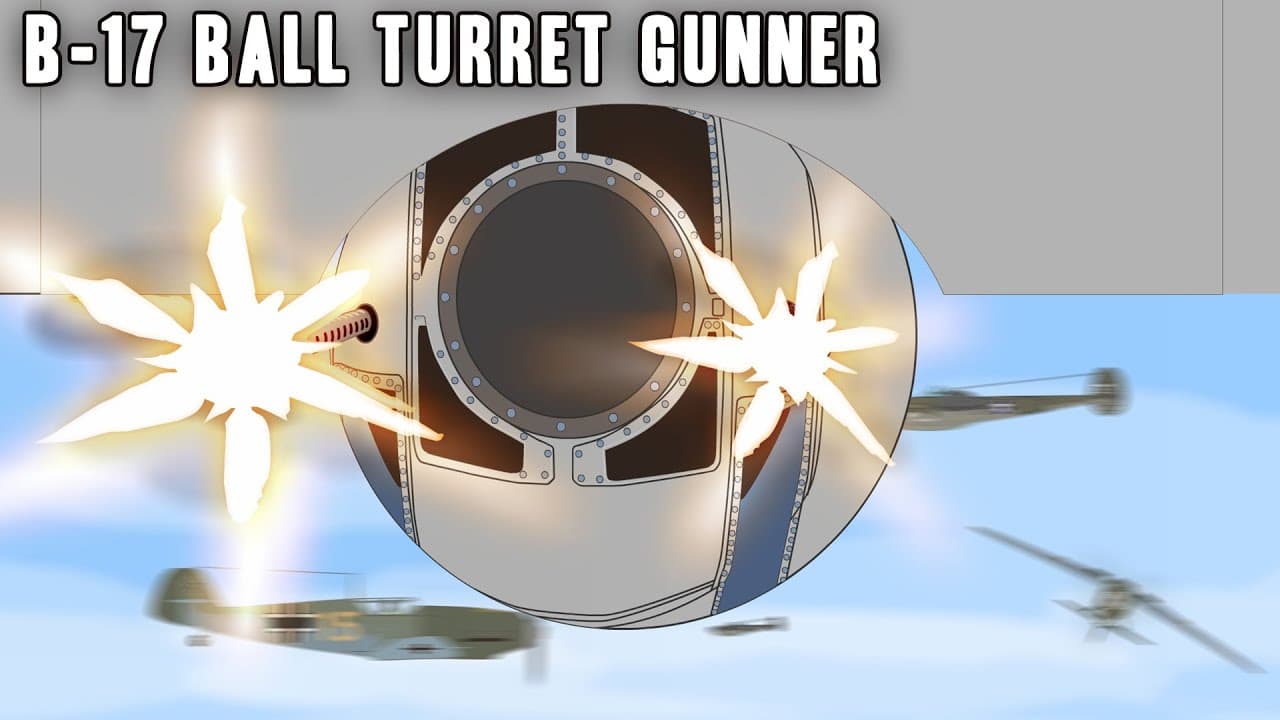
The B-17 ball turret gunner faced extreme dangers, being located in a cramped, exposed position that offered little protection. Their role was particularly perilous due to the aircraft's vulnerability and the high casualty rates suffered by gunners during missions.
Transcript
become a b-17 crewman as you navigate the skies in this battle-ready hoodie from simple history support the show by clicking the link in the description to grab our latest design limited time only ball turret gunner dangerous jobs in history world war ii the b-17 flying fortress was one of the most formidable aircraft of world war ii this mighty st... Read More
Key Insights
- 🖐️ The B-17 Flying Fortress was a formidable aircraft that played a crucial role in World War II.
- 😀 The ball turret gunner had the most dangerous role, facing high risks due to their exposed position and limited protection.
- 👾 Operating the ball turret was physically and mentally challenging, with the cramped space and uncomfortable position making it difficult for the gunner.
- ❤️🔥 The ball turret was a well-designed defensive system, but it still lacked proper protection against enemy fire.
- 😀 The high casualty rates among ball turret gunners highlight the extreme risks they faced during combat.
- ❓ The poem "The Death of the Ball Turret Gunner" by Randall Jarrell provides insight into the dangerous and fatal nature of the gunner's job.
- 🖤 The ball turret gunner's lack of a personal parachute further emphasized the risks and limited means of escape.
Install to Summarize YouTube Videos and Get Transcripts
Explore YouTube Video Summarizer or Get YouTube Transcript Extractor
Questions & Answers
Q: How did the B-17 contribute to the German war industry during World War II?
The B-17 Flying Fortress played a significant role in crippling the German war industry by delivering over a third of all bombs dropped on German soil during the war.
Q: What made the ball turret gunner position so dangerous?
The ball turret gunner was in an exposed position beneath the aircraft, making them a primary target for enemy aircraft and anti-aircraft defenses. The turret provided minimal protection, leaving the gunner vulnerable to enemy fire.
Q: How did the ball turret function and what weapons did it have?
The ball turret was a spherical chamber attached to the fuselage and armed with two 50 caliber Browning machine guns. It could rotate 360 degrees and pitch down to a 90-degree angle to cover the entire area below the aircraft.
Q: How did ball turret gunners enter and exit the turret?
To enter or exit the turret, the gunner had to manually position the hatch inside the aircraft. This process required several steps and the assistance of another crewman. Exiting the turret to retrieve the gunner's parachute was a complex and time-consuming operation.
Summary & Key Takeaways
-
The B-17 Flying Fortress was a vital bomber in World War II, but the crew faced high risks due to the aircraft's size and slow speed.
-
The ball turret gunner had the most dangerous role, with their exposed position making them vulnerable to enemy fire from below.
-
The ball turret itself was a small, cramped space with limited protection, making it a challenging and uncomfortable place to operate.
Read in Other Languages (beta)
Share This Summary 📚
Summarize YouTube Videos and Get Video Transcripts with 1-Click
Try YouTube Summary with ChatGPT & Claude or YouTube Transcript Generator
Explore More Summaries from Simple History 📚


Summarize YouTube Videos and Get Video Transcripts with 1-Click
Try YouTube Summary with ChatGPT & Claude or YouTube Transcript Generator