Inhumane Punishments in History
TL;DR
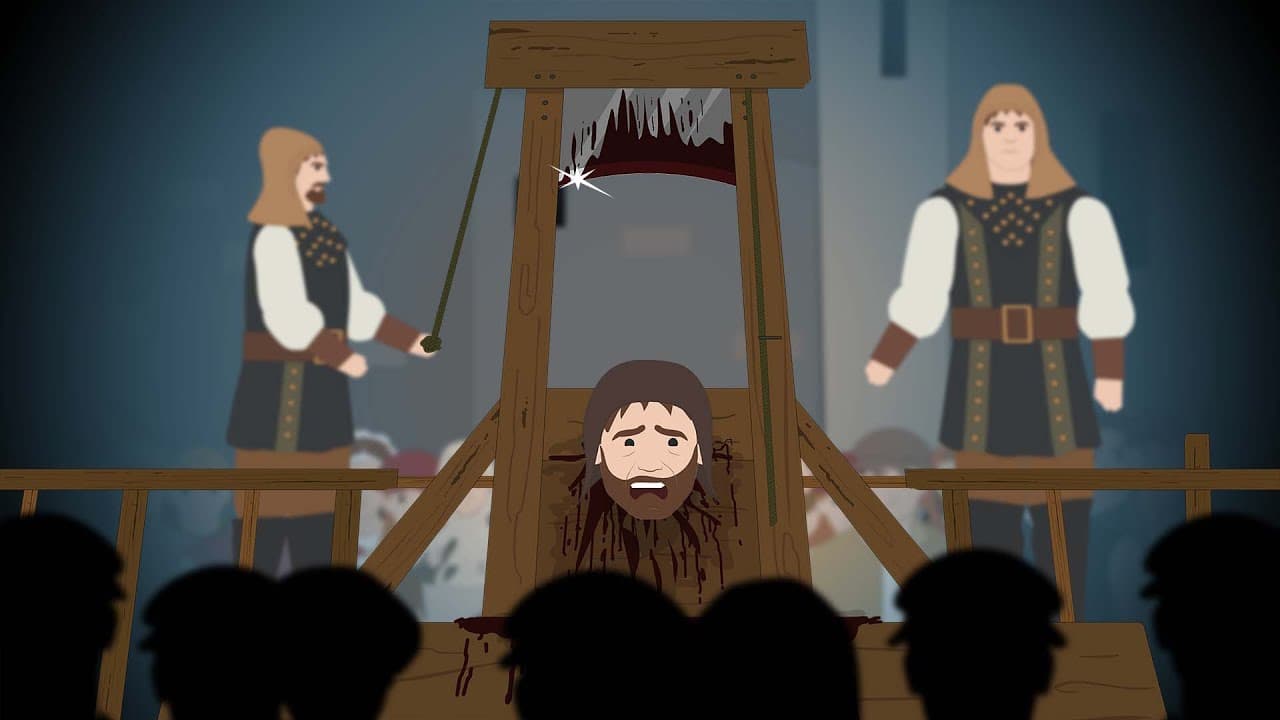
The guillotine, gibbet, rack, and thumb screws were brutal medieval torture methods used for execution and interrogation.
Transcript
foreign how long did a person's head stay alive after being guillotined beheading as a form of execution has been around for Centuries by 1792 during the time of the French Revolution it had become a highly efficient and quick form of execution in the shape of the now famous guillotine King Louis XVI himself signed the bill that made the guillotine... Read More
Key Insights
- ❓ The guillotine revolutionized execution methods with its quick and efficient beheading technique.
- 🛟 The gibbet served as a deterrent, publicly humiliating criminals by displaying their bodies after execution.
- 🧗 The rack was a brutal torture device used to stretch and dislocate the limbs of victims, often employed during the Spanish Inquisition.
- 🫰 Thumb screws inflicted excruciating pain and were used for torture and interrogation, especially during the Inquisition and witch trials.
- ⌛ These medieval torture methods reflect the brutal and inhumane practices of the time.
- 😒 The use of these devices was influenced by religion, political power, and the desire for punishment and control.
- 😨 Torture methods varied across different regions, but the goal was to extract confessions and instill fear in both individuals and society.
Install to Summarize YouTube Videos and Get Transcripts
Explore YouTube Video Summarizer or Get YouTube Transcript Extractor
Questions & Answers
Q: How did the guillotine work as a method of execution?
The guillotine was a tall wooden structure with a slanted blade that would drop down and quickly behead the condemned person. It was known for its efficiency in delivering a clean cut.
Q: What was the purpose of using the gibbet as a form of punishment?
The gibbet was used to publicly display the bodies of criminals after execution as a deterrent to others. The bodies would be left hanging until decomposition, drawing further humiliation.
Q: How did the rack torture device function?
The rack consisted of a large wooden frame with rollers and levers. The victim's limbs would be stretched, often resulting in dislocation, while additional forms of torture were inflicted.
Q: What was the purpose of thumb screws in torture?
Thumb screws were used to crush the fingers and cause intense pain. They were effective in extracting confessions during interrogations and were commonly used during the Inquisition and witch trials.
Summary & Key Takeaways
-
The guillotine, a device used for beheading, was considered a quick and efficient method of execution during the French Revolution.
-
The gibbet, also known as hanging in chains, involved leaving a body hanging after execution as a form of punishment and deterrent.
-
The rack was a torture device used to stretch and dislocate the limbs of victims, often used during the Spanish Inquisition.
-
Thumb screws were a torture method that crushed the fingers and caused excruciating pain, commonly used during the Inquisition and witch trials.
Read in Other Languages (beta)
Share This Summary 📚
Summarize YouTube Videos and Get Video Transcripts with 1-Click
Try YouTube Summary with ChatGPT & Claude or YouTube Transcript Generator
Explore More Summaries from Simple History 📚




Summarize YouTube Videos and Get Video Transcripts with 1-Click
Try YouTube Summary with ChatGPT & Claude or YouTube Transcript Generator