Who Came Up with This?
TL;DR
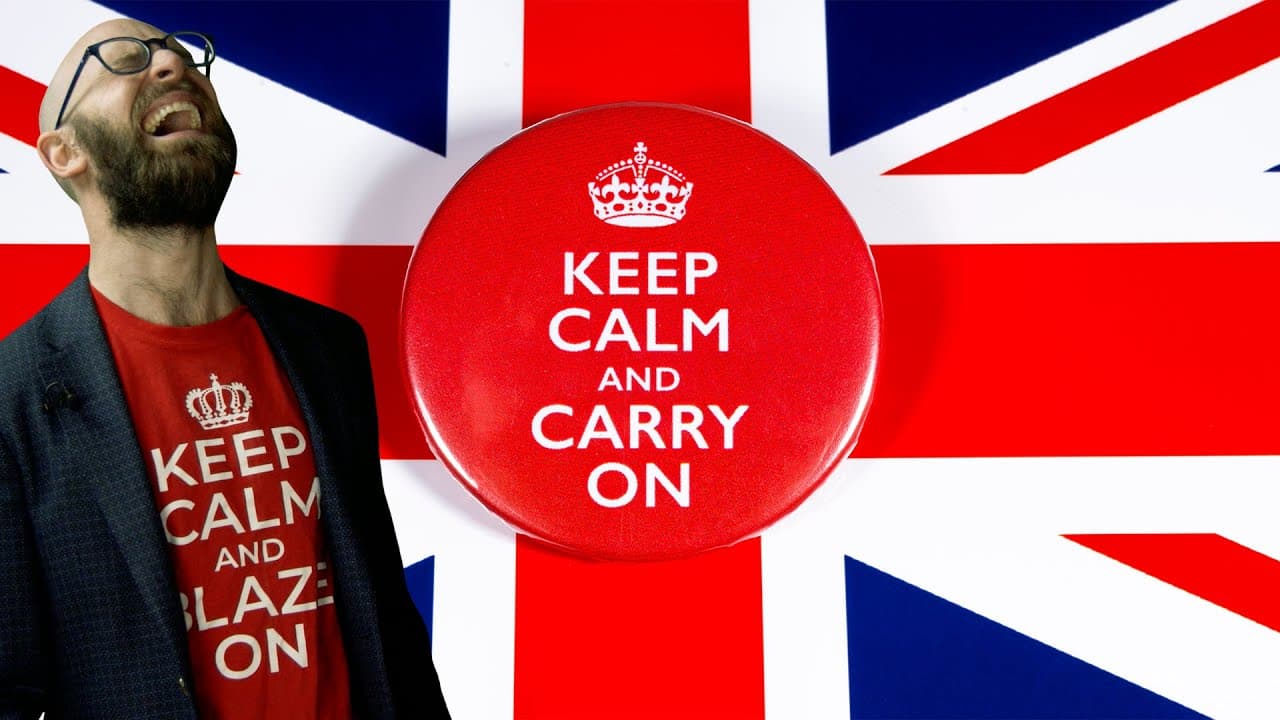
"Keep Calm and Carry On" evolved from obscure WWII propaganda to a global cultural phenomenon.
Transcript
you can find it almost everywhere in every gift shop on every online merchandise store on every souvenir stand and on every object imaginable from posters and postcards to coffee mugs water bottle t-shirts and phone cases the brick red backgrounds the stylized white crown and to big bold letters those five iconic words keep calm and carry on or jus... Read More
Key Insights
- ⌛ The "Keep Calm and Carry On" poster was part of a larger WWII propaganda effort aimed at unifying the British public against external threats, yet its visibility was minimal during that time.
- 🇨🇫 The poster was initially overshadowed by other, more immediate slogans, which were deemed more relevant to the public's wartime experience.
- ❓ Its cultural revival in the early 2000s illustrates how historical artifacts can be recontextualized, highlighting society’s appetite for nostalgia and resilience.
- ™️ The legal disputes surrounding the poster’s trademark demonstrate the complexities of commercialization versus historical legacy in popular culture.
- 🎨 Despite its once obscure status, the poster's design and message have made it a timeless icon associated with British ethos and stoicism.
- 🫱 Critics' disdain for the slogans during the war reflected broader societal tensions and misunderstandings regarding the roles of different social classes during times of crisis.
- 😑 The potential for "Keep Calm and Carry On" to serve as a universal message emphasizes the appeal of simplicity and reassurance in design and expression.
Install to Summarize YouTube Videos and Get Transcripts
Explore YouTube Video Summarizer or Get YouTube Transcript Extractor
Questions & Answers
Q: What was the original purpose of the "Keep Calm and Carry On" poster?
Originally, the "Keep Calm and Carry On" poster was created as a reassurance tool by the British Ministry of Information in 1939 to bolster public morale in anticipation of potential German air raids during World War II. The objective was to prepare the populace psychologically against the expected chaos of war without inciting panic.
Q: Why did the "Keep Calm and Carry On" poster largely go unnoticed during World War II?
Despite the extensive production of the "Keep Calm and Carry On" posters, they went mostly unnoticed during the war due to the timing and public sentiment. After Britain declared war on Germany, an extended period known as the "Phoney War" ensued, resulting in a public mood of boredom, leading to indifference towards the posters that were meant to inspire courage and resilience.
Q: How did the poster regain popularity in the 2000s?
The resurgence of the "Keep Calm and Carry On" poster began when a surviving copy was discovered in 2000 by Stuart Manley, who showcased it at his bookshop. In 2005, media coverage featuring the poster catalyzed a surge in interest, leading to high demand for reproductions and merchandise, thus transforming it into a pop culture icon.
Q: What were some of the criticisms regarding the slogans from the WWII propaganda campaign?
Critics felt that the slogans, particularly "Your Courage," implied that the common populace would bear the brunt of hardships for the upper classes. The slogans were also criticized for being too wordy or confusing, lacking the memorability needed for effective propaganda. This feedback highlighted a disconnect between the government's messaging and public sentiment.
Q: How did the trademark controversy around the slogan unfold?
In 2011, Mark Coupe trademarked the slogan "Keep Calm and Carry On," which sparked backlash from small vendors who argued that ownership of such a widely used slogan was unreasonable. A legal battle ensued, with various vendors fighting to reclaim their rights to sell products featuring the slogan, leading to broader discussions about historical ownership and commercialization.
Summary & Key Takeaways
-
The "Keep Calm and Carry On" poster originated in the UK as part of a WWII propaganda campaign aimed at maintaining public morale during the threat of Nazi bombings, but it remained largely unseen during the war.
-
Initially created in 1939, the poster's production was accelerated by the looming war, yet it was overshadowed by other slogans and had minimal impact due to the lack of immediate bombing raids.
-
The poster resurfaced in the early 2000s and captured global attention, leading to widespread commercialization, despite controversy over trademark rights and concerns of trivializing its historical significance.
Read in Other Languages (beta)
Share This Summary 📚
Summarize YouTube Videos and Get Video Transcripts with 1-Click
Try YouTube Summary with ChatGPT & Claude or YouTube Transcript Generator
Explore More Summaries from Today I Found Out 📚




Summarize YouTube Videos and Get Video Transcripts with 1-Click
Try YouTube Summary with ChatGPT & Claude or YouTube Transcript Generator