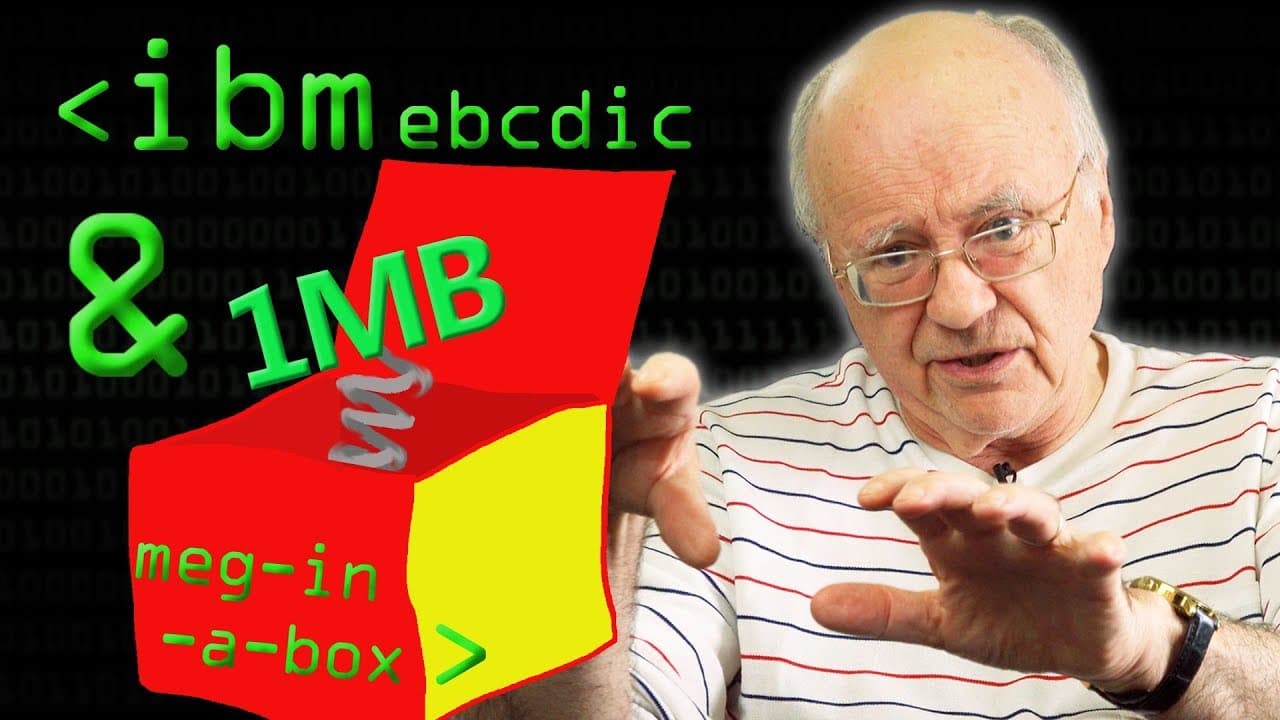
Why Did IBM Stick with EBCDIC Over ASCII?
TL;DR
IBM opted to use their proprietary EBCDIC character code rather than adopt ASCII to maintain market competitiveness and compatibility with existing systems. This decision had the unintended effect of locking users into IBM hardware, complicating interactions with ASCII-based technologies. Ultimately, IBM did move to ASCII for its UNIX servers, but the legacy of EBCDIC's limitations persisted.
Transcript
IBM was thinking of launching the 360 series computers that will be byte addressable in the early sixties there was a well-known committee that decided the character codes we used today the ASCII committing American Standard Code for information interchange early sixties IBM approved variet they even had delegates on the board so then the embarrass... Read More
Key Insights
- 👨💻 IBM's decision to continue using their own character codes had both commercial and technical motivations.
- 💋 The compatibility issues caused by using AB stick instead of ASCII locked users into using IBM machinery.
- 🛟 IBM eventually adopted ASCII for their mainframes, particularly with the introduction of IBM Discovery Unix servers.
- 💋 The cumbersome transition from AB stick to ASCII caused difficulties with character mapping and interconversion.
Install to Summarize YouTube Videos and Get Transcripts
Explore YouTube Video Summarizer or Get YouTube Transcript Extractor
Questions & Answers
Q: Why did IBM decide to continue using their own character codes instead of adopting ASCII?
IBM chose to use AB stick for commercial reasons, as transitioning to ASCII could have led to compatibility issues and potentially lost market share to competitors.
Q: What were the implications of IBM's decision to continue using AB stick?
The decision to use AB stick created compatibility issues with ASCII-based systems and locked users into using IBM machinery. It also hindered the adoption of standard character codes.
Q: Did IBM eventually transition to ASCII for their mainframes?
Yes, IBM eventually adopted ASCII, especially when they introduced IBM Discovery Unix servers. However, it took some time for them to fully embrace ASCII across their systems.
Q: How many versions of AB stick did IBM have?
IBM had six versions of AB stick, each with its own mapping of characters and code positions. This caused further compatibility challenges when trying to interconvert characters between AB stick and ASCII.
Summary & Key Takeaways
-
In the early 1960s, IBM planned to launch the 360 series computers, which would be byte addressable. However, their existing character codes based on BCD posed compatibility issues.
-
IBM chose to continue using their own character codes known as AB stick due to commercial considerations, as transitioning to ASCII could potentially lose them a significant market share.
-
This decision had unintended consequences, as it locked users into using IBM machinery and caused compatibility issues with ASCII-based systems.
-
Eventually, IBM did adopt ASCII for their mainframes, particularly when they introduced IBM Discovery Unix servers.
Read in Other Languages (beta)
Share This Summary 📚
Summarize YouTube Videos and Get Video Transcripts with 1-Click
Try YouTube Summary with ChatGPT & Claude or YouTube Transcript Generator
Explore More Summaries from Computerphile 📚





Summarize YouTube Videos and Get Video Transcripts with 1-Click
Try YouTube Summary with ChatGPT & Claude or YouTube Transcript Generator