These Night Sky Stars Are Going to Explode
TL;DR
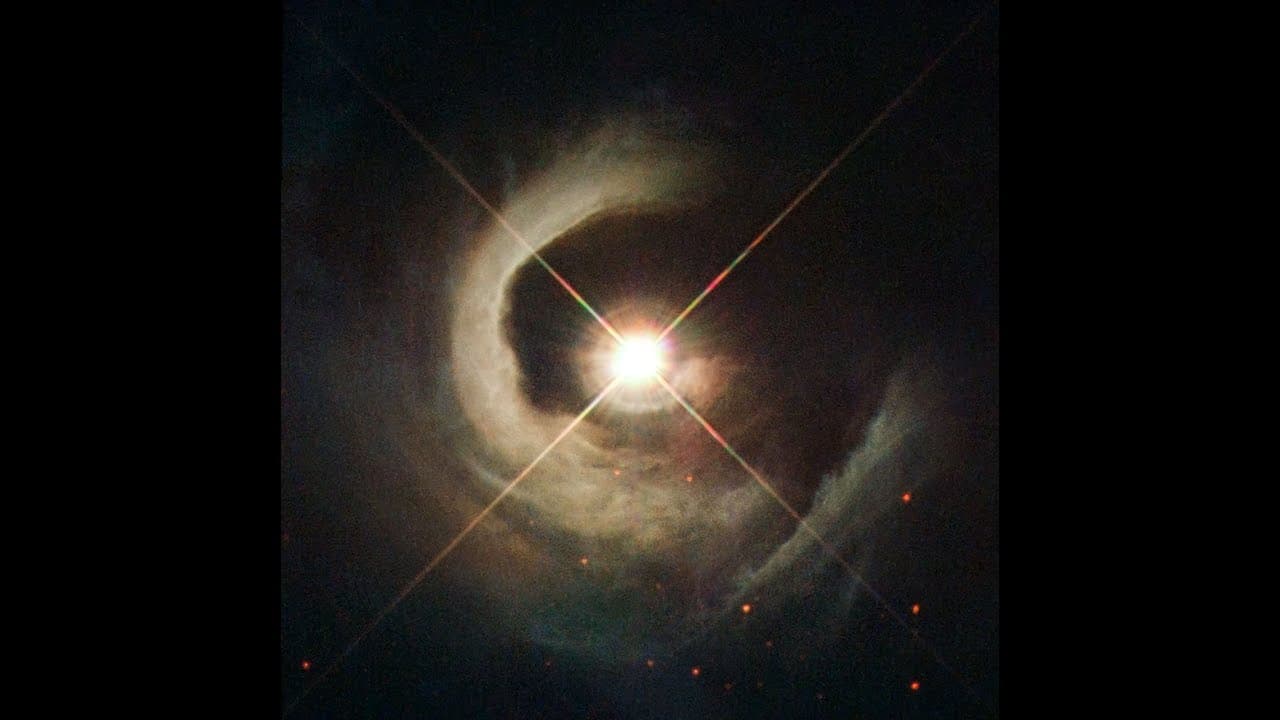
Antares, Betelgeuse, and WR 104 are the three stars expected to explode in the future. Antares may go supernova after about 10,000 years, while Betelgeuse probably has less than 100,000 years left. Neither should threaten Earth, but WR 104 has a very low chance of directing a damaging gamma-ray burst toward the planet. Read on to compare their timelines, visibility, and potential effects.
Transcript
This is the 100th video I've made for this channel since I first began uploading these videos in April of 2016. At the time, I only expected to make one video and did not expect to end up with many subscribers, needless to say, the numbers continue to amaze me. Thanks to all of you for that, the channel truly is something that I love and I look for... Read More
Key Insights
- 🤩 Antares, Betelgeuse, and WR 104 are stars on the verge of exploding, with Antares being the closest to its supernova event.
- 🤩 Red stars like Antares and Betelgeuse are easily observable due to their brightness and reddish hue.
- 🤩 WR 104 is a wolf-rayett star located at a great distance, making it too dim to see but potentially dangerous due to a small chance of a gamma ray burst.
- 🌟 The odds of significant damage from WR 104's gamma ray burst to Earth are low, considering factors such as the geometry of the burst and the alignment of the star's poles with our planet.
- 🫥 Antares and Betelgeuse's future explosions are expected to be visible from Earth, providing a spectacular cosmic event for future observers.
Install to Summarize YouTube Videos and Get Transcripts
Explore YouTube Video Summarizer or Get YouTube Transcript Extractor
Questions & Answers
Q: Which night-sky stars are going to explode?
Antares and Betelgeuse are two visible stars expected to explode as supernovae. WR 104 is a third star that may explode, but it is too dim to see with the naked eye.
Q: When will Antares go supernova?
Antares is expected to go supernova sometime after about 10,000 years from now, although estimates vary. The red supergiant is the 15th brightest star in the night sky.
Q: What would the Antares supernova look like from Earth?
Antares could reach or exceed the brightness of the full moon as seen from Earth. It might become bright enough to cast shadows at night before gradually dimming.
Q: Would an Antares supernova threaten Earth?
Antares should pose no threat to Earth because it is about 600 light years away. Its explosion would instead be a spectacular sight for future observers.
Q: When will Betelgeuse explode?
Betelgeuse probably has less than 100,000 years left, although it could explode at any moment. When it does, its supernova will be prominently visible from Earth.
Q: What signs suggest Betelgeuse is nearing the end of its life?
Betelgeuse is a turbulent star that throws layers of itself into space and has shrunk by 15 percent in less than two decades. Historical descriptions also suggest it may have changed from a yellow supergiant into the reddish star observed today.
Q: What is WR 104, and when might it explode?
WR 104 is a Wolf-Rayet star about 7,500 light years away and too dim to see with the naked eye. It could explode sometime within the next few hundred thousand years.
Q: Could WR 104 cause a mass extinction on Earth?
WR 104 has a very low chance of producing a gamma-ray burst that could cause a mass extinction if its poles are aligned with Earth. Scientists do not agree that it will produce such a burst, and a wide jet would diffuse over the distance while a narrow jet would be less likely to line up with Earth.
Summary & Key Takeaways
-
Antares, a red supergiant in the constellation of Scorpius, is expected to go supernova in about 10,000 years, potentially reaching or exceeding the brightness of the full moon.
-
Betelgeuse, another red star in the constellation of Orion, is also on the brink of exploding and has shown signs of shrinking. Its end could be seen within the next 100,000 years.
-
WR 104, a wolf-rayett star located 7500 light years away, is too dim to see but has a small chance of producing a gamma ray burst during a supernova, potentially causing a mass extinction on Earth.
Read in Other Languages (beta)
Share This Summary 📚
Summarize YouTube Videos and Get Video Transcripts with 1-Click
Try YouTube Summary with ChatGPT & Claude or YouTube Transcript Generator
Explore More Summaries from John Michael Godier 📚
Summarize YouTube Videos and Get Video Transcripts with 1-Click
Try YouTube Summary with ChatGPT & Claude or YouTube Transcript Generator