Why Does the Stock Market Rise Amidst Crisis?
TL;DR
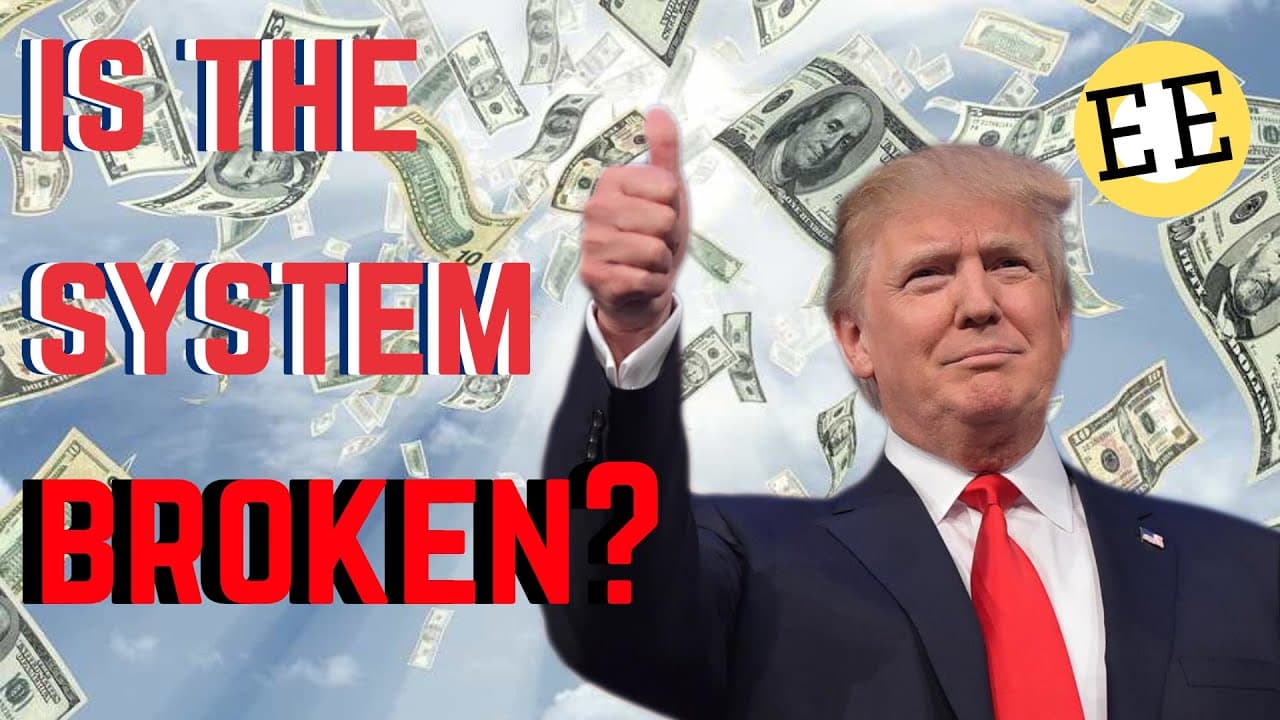
Despite the economic downturn and rising unemployment, the stock market is experiencing a recovery due to factors like government stimulus, investor speculation, and inflation in financial markets. This recovery might be temporary, driven by a 'dead cat bounce' phenomenon and the lack of alternative investment options.
Transcript
the economy has been through a bit of a rough ride in recent weeks the United States has been particularly hard hit by any illness that is forcing businesses to stay closed and people to basically lock themselves up in their homes now in a developed economy like the United States that relies so heavily on household consumption for sustained prosper... Read More
Key Insights
- The stock market's rise amidst economic downturns can be attributed to government stimulus and investor speculation.
- A 'dead cat bounce' is a temporary recovery in stock prices following a significant decline, often driven by investor optimism.
- Government bailouts and stimulus packages provide short-term relief for businesses, influencing stock prices positively.
- Inflation in financial markets, rather than consumer markets, is causing stock prices to rise despite economic challenges.
- The fear of missing out on market recovery drives investors to buy stocks, contributing to the stock market's rise.
- Ray Dalio suggests that cash is not a safe investment during times of economic uncertainty, as inflation erodes its value.
- Market reactions are more influenced by uncertainty than by bad news itself, leading to unpredictable stock movements.
- Long-term investors are left with limited options, often choosing between stocks and real estate as viable investments.
Install to Summarize YouTube Videos and Get Transcripts
Explore YouTube Video Summarizer or Get YouTube Transcript Extractor
Questions & Answers
Q: Why is the stock market rising despite economic downturn?
The stock market is rising due to government stimulus, investor speculation, and inflation in financial markets. Government bailouts provide short-term relief, leading to investor optimism. Additionally, inflation in financial markets rather than consumer markets causes stock prices to rise, creating a disconnect between the stock market and the broader economy.
Q: What is a 'dead cat bounce' in the stock market?
A 'dead cat bounce' is a temporary recovery in stock prices following a significant decline. It is often driven by investor optimism and the fear of missing out on market recovery. This phenomenon can mislead investors into believing a market recovery is underway when it may be short-lived, leading to further declines.
Q: How does government stimulus affect the stock market?
Government stimulus affects the stock market by providing financial support to businesses, which stabilizes stock prices. Stimulus packages and bailouts offer short-term relief, allowing companies to maintain operations. This support boosts investor confidence and contributes to rising stock prices, even amidst broader economic challenges.
Q: Why is inflation occurring in financial markets?
Inflation is occurring in financial markets due to increased money supply from government stimulus and quantitative easing. This influx of money is directed towards financial assets like stocks, causing their prices to rise. Unlike consumer markets, where spending is restricted, financial markets experience inflation as investors seek returns.
Q: What are the investment options during economic uncertainty?
During economic uncertainty, investment options are limited. Long-term investors often choose between stocks and real estate, as traditional safe havens like cash, oil, and gold may not provide the same security. Inflation erodes cash value, while stocks and real estate offer potential for growth despite market volatility.
Q: How does investor sentiment influence stock market movements?
Investor sentiment influences stock market movements by driving buying and selling decisions based on optimism or fear. Positive sentiment, fueled by government actions or perceived recovery, can lead to stock price increases. Conversely, negative sentiment can trigger sell-offs. Sentiment is often more reactive to uncertainty than actual economic data.
Q: What role does uncertainty play in stock market reactions?
Uncertainty plays a significant role in stock market reactions, as markets are more sensitive to unknowns than to bad news itself. When uncertainty is high, investors may react unpredictably, causing volatility. Conversely, when uncertainty decreases, even if conditions are poor, markets may stabilize as investors adjust to known risks.
Q: Why is cash considered a poor investment during inflation?
Cash is considered a poor investment during inflation because its purchasing power erodes over time. As governments increase money supply to support economies, inflation devalues cash holdings. Investors seek alternatives like stocks or real estate, which may offer better returns and preserve value against inflationary pressures.
Summary & Key Takeaways
-
The stock market is rising despite economic challenges due to factors like government stimulus, investor speculation, and inflation in financial markets. This rise is possibly a 'dead cat bounce,' a temporary recovery driven by investor optimism and fear of missing out. Long-term investors face limited options, often choosing stocks or real estate.
-
Government bailouts and stimulus packages are providing short-term relief to businesses, which in turn positively influences stock prices. Inflation is occurring in financial markets rather than consumer markets, causing stock prices to rise despite underlying economic issues. This creates a disconnect between the stock market and the broader economy.
-
Market reactions are driven more by uncertainty than bad news itself, leading to unpredictable stock movements. Ray Dalio advises against holding cash, as inflation erodes its value, leaving investors with few options beyond stocks and real estate. The long-term sustainability of the current market rise remains uncertain.
Read in Other Languages (beta)
Share This Summary 📚
Summarize YouTube Videos and Get Video Transcripts with 1-Click
Try YouTube Summary with ChatGPT & Claude or YouTube Transcript Generator
Explore More Summaries from Economics Explained 📚






Summarize YouTube Videos and Get Video Transcripts with 1-Click
Try YouTube Summary with ChatGPT & Claude or YouTube Transcript Generator