What did people do before anesthesia? - Sally Frampton
TL;DR
Surgeons in the 1800s experimented with various substances like nitrous oxide, ether, and chloroform to develop anesthetics that could induce unconsciousness and relieve patients of pain during surgery.
Transcript
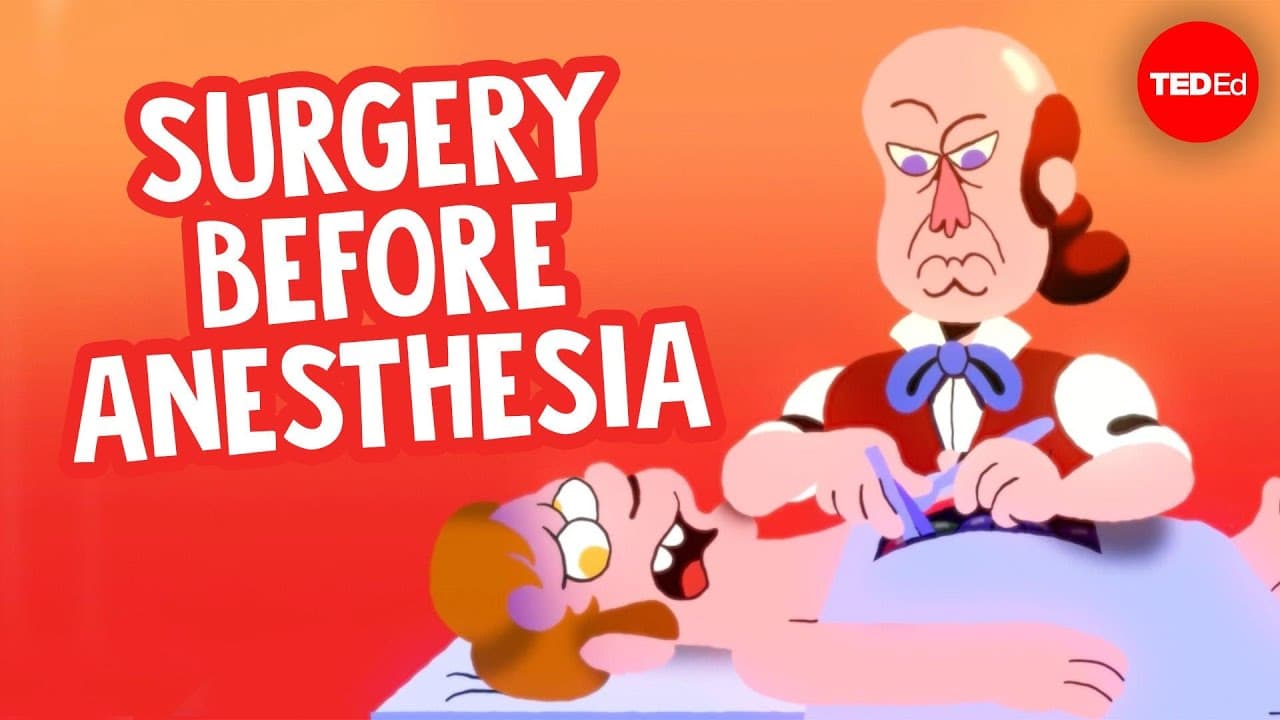
With medical students restraining the patient and onlookers eagerly awaiting, Scottish surgeon Robert Liston poised himself to begin. In quick succession, he cut his patient’s flesh, sawed through their tibia and fibula and, within just a few minutes, the amputation was complete. It was the 1830s and Liston was renowned for his surgical speed. Th... Read More
Key Insights
- 🎭 Surgeons in the 1800s had to perform surgeries without anesthesia, causing great suffering for patients.
- ⌛ Chinese physicians and Arab surgeons experimented with anesthetic substances in ancient times.
- 🤲 Nitrous oxide, ether, and chloroform emerged as key anesthetic drugs, with ether eventually being favored.
- 😀 Anesthetic drugs faced skepticism and safety concerns before gaining widespread acceptance.
- 🤲 Ether and nitrous oxide are still used today but in safer formulations with fewer side effects.
- 😒 The use of anesthetics revolutionized surgery, allowing for more complex procedures.
- 🥹 Some doctors held sexist and racist beliefs regarding anesthesia administration.
Install to Summarize YouTube Videos and Get Transcripts
Explore YouTube Video Summarizer or Get YouTube Transcript Extractor
Questions & Answers
Q: When did the search for anesthetics begin?
The search for anesthetics started centuries ago, with Chinese physician Hua Tuo and Arab surgeon Ibn al-Quff experimenting with various substances in ancient times.
Q: Why did it take a long time for anesthetics to be widely used in surgery?
Some surgeons and patients were skeptical of the effectiveness and safety of anesthetic drugs, which led to delays in their widespread adoption.
Q: How did ether gain popularity as an anesthetic?
Ether gained popularity after an American physician successfully removed a tumor from a patient under ether anesthesia. Dentists also began recognizing the promise of nitrous oxide around the same time.
Q: How did chloroform become popular as an anesthetic?
Scottish obstetrician James Simpson learned about chloroform and administered it during childbirth, leading to its rapid popularity due to its fast-acting nature and perceived lack of side effects.
Summary & Key Takeaways
-
Surgeons in the 1800s had to perform surgeries without anesthesia, making it a painful experience for patients.
-
The quest for anesthetic drugs began centuries ago, with Chinese and Arab physicians experimenting with various substances to induce unconsciousness.
-
Nitrous oxide, ether, and chloroform emerged as the main anesthetic players, with ether eventually being favored for its effectiveness.
Read in Other Languages (beta)
Share This Summary 📚
Summarize YouTube Videos and Get Video Transcripts with 1-Click
Try YouTube Summary with ChatGPT & Claude or YouTube Transcript Generator
Explore More Summaries from TED-Ed 📚





Summarize YouTube Videos and Get Video Transcripts with 1-Click
Try YouTube Summary with ChatGPT & Claude or YouTube Transcript Generator