How AI Tools Detect Student Cheating
TL;DR
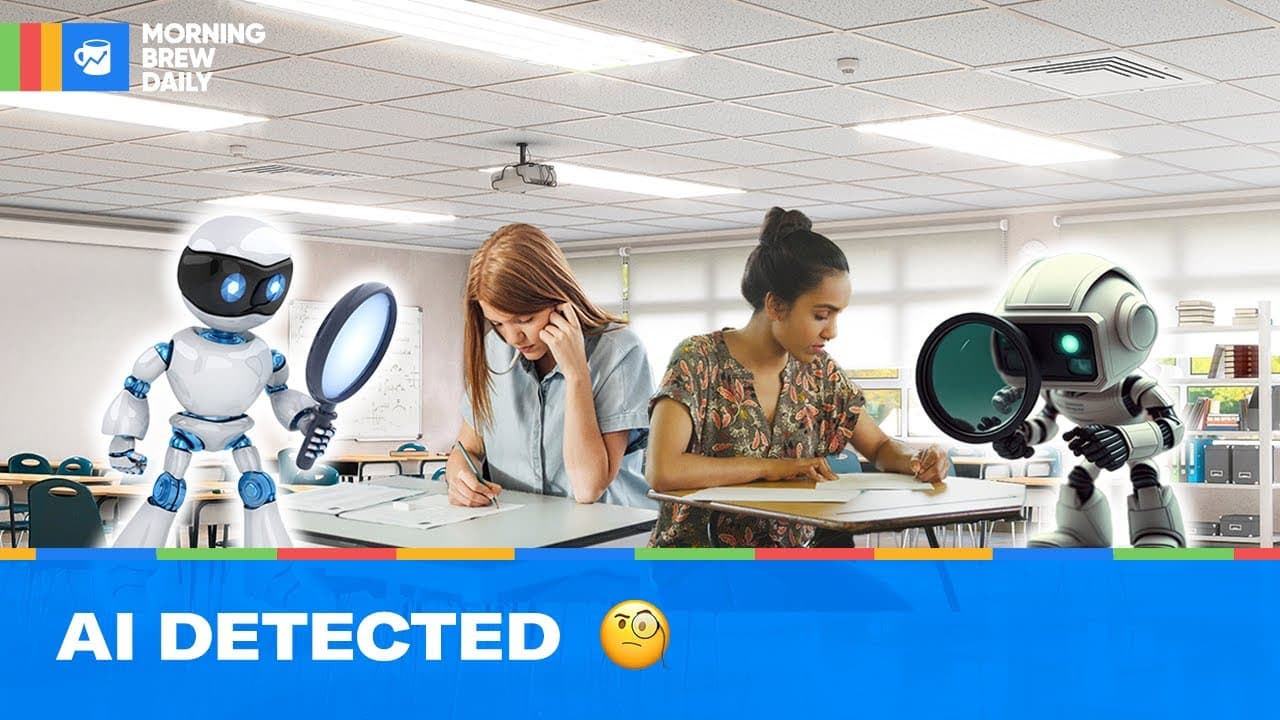
AI detection tools are being used to catch students using AI to write papers, but these tools can be unreliable. Some institutions have stopped using them due to false positives. The challenge lies in distinguishing AI-generated content from original student work, especially for non-native English speakers who face higher false positive rates.
Transcript
Good morning, brew daily show. I'm Neal Freyman and I'm Toby Howell today. Can you own the trademark to a condiment? David Chang wants to find out. And he's burning bridges along the way. Then teachers are catching students using AI to write their papers at an alarming rate. But are the tools they are using reliable? It's Wednesday, April 10th. Tha... Read More
Key Insights
- AI detection tools are increasingly used to identify AI-written student papers.
- Turnitin reports 11% of papers have AI-generated content, with 3% mostly AI-written.
- AI detection tools can produce false positives, impacting students' academic records.
- Some universities have stopped using Turnitin due to reliability concerns.
- AI-generated text is original, complicating plagiarism detection.
- Non-native English speakers face higher false positive rates with AI detectors.
- ChatGPT usage fluctuates with the academic calendar, indicating school-related use.
- AI detection tools' effectiveness and fairness remain debated among educators.
Install to Summarize YouTube Videos and Get Transcripts
Explore YouTube Video Summarizer or Get YouTube Transcript Extractor
Questions & Answers
Q: How do AI detection tools identify AI-written papers?
AI detection tools analyze linguistic patterns and structures that are typical of AI-generated content. They compare these patterns to known AI-written texts to identify similarities. However, this method can lead to false positives, as AI-generated content is original and not directly copied from existing sources.
Q: What are the reliability concerns with AI detection tools?
The main concern is the potential for false positives, where original student work is incorrectly flagged as AI-generated. This can unfairly impact students' academic records. Additionally, non-native English speakers are more likely to be flagged, raising concerns about the fairness and accuracy of these tools.
Q: Why have some universities stopped using Turnitin?
Some universities have stopped using Turnitin due to concerns about the reliability of its AI detection tool. False positives can unfairly damage students' academic reputations, and without a way to confirm AI use, disputes arise between students and educators, leading institutions to reconsider their use of such tools.
Q: How does AI-generated content differ from plagiarism?
AI-generated content is original and not directly copied from existing sources, unlike traditional plagiarism. This makes it challenging to detect using standard plagiarism detection methods. AI detection tools must identify subtle linguistic patterns that indicate AI authorship, which can lead to false positives.
Q: What impact does AI detection have on non-native English speakers?
Non-native English speakers face higher false positive rates with AI detection tools. This is because their writing may unintentionally mimic AI-generated patterns, leading to incorrect flags. This raises concerns about the fairness and accuracy of AI detection tools in diverse educational settings.
Q: How has ChatGPT usage changed over time in education?
ChatGPT usage fluctuates with the academic calendar, indicating that students use it for school-related purposes. Usage typically dips during summer and increases when the school year resumes, suggesting that students rely on AI tools for writing and homework assistance during the academic year.
Q: What is the debate around AI detection tools in education?
The debate centers on whether AI detection tools are a net positive for education. Supporters argue they help maintain academic integrity by identifying AI-written content. Critics, however, highlight issues like false positives and fairness, particularly for non-native English speakers, questioning the overall benefit of these tools.
Q: How do AI detection tools handle AI-generated text?
AI detection tools attempt to identify AI-generated text by analyzing linguistic patterns that are typical of AI output. However, because AI-generated text is original, this approach can lead to false positives. The challenge lies in accurately distinguishing between human and AI-generated content without unfairly penalizing students.
Summary & Key Takeaways
-
AI detection tools are being used to catch students using AI for their papers, but reliability issues persist. Some institutions have stopped using these tools due to false positives, which can unfairly impact students. The challenge is distinguishing AI-generated content from original work, especially for non-native English speakers who face higher false positive rates.
-
Turnitin's AI detection software has reviewed over 200 million papers, with 11% containing likely AI-written content. Despite its use, the software faces criticism for false positives, leading some universities to drop it. The debate continues on whether these tools are beneficial or harmful to education.
-
AI-generated content is original, making it difficult to detect using traditional plagiarism tools. The use of AI in education raises questions about fairness, especially for non-native English speakers who are more likely to be flagged by AI detectors. The effectiveness and fairness of these tools remain a topic of debate.
Read in Other Languages (beta)
Share This Summary 📚
Summarize YouTube Videos and Get Video Transcripts with 1-Click
Try YouTube Summary with ChatGPT & Claude or YouTube Transcript Generator
Explore More Summaries from Morning Brew Daily 📚



Summarize YouTube Videos and Get Video Transcripts with 1-Click
Try YouTube Summary with ChatGPT & Claude or YouTube Transcript Generator