Millions of Americans can't pay rent | 2020 Election
TL;DR
Pandemic exacerbates US eviction crisis, impacting low-wage renters.
Transcript
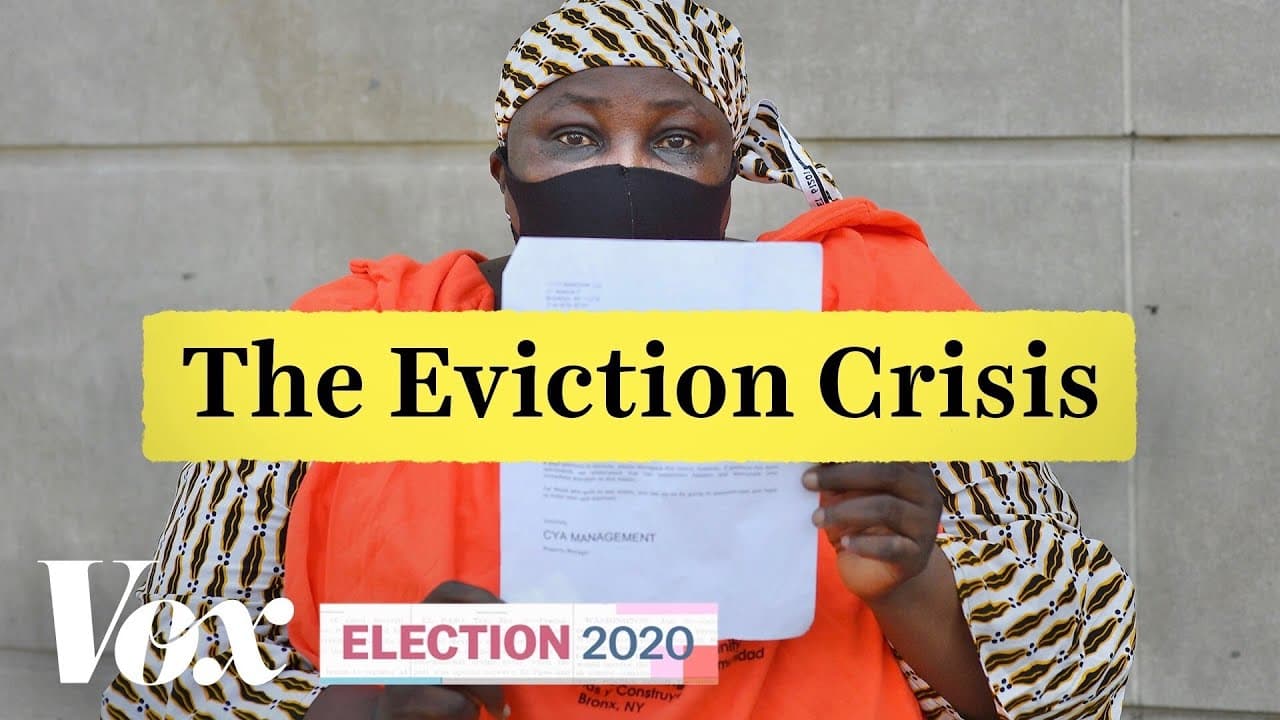
In September of 2020, Emily found a notice on her front door. She was being evicted. “In April, I lost my job due to Covid. So I’m waiting on unemployment, I can’t pay… I’m a mother of a five-month-old… And then the eviction date came... Sorry. It was just a really, really scary time.” Since the pandemic took millions of US jobs in March and April,... Read More
Key Insights
- The pandemic has significantly worsened the eviction crisis in the US, particularly affecting low-wage workers who struggle to pay rent due to job losses.
- Compared to other countries, the US had a higher eviction rate even before the pandemic, with 1 in 40 renters evicted at some point.
- The pandemic led to millions of job losses, but low-wage workers, who are mostly renters, have been the slowest to regain employment.
- While other countries provided direct salary support during lockdowns, the US offered temporary unemployment benefits, which ended in July, leading to increased evictions.
- The CDC issued a temporary halt on evictions, but it required tenants to fill out forms that many were unaware of, limiting its effectiveness.
- Democrats proposed a Rent and Mortgage Cancellation bill to relieve rental debt, while Biden suggested expanding rental vouchers as a long-term solution.
- Evictions disproportionately affect Black and Latinx Americans, who are more likely to rent and earn lower wages.
- The CDC eviction moratorium is set to expire on December 31, potentially leaving millions of renters vulnerable to eviction if no further action is taken.
Install to Summarize YouTube Videos and Get Transcripts
Explore YouTube Video Summarizer or Get YouTube Transcript Extractor
Questions & Answers
Q: How has the pandemic affected the eviction crisis in the US?
The pandemic has significantly worsened the eviction crisis in the US. Many low-wage workers lost their jobs and were unable to pay rent, leading to increased evictions. The temporary unemployment benefits provided some relief, but their expiration in July increased the vulnerability of renters.
Q: What measures have other countries taken to prevent evictions during the pandemic?
Other countries like the UK, France, and Denmark provided direct salary support to workers during lockdowns, ensuring they could pay rent even when businesses were closed. This approach helped prevent mass evictions and provided more stability for renters during the pandemic.
Q: What are the proposed solutions to address the eviction crisis in the US?
Proposed solutions include a Rent and Mortgage Cancellation bill to relieve rental debt and expanding rental vouchers to help more households afford rent. These measures aim to provide immediate relief and address long-term issues in the affordable housing market.
Q: How does the US eviction rate compare to other countries?
The US had a much higher eviction rate even before the pandemic, with 1 in 40 renters experiencing eviction at some point. In comparison, the eviction rate is 1 in 89 in the UK, 1 in 227 in Denmark, and 1 in 25,000 in France, highlighting the severity of the crisis in the US.
Q: What was the impact of the CDC's temporary eviction moratorium?
The CDC's temporary eviction moratorium aimed to halt evictions but required tenants to fill out forms, which many were unaware of. This limited its effectiveness, as landlords and housing courts were not required to inform tenants about the protection, leading to continued evictions.
Q: How do evictions disproportionately affect certain groups in the US?
Evictions disproportionately affect Black and Latinx Americans, who are more likely to rent and earn lower wages. These groups face higher eviction rates and are more vulnerable to the economic impacts of the pandemic, exacerbating existing inequalities in housing stability.
Q: What role did unemployment benefits play in the eviction crisis?
Temporary unemployment benefits provided crucial support to laid-off workers, allowing them to pay rent during the early months of the pandemic. However, the expiration of these benefits in July left many renters unable to afford housing costs, leading to a surge in eviction filings.
Q: What is the potential impact of the CDC eviction moratorium expiring?
The expiration of the CDC eviction moratorium on December 31 could lead to a significant increase in evictions, as millions of renters may be unable to pay overdue rent. Without further government intervention, this could worsen the housing crisis and increase homelessness across the country.
Summary & Key Takeaways
-
The eviction crisis in the US has been exacerbated by the pandemic, disproportionately affecting low-wage workers who have lost jobs and are unable to pay rent. The US had a higher eviction rate than other similar countries even before the pandemic.
-
While other countries provided direct salary support, the US offered temporary unemployment benefits, which ended in July. This led to an increase in evictions as many unemployed individuals could no longer afford rent.
-
Democrats have proposed bills to address the crisis, including rent forgiveness and expanding rental vouchers. However, the CDC's temporary eviction halt requires tenants to fill out forms, limiting its effectiveness, and the moratorium is set to expire soon.
Read in Other Languages (beta)
Share This Summary 📚
Summarize YouTube Videos and Get Video Transcripts with 1-Click
Try YouTube Summary with ChatGPT & Claude or YouTube Transcript Generator
Explore More Summaries from Vox 📚



Summarize YouTube Videos and Get Video Transcripts with 1-Click
Try YouTube Summary with ChatGPT & Claude or YouTube Transcript Generator