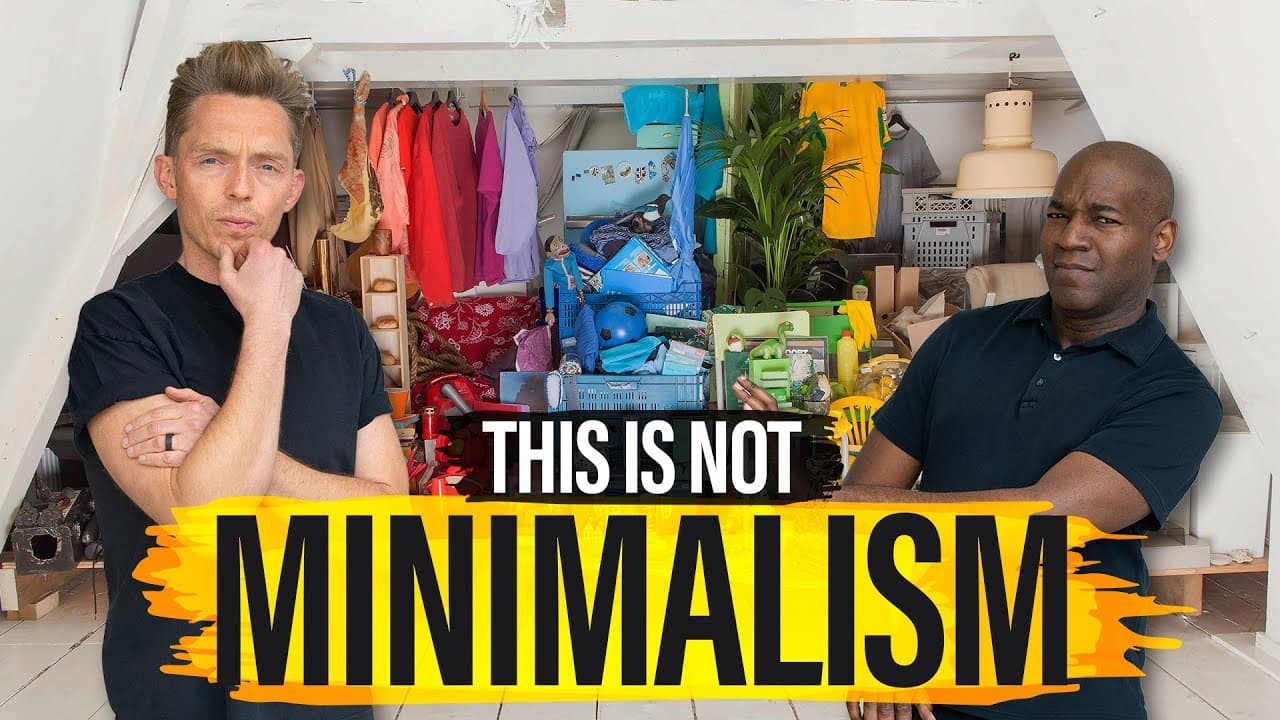
Ep. 386 | This Is NOT Minimalism
TL;DR
Minimalism applies to all aspects of life, not just physical items.
Transcript
hello everybody Welcome to the minimalist podcast where we discuss what it means to live a meaningful life with less my name is Joshua Fields Milburn Ryan Nicodemus is on vacation this week but don't worry he'll be back next week in the meantime we've got malab here hi everybody TK Coleman what it is oh we got the rest of our team here in the studi... Read More
Key Insights
- Minimalism is not just about reducing physical possessions; it's a philosophy that can be applied to all areas of life, including friendships, entertainment, and even historical interests.
- The core question of minimalism is 'How might my life be better with less?' This question can be applied to physical, philosophical, and psychological aspects of life.
- Helping loved ones move on from unfulfilling pursuits is more about providing support than direct help, allowing them to find their own path.
- Consumerism often misleads people into believing that more possessions equate to happiness; minimalism challenges this by focusing on what truly adds value to life.
- Brainstorming is a crucial part of minimalism, as it helps individuals declutter their mental space by becoming comfortable with bad ideas and fostering critical thinking.
- Minimalism encourages setting boundaries rather than strict rules, allowing for flexibility and personal growth in various life aspects.
- The concept of clutter extends beyond physical items and includes career, emotional, and mental clutter, all of which minimalism seeks to address.
- Minimalism is a creative path for those who feel overwhelmed by consumerism, not a consolation prize for those who lack resources.
Install to Summarize YouTube Videos and Get Transcripts
Explore YouTube Video Summarizer or Get YouTube Transcript Extractor
Questions & Answers
Q: How can minimalism apply to most everyday topics?
Minimalism is a philosophy that can be applied to all areas of life, not just physical possessions. It involves asking how life might be better with less, which can relate to reducing mental, emotional, and even philosophical clutter. This approach allows for a more intentional and meaningful life.
Q: Why do most people believe minimalism only applies to physical items?
Many people associate minimalism with physical decluttering because it's the most visible aspect. However, minimalism also addresses mental, emotional, and philosophical clutter. The misconception arises because the physical aspect is more tangible and easier to grasp, but the philosophy itself is much broader.
Q: What is epistemology?
Epistemology is a branch of philosophy concerned with the theory of knowledge. It explores the nature of knowledge, the rationality of belief, and justification. In the context of minimalism, it involves questioning assumptions and beliefs to declutter mental and philosophical space, allowing for clearer thinking and decision-making.
Q: How do we help loved ones move on from fruitless pursuits?
Helping loved ones involves providing support rather than direct help. This means listening, offering a different perspective, and being there as they navigate their path. It's about meeting them where they are and encouraging small, manageable steps towards change, rather than dragging them in a direction they may not be ready for.
Q: What is the difference between helping and supporting?
Helping often involves doing something for someone, which can sometimes lead to dependency or resistance. Supporting, on the other hand, involves being present, listening, and providing a perspective without taking over the process. It's about empowering the person to make their own decisions and find their own path.
Q: Why do you have an issue with those that can afford expensive things?
The issue is not with owning expensive things but with the belief that they bring happiness or fulfillment. Minimalism challenges the consumerist notion that more possessions equate to success and instead focuses on what truly adds value to life. It's about understanding that happiness comes from within, not from external possessions.
Q: What does tire rubber have to do with minimalism?
Tire rubber, like any physical item, can be related to minimalism through its utility and necessity. Minimalism encourages evaluating possessions based on their value and purpose in one's life. If something no longer serves a purpose, like snow tires in a non-snowy area, it may be time to let it go.
Q: How is brainstorming related to minimalism?
Brainstorming is related to minimalism as it involves decluttering mental space and becoming comfortable with bad ideas. This process fosters critical thinking and creativity, allowing individuals to explore possibilities without fear of judgment. It aligns with minimalism's goal of simplifying and focusing on what truly matters.
Summary & Key Takeaways
-
Minimalism is a philosophy that extends beyond reducing physical items. It can be applied to various life aspects, such as friendships, entertainment, and even historical interests. The core idea is to make room for what truly matters by eliminating excess.
-
Helping loved ones transition from unfulfilling roles involves offering support rather than direct help, allowing them to find their own path. Minimalism encourages setting flexible boundaries rather than strict rules, fostering personal growth and intentional living.
-
Consumerism often misleads people into thinking that more possessions bring happiness. Minimalism challenges this notion by focusing on what truly adds value to life. It also encourages brainstorming to declutter mental space and improve critical thinking.
Read in Other Languages (beta)
Share This Summary 📚
Summarize YouTube Videos and Get Video Transcripts with 1-Click
Try YouTube Summary with ChatGPT & Claude or YouTube Transcript Generator
Explore More Summaries from The Minimalists Podcast 📚




Summarize YouTube Videos and Get Video Transcripts with 1-Click
Try YouTube Summary with ChatGPT & Claude or YouTube Transcript Generator