Why buying a house in the US is so hard right now
TL;DR
Homeownership in the US is increasingly unaffordable and inaccessible.
Transcript
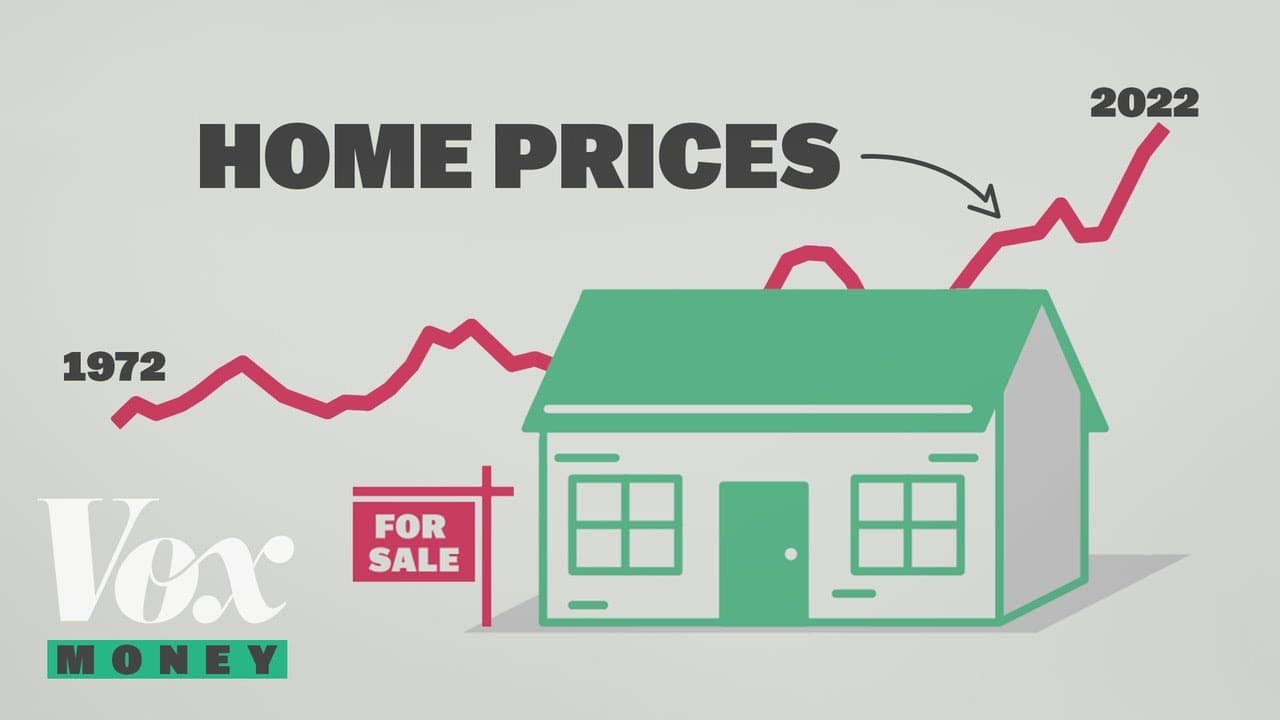
When you buy a home in the US, there is a basic promise: that home values will go up over time. And that is what you're seeing on this chart. Let’s adjust it for inflation... ok... jerkier, but still basically goes up. The story goes like this: Money, by itself, loses value over time - that's inflation. But if you own your home in the US, you own a... Read More
Key Insights
- Homeownership is seen as a pathway to financial stability in the US, but rising costs and stagnant wages are making it less accessible.
- The median home price has increased significantly compared to median income over the past 50 years, making homeownership more challenging.
- Restrictive zoning laws and low homeowner vacancy rates contribute to the high cost and scarcity of homes in the US market.
- Interest rates have generally decreased over the past 50 years, but recent increases have further complicated the homebuying process.
- The burden of homeownership is exacerbated for people of color, who face higher rates of mortgage loan denial.
- The 2008 housing crisis highlighted the volatility of the housing market, showing that home values can decrease significantly.
- Alternative investment options, such as government bonds, offer more stable long-term growth compared to real estate.
- Generational disparities exist in homeownership accessibility, with millennials and Gen Z facing more barriers than previous generations.
Install to Summarize YouTube Videos and Get Transcripts
Explore YouTube Video Summarizer or Get YouTube Transcript Extractor
Questions & Answers
Q: Why is homeownership considered a pathway to financial stability in the US?
Homeownership is seen as a pathway to financial stability because owning a home is an appreciating asset. This appreciation, combined with the ability to use the home as collateral and the potential for selling it at a profit, provides financial security and wealth-building opportunities. Additionally, homeownership is ingrained in US society as a symbol of self-determination and security.
Q: What factors have contributed to the increasing cost of homes in the US?
Several factors have contributed to the increasing cost of homes in the US, including restrictive zoning laws that limit where and how densely homes can be built, low homeowner vacancy rates leading to scarcity, and a lack of housing supply. Additionally, the disparity between rising home prices and stagnant median wages has made homeownership less affordable.
Q: How have interest rates affected the homebuying process over time?
Interest rates have generally decreased over the past 50 years, making monthly mortgage payments more affordable. However, recent increases in interest rates, particularly during efforts to curb inflation, have complicated the homebuying process. Higher interest rates lead to higher monthly payments, making it more challenging for potential buyers to afford homes.
Q: What challenges do people of color face in the homebuying process?
People of color face significant challenges in the homebuying process, including higher rates of mortgage loan denial compared to their white counterparts, regardless of income. This systemic issue exacerbates the barriers to homeownership for these communities, limiting their ability to build wealth and achieve financial stability through homeownership.
Q: How did the 2008 housing crisis impact home values?
The 2008 housing crisis led to a significant decrease in home values, demonstrating the volatility of the housing market. Many homeowners found themselves with properties worth less than their mortgage balances, leading to widespread financial distress and foreclosures. Although home values have since recovered, the crisis highlighted the risks associated with real estate investments.
Q: What alternative investment options exist for those unable to buy a home?
For those unable to buy a home, alternative investment options include government bonds, mutual funds, and the stock market. These investments can offer more stable long-term growth compared to real estate. Government bonds, in particular, are considered low-risk and provide predictable returns, making them an attractive option for building wealth over time.
Q: What generational disparities exist in homeownership accessibility?
Generational disparities in homeownership accessibility are evident, with millennials and Gen Z facing more barriers than previous generations. Factors such as rising home prices, stagnant wages, and increased student loan debt have made it more challenging for younger generations to afford homes, leading to lower homeownership rates compared to their parents.
Q: How do zoning laws impact the housing market in the US?
Zoning laws impact the housing market by regulating where and how densely homes can be built. These laws often restrict the development of new housing, contributing to a limited supply and higher prices. By limiting the availability of land for new construction, zoning laws exacerbate the scarcity of affordable housing and hinder efforts to meet growing demand.
Summary & Key Takeaways
-
Homeownership is considered a key to financial stability in the US, but rising home prices and stagnant wages have made it less accessible. The middle class holds most of its wealth in homes, emphasizing the importance of homeownership.
-
Restrictive zoning laws and low homeowner vacancy rates contribute to high home prices and scarcity. Interest rates have decreased over the long term but have recently increased, complicating the homebuying process.
-
Generational disparities in homeownership exist, with millennials and Gen Z facing more challenges than previous generations. Alternative investments like government bonds offer more stable long-term growth compared to real estate.
Read in Other Languages (beta)
Share This Summary 📚
Summarize YouTube Videos and Get Video Transcripts with 1-Click
Try YouTube Summary with ChatGPT & Claude or YouTube Transcript Generator
Explore More Summaries from Vox 📚




Summarize YouTube Videos and Get Video Transcripts with 1-Click
Try YouTube Summary with ChatGPT & Claude or YouTube Transcript Generator