Why serverless is sometimes GOATED (removing 1,000 image backgrounds in seconds)
TL;DR
Serverless technology can efficiently remove backgrounds from images, presenting cost-effective advantages over dedicated servers.
Transcript
so there's a very interesting debate that I was scrolling through and saw on Twitter where people kind of trying to figure out how could you remove backgrounds from images and there's tons of third party service tools that do this such as replicate but I wanted to explain one of my proposed ideas as to why I think using serverless and lambdas could... Read More
Key Insights
- 😭 Leveraging AWS Lambda for image background removal allows for efficient scaling that enhances processing speed without manual server management.
- 😒 The use of SQS in conjunction with Lambda enables effective message queuing and batch processing, ensuring that high workloads are handled smoothly.
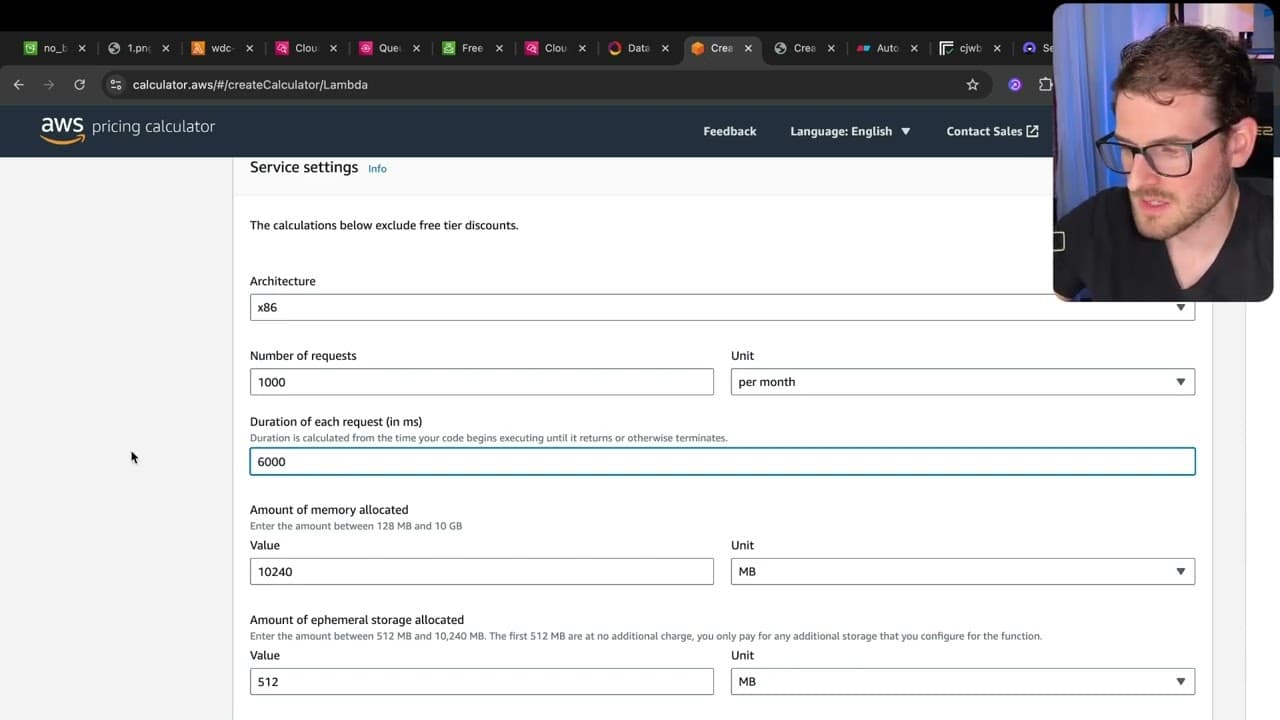
- 😒 Serverless architecture provides a cost-effective solution for varying workloads, offering charge-per-use pricing without the financial commitment of dedicated servers.
- 👤 The streamlined setup of post-processing workflows with S3 helps maintain organized storage and retrieval of user-uploaded images.
- 🥳 Security and privacy concerns drive preference for in-house processing over third-party services, especially for sensitive user data.
- 🛟 Analytical performance data can help identify when dedicated server setups become more economically viable compared to serverless options.
- 💐 Developers focusing on rapid prototyping benefit from serverless architectures, which lower the barriers for deploying innovative solutions.
Install to Summarize YouTube Videos and Get Transcripts
Explore YouTube Video Summarizer or Get YouTube Transcript Extractor
Questions & Answers
Q: What is the main advantage of using AWS Lambda for image processing?
The primary advantage of using AWS Lambda for image processing is its ability to scale automatically, allowing for processing of a high volume of requests without the need for dedicated resources. This results in faster processing times and reduced infrastructure management, enabling developers to focus on building features rather than maintaining servers. Lambda's built-in retry logic and cost-effectiveness further enhance its appeal for handling bursty workloads.
Q: How does the serverless approach handle increased image processing demands?
The serverless approach handles increased image processing demands by utilizing AWS Lambda's automatic scaling capabilities. When there’s a surge in requests, Lambda can quickly spin up multiple instances to process images concurrently, thereby reducing wait times. The implementation also leverages SQS for queuing messages, enabling batch processing and preventing overload on the system, which guarantees efficient handling of burst traffic.
Q: What are the privacy considerations mentioned for using serverless over third-party services?
Privacy considerations include the potential risks associated with uploading sensitive images to third-party services. The speaker advocates for processing images in-house using serverless technology to ensure that user data remains within the organization's control. This approach minimizes exposure to data leakage or misuse, aligning with a growing emphasis on data privacy and security especially concerning personal or sensitive images.
Q: Can you explain the cost comparison between a dedicated server and serverless computing?
In terms of cost, dedicated servers incur fixed monthly charges, which can lead to higher expenses if traffic increases beyond the server's processing capacity, requiring additional resources and management. Conversely, serverless computing charges based on usage, which can be very economical for lower volumes but might surpass dedicated server costs at high transaction volumes. The speaker illustrates this by noting how many images would need to be processed before a dedicated server becomes more cost-effective.
Q: What is the role of S3 buckets in the image processing pipeline?
S3 buckets play a crucial role in the image processing pipeline by storing the original images that need background removal. The serverless architecture fetches images from these buckets for processing, and upon completion, the resulting images are saved back to a different prefix in S3. This structure allows for organized data management and seamless integration with AWS Lambda for efficient processing workflows.
Q: What insights can be gained about the use of serverless technology from the content?
The insights include that serverless technology is highly effective for bursty workloads, enhancing the speed and efficiency of processing tasks. It minimizes infrastructure complexities compared to dedicated servers, providing more time for developers to focus on application features. Additionally, the flexibility of serverless architecture allows for rapid iterations and deployment, making it ideal for startups and businesses testing new ideas without significant upfront costs.
Q: What challenges might arise when using serverless approaches?
While serverless technology offers numerous benefits, challenges may include managing cold start times for Lambda functions, which can delay processing when functions haven't been invoked for a while. Moreover, there's the risk of unexpected costs if workloads exceed free tier limits, along with the necessity for developers to ensure efficient handling of concurrent executions and proper configurations to avoid throttling during high demand.
Q: How does the speaker's experience influence their presentation on serverless technology?
The speaker’s extensive experience with AWS services and serverless solutions provides a knowledgeable perspective that highlights the feasibility and advantages of this approach. Their practical insights into implementation challenges and performance comparisons with dedicated servers lend credibility to their arguments. This background shapes a strong advocacy for serverless computing, especially for businesses seeking rapid development and scalability.
Summary & Key Takeaways
-
The content describes a serverless approach using AWS Lambda to efficiently process thousands of images to remove backgrounds, using automatic scaling and batch processing techniques.
-
It contrasts serverless solutions with dedicated server setups, highlighting that while serverless can initially seem more costly, it offers significant scalability and flexibility for fluctuating workloads.
-
The speaker emphasizes the importance of privacy, showing a preference for in-house processing over third-party services for handling potentially sensitive user images.
Read in Other Languages (beta)
Share This Summary 📚
Summarize YouTube Videos and Get Video Transcripts with 1-Click
Try YouTube Summary with ChatGPT & Claude or YouTube Transcript Generator
Explore More Summaries from Web Dev Cody 📚

Summarize YouTube Videos and Get Video Transcripts with 1-Click
Try YouTube Summary with ChatGPT & Claude or YouTube Transcript Generator