China's trillion dollar plan to dominate global trade
TL;DR
China's Belt and Road Initiative aims to reroute global trade.
Transcript
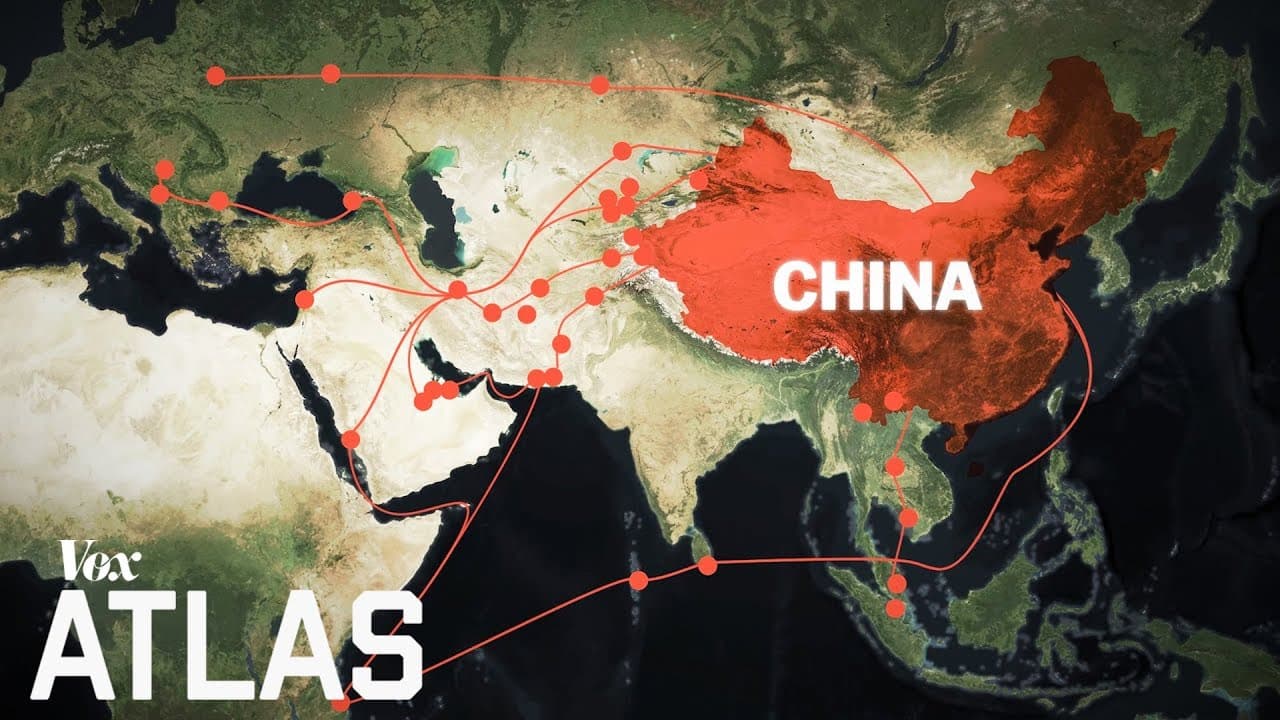
There’s a new highway in Pakistan. And a new rail terminal in Kazakhstan. A sea port in Sri Lanka recently opened. As well as this bridge in rural Laos. What’s interesting is that they’re all part of one country’s project that spans 3 continents and touches over 60% of the world’s population. If you connect the dots, it’s not hard to see which coun... Read More
Key Insights
- China's Belt and Road Initiative (BRI) is an ambitious infrastructure project that spans over 60 countries and aims to reroute global trade routes, enhancing China's influence on the world stage.
- The BRI consists of two components: the overland Economic Belt and the Maritime Silk Road, which together create new trade corridors and seaports to facilitate global trade with China.
- China's involvement in BRI projects often includes direct participation in construction, benefiting Chinese firms and boosting China's economy despite the risks associated with lending to unstable countries.
- The BRI's flagship project in Pakistan highlights the economic benefits for participating countries, while also securing strategic trade routes for China, particularly for oil and gas from the Middle East.
- China's approach to the BRI involves offering loans with fewer conditions, making it attractive to less-democratic and authoritarian regimes, which may struggle to repay, posing a financial risk.
- Strategically, the BRI enables China to establish a 'String of Pearls'—a series of naval bases in the Indian Ocean—enhancing its military presence and securing vital shipping routes.
- China's growing influence through the BRI challenges the United States' status as the world's leading superpower, as the US reduces its global investments and influence.
- The BRI is not just an economic initiative; it is a geopolitical strategy for China to leverage power and become a global leader by building international relationships and controlling global trade.
Install to Summarize YouTube Videos and Get Transcripts
Explore YouTube Video Summarizer or Get YouTube Transcript Extractor
Questions & Answers
Q: What is China's Belt and Road Initiative (BRI)?
China's Belt and Road Initiative (BRI) is a massive infrastructure project aimed at rerouting global trade by constructing new trade routes and seaports across Asia and Africa. The initiative involves over 60 countries and is designed to increase China's influence on the world stage by facilitating global trade with China.
Q: What are the two main components of the BRI?
The BRI consists of two main components: the overland Economic Belt and the Maritime Silk Road. The Economic Belt involves creating new trade corridors overland, while the Maritime Silk Road focuses on a chain of seaports, together facilitating global trade with China and enhancing its strategic positioning.
Q: How does the BRI benefit China's economy?
The BRI benefits China's economy by involving Chinese firms in construction projects, boosting their business and securing vital trade routes for imports, particularly oil and gas from the Middle East. This involvement also strengthens China's economy by ensuring access to resources and markets through improved trade infrastructure.
Q: Why is the BRI attractive to less-democratic countries?
The BRI is attractive to less-democratic countries because China offers loans with fewer conditions compared to Western investments, making it easier for these countries to participate. This approach appeals to authoritarian regimes and those with corruption issues, despite the financial risks associated with potential repayment problems.
Q: What is the 'String of Pearls' theory in relation to the BRI?
The 'String of Pearls' theory suggests that China is establishing a series of naval bases in the Indian Ocean as part of the BRI. These bases enhance China's military presence and allow it to secure vital shipping routes, achieving significant strategic goals beyond just economic benefits.
Q: How does the BRI challenge the United States' global dominance?
The BRI challenges the United States' global dominance by increasing China's influence through international relationships and control over global trade routes. As the US reduces its global investments, China's strategic positioning and infrastructure projects enable it to leverage power and potentially become a global leader.
Q: What are the financial risks associated with the BRI?
The financial risks associated with the BRI include lending to unstable and less-democratic countries that may struggle to repay loans. This creates potential economic vulnerabilities for China, as some countries involved in the BRI are at high risk of being unable to fulfill their financial obligations.
Q: What strategic goals does China achieve through the BRI?
Through the BRI, China achieves strategic goals such as enhancing its military presence via the 'String of Pearls,' securing vital trade routes for resource imports, and increasing global influence by building international relationships. These goals extend beyond economic benefits, positioning China as a potential global leader.
Summary & Key Takeaways
-
China's Belt and Road Initiative is a multi-trillion dollar infrastructure project aimed at rerouting global trade and increasing China's influence. It involves constructing new trade routes and seaports across Asia and Africa, with over 60 countries participating, despite the financial risks posed by lending to unstable regimes.
-
The BRI consists of an overland Economic Belt and a Maritime Silk Road, creating new trade corridors and enhancing China's strategic positioning. China's involvement in construction boosts its economy and secures vital trade routes, particularly for oil and gas from the Middle East.
-
China's BRI is a geopolitical strategy to challenge the US's global dominance by building international relationships and controlling trade. The initiative is attractive to less-democratic countries due to fewer loan conditions, but poses financial risks due to potential repayment issues.
Read in Other Languages (beta)
Share This Summary 📚
Summarize YouTube Videos and Get Video Transcripts with 1-Click
Try YouTube Summary with ChatGPT & Claude or YouTube Transcript Generator
Explore More Summaries from Vox 📚


Summarize YouTube Videos and Get Video Transcripts with 1-Click
Try YouTube Summary with ChatGPT & Claude or YouTube Transcript Generator