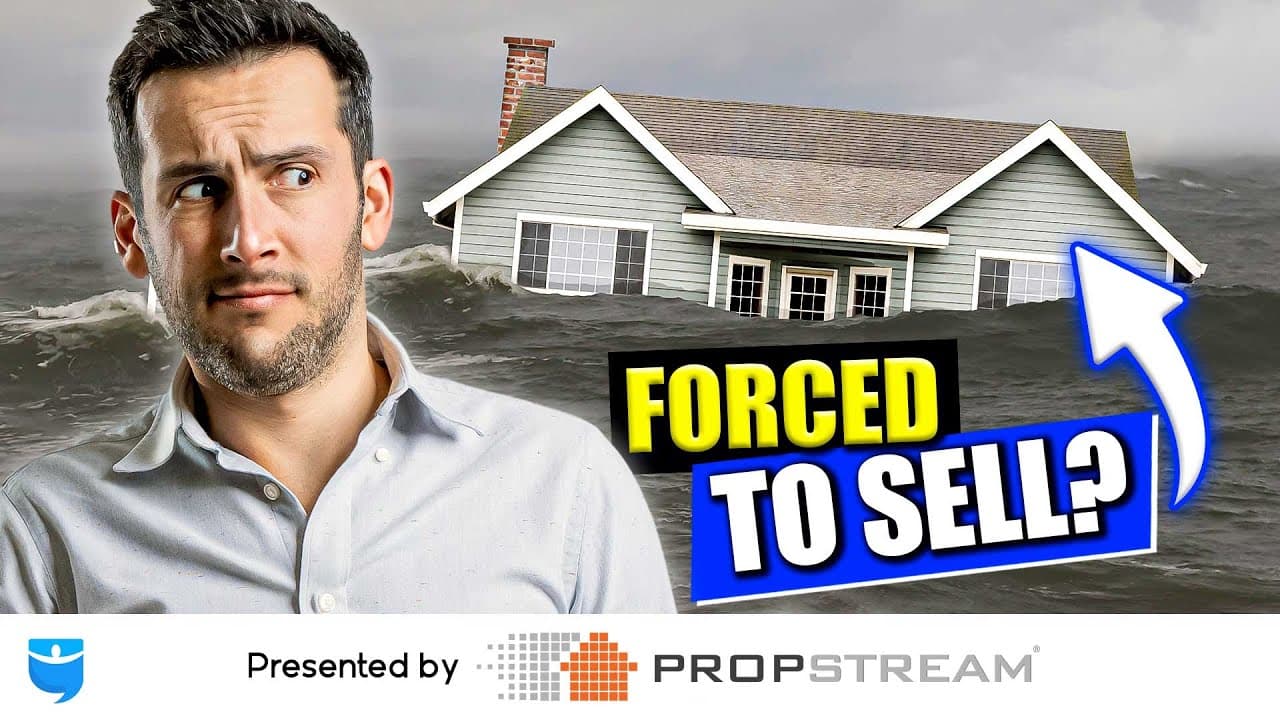
Could Negative Equity Trigger a Housing Crisis?
TL;DR
Negative equity occurs when homeowners owe more on their mortgages than their homes are worth, potentially leading to a housing market downturn. Currently, the national risk is low, with only 2% of homeowners underwater. However, some regions face higher risks, and homeowners should consider strategies like making consistent payments or renting out properties to mitigate potential issues.
Transcript
home prices at least on a national basis are about flat year-over-year despite higher and continuing to climb mortgage rates but certain areas around the country have seen declines some of them are even up to about 10% which is pretty significant and the last time we saw property values decline like this was back during the great financial crisis a... Read More
Key Insights
- Negative equity occurs when a homeowner owes more on their mortgage than the property's market value.
- Being underwater on a mortgage doesn't directly lead to foreclosure unless payments are missed.
- Only about 2% of U.S. homeowners are currently underwater, a significant decrease from 26% during the 2008 crisis.
- Some regions, like Mississippi and D.C., have higher rates of underwater mortgages and face greater risks.
- Homeowners with adjustable-rate mortgages or low down payments are more vulnerable to negative equity.
- Forced selling, due to inability to pay mortgages, can exacerbate negative equity situations.
- The national housing market is strong, with average homeowner equity at $290,000.
- Strategies to avoid foreclosure include making consistent payments, adding property value, or renting out the home.
Install to Summarize YouTube Videos and Get Transcripts
Explore YouTube Video Summarizer or Get YouTube Transcript Extractor
Questions & Answers
Q: What is negative equity in real estate?
Negative equity occurs when the outstanding balance on a homeowner's mortgage exceeds the current market value of the property. This situation is often referred to as being 'underwater.' It poses financial risks to both homeowners and lenders, as it can lead to losses if the property is sold for less than the mortgage balance.
Q: How does negative equity affect homeowners?
Negative equity affects homeowners by limiting their ability to sell their property without incurring a loss. If they owe more on their mortgage than the home is worth, they may have to bring additional funds to closing to pay off the loan. This can also restrict refinancing options and increase the risk of foreclosure if they cannot make mortgage payments.
Q: What regions in the U.S. are most at risk for underwater mortgages?
Regions like Mississippi, Washington D.C., Louisiana, and West Virginia currently have higher percentages of underwater mortgages compared to the national average. These areas face greater risks due to economic factors, higher foreclosure rates, and specific challenges within their housing markets.
Q: How does forced selling contribute to a housing market downturn?
Forced selling occurs when homeowners must sell their property because they can't afford mortgage payments, often due to job loss or income reduction. If the home is underwater, the sale may not cover the mortgage balance, leading to financial losses for both homeowners and banks. This can put downward pressure on home prices, potentially causing a market downturn.
Q: How did the 2008 financial crisis relate to negative equity?
The 2008 financial crisis saw a surge in negative equity due to subprime lending and a collapse in housing prices. Many homeowners defaulted on their mortgages as they owed more than their homes' worth, leading to widespread foreclosures. This created a negative feedback loop, further depressing home values and tightening credit.
Q: What measures can homeowners take to avoid foreclosure if underwater?
Homeowners can avoid foreclosure by continuing to make mortgage payments, even if the home is underwater. They might also consider renting out the property to cover mortgage costs, making value-adding renovations, or selling before the situation worsens. These strategies can help maintain financial stability while waiting for market recovery.
Q: Are adjustable-rate mortgages riskier in terms of negative equity?
Adjustable-rate mortgages (ARMs) can be riskier because interest rates may rise, increasing monthly payments. If homeowners are unable to afford these higher payments, they may default, especially if the property value declines. This increases the likelihood of negative equity, as the mortgage balance remains high while the property's market value drops.
Q: What is the current state of U.S. homeowner equity?
As of the latest reports, the average U.S. homeowner has approximately $290,000 in equity, the highest in history. This indicates a strong national housing market, with most homeowners having significant financial security in their properties. However, regional disparities exist, with some areas experiencing higher rates of negative equity.
Summary & Key Takeaways
-
Negative equity, or being underwater, is when a homeowner owes more on their mortgage than the home's market value. Currently, about 2% of U.S. homeowners face this issue, a significant improvement from the 2008 financial crisis peak of 26%. While the national market remains strong, some regions still face higher risks.
-
Key risk factors for negative equity include adjustable-rate mortgages, low down payments, and regional economic downturns. Homeowners can mitigate risks by making consistent mortgage payments, adding value through renovations, or renting out properties to cover mortgage costs.
-
Despite some regional vulnerabilities, the overall U.S. housing market is stable, with record-high average homeowner equity. Homeowners in high-risk areas should remain vigilant and consider strategies like renting or selling before going underwater to avoid financial strain.
Read in Other Languages (beta)
Share This Summary 📚
Summarize YouTube Videos and Get Video Transcripts with 1-Click
Try YouTube Summary with ChatGPT & Claude or YouTube Transcript Generator
Explore More Summaries from BiggerPockets 📚





Summarize YouTube Videos and Get Video Transcripts with 1-Click
Try YouTube Summary with ChatGPT & Claude or YouTube Transcript Generator