The Growing Influence of the BRICS in Global Politics and Economics
TL;DR
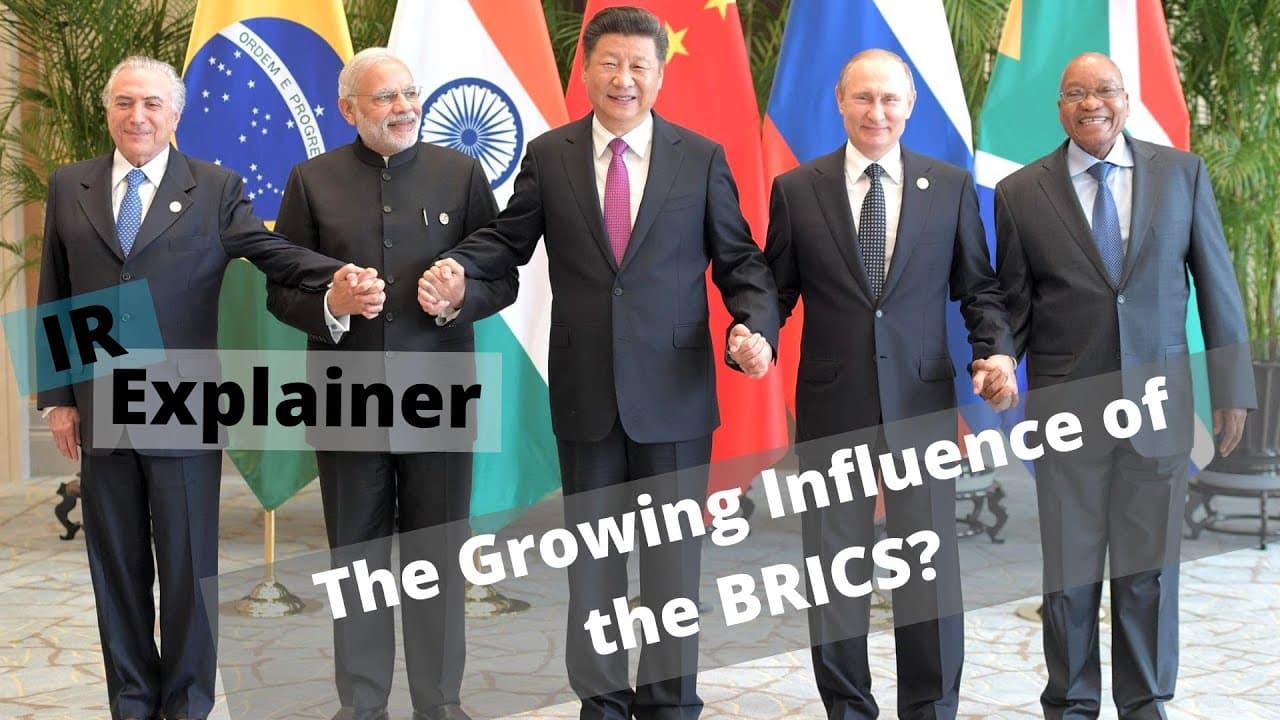
The BRICS (Brazil, Russia, India, China, and South Africa) are challenging the dominance of Western countries in global politics and economics through their growing influence and collective power.
Transcript
over the past couple of decades a new political and economic Force has emerged on the world stage challenging the traditional dominance of the United States and other Western countries this group known as the brics is made up of five major emerging economies Brazil Russia India China and South Africa today we'll explore the growing influence of the... Read More
Key Insights
- 🌐 The BRICS collectively represent a significant portion of the world's population, GDP, land coverage, and global trade.
- ✊ Power transition theory explains how emerging states challenge the established order to redefine the rules of the international system.
- 🌐 The BRICS exert their influence through the establishment of alternative financial institutions and shaping global norms and values.
- 💗 Their growing influence has implications for global security, including concerns about potential conflicts and great power competition.
- 👥 The BRICS are an influential group in global politics and present a challenge to American hegemony.
- 🇸🇦 Other countries, such as Saudi Arabia, have expressed interest in joining the BRICS group.
- 🥺 The UN and global development system are still predominantly controlled by Western donors, leading to calls for increased inclusion of emerging economies.
Install to Summarize YouTube Videos and Get Transcripts
Explore YouTube Video Summarizer or Get YouTube Transcript Extractor
Questions & Answers
Q: Who coined the term "BRICS"?
The term "BRICS" was coined by Jim O'Neill, an economist at Goldman Sachs, in 2001 to describe the four fast-growing economies of Brazil, Russia, India, and China. South Africa was added to the group in 2010.
Q: How do the BRICS countries challenge Western dominance in global politics and economics?
The BRICS countries challenge Western dominance through their increasing political influence, rapid economic growth, and the establishment of alternative financial institutions like the New Development Bank.
Q: What is power transition theory and how does it explain the rise of BRICS?
Power transition theory suggests that as emerging states gain relative power, they are likely to challenge the established order to better suit their interests. The BRICS' economic growth and political influence have enabled them to challenge the dominance of Western countries in the global system.
Q: What are the implications of the BRICS' growing influence for global security?
The BRICS' growing influence, particularly Russia's resurgence and China's military modernization, raises concerns about potential conflicts and a renewed focus on great power competition in Eastern Europe, the Middle East, and the Asia-Pacific region.
Summary & Key Takeaways
-
The BRICS, comprising Brazil, Russia, India, China, and South Africa, collectively represent a significant portion of the world's population, GDP, land coverage, and global trade.
-
Power transition theory explains how emerging states like BRICS challenge the established order to redefine the rules of the international system.
-
BRICS exert their influence through the establishment of the New Development Bank, shaping global norms and values, and implications for global security.
Read in Other Languages (beta)
Share This Summary 📚
Summarize YouTube Videos and Get Video Transcripts with 1-Click
Try YouTube Summary with ChatGPT & Claude or YouTube Transcript Generator
Explore More Summaries from Noah Zerbe 📚
Summarize YouTube Videos and Get Video Transcripts with 1-Click
Try YouTube Summary with ChatGPT & Claude or YouTube Transcript Generator