Economic Policy After the Omnibus
TL;DR
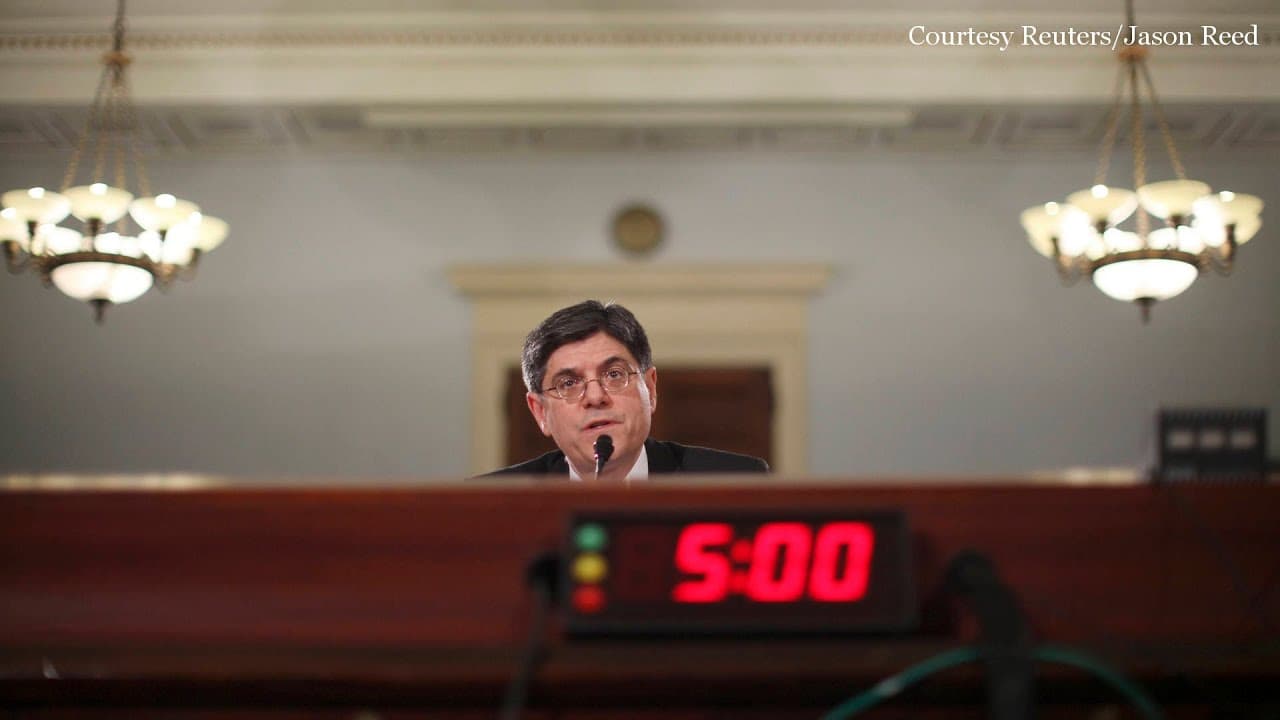
Jacob Lew discusses U.S. economic recovery and international trade.
Transcript
BUSSEY: Welcome everybody. We're going to go a few minutes later than planned, to about 9:20, and we'll have a good opportunity for a robust question-and-answer session. So, please, be thinking of some robust questions as we go along in our conversation this morning. Just a reminder that this is on the record. When you ask your questions later on, ... Read More
Key Insights
- The U.S. is starting the year with economic tailwinds, with Congress moving towards normalcy, reducing uncertainty and boosting confidence.
- The December jobs report was an anomaly, but the overall trend shows economic strength, with a focus needed on growth and job creation.
- The budget agreement is easing fiscal constraints, which should help stimulate economic growth and reduce fiscal drag.
- Long-term unemployment remains a concern, with discussions on extending unemployment benefits to support economic activity.
- The debt ceiling deadline poses a potential risk, with Lew emphasizing the need for Congress to act promptly to avoid undermining confidence.
- Europe is showing signs of recovery, but needs to stimulate domestic demand to achieve sustainable growth.
- China's economic reform efforts are crucial for global economic stability, with a focus on market-driven policies.
- The U.S. is pushing for high-standard trade agreements in Asia and Europe, with fast-track authority seen as essential for successful negotiations.
Install to Summarize YouTube Videos and Get Transcripts
Explore YouTube Video Summarizer or Get YouTube Transcript Extractor
Questions & Answers
Q: How is the U.S. economy starting the year according to Jacob Lew?
Jacob Lew states that the U.S. economy is starting the year with economic tailwinds rather than headwinds. He attributes this to Congress moving towards normalcy and away from brinksmanship, which has been boosting both domestic and international confidence. He emphasizes that while the U.S. is not completely out of the woods, the trend in economic statistics, including job statistics and confidence, has been strong across sectors.
Q: What does Jacob Lew say about the December jobs report?
Jacob Lew advises against overreacting to the December jobs report, which showed a weak number. He emphasizes the importance of looking at the overall trend rather than month-to-month fluctuations. Lew suggests that the December report might be an anomaly and stresses the need to focus on promoting growth and investment. He also highlights the importance of extending unemployment benefits as a macroeconomic question to support economic activity.
Q: What are the potential risks related to the debt ceiling according to Lew?
Jacob Lew warns that the debt ceiling deadline poses a significant risk to the U.S. economy. He stresses that failure to act on the borrowing authority could hurt the country's standing and undermine confidence. Lew emphasizes that Congress needs to act promptly to avoid the kind of brinksmanship that causes uncertainty and anxiety in markets and among consumers. He calls for Congress to extend the debt limit as quickly and with as little drama as possible.
Q: How does Lew view the economic situation in Europe?
Jacob Lew acknowledges the progress Europe has made since 2012 but notes that it is not completely out of the woods. He emphasizes the need for surplus countries to invest more and create domestic demand to achieve higher growth. Lew mentions that while Europe has turned the corner from negative to small positive growth, there is inconsistency and fragmentation in financial markets. He calls for more investment in infrastructure and domestic demand to support Europe's economy.
Q: What does Lew say about China's economic reforms?
Jacob Lew expresses confidence that China is intent on pursuing economic reforms focused on market-driven policies. He highlights the importance of market-determined exchange rates and competitive allocation of capital. Lew notes that while intentions are critical, results are what matter. He emphasizes that China's reforms are in its own interest and that the U.S. will continue to engage with China to encourage progress in these areas.
Q: What is Lew's stance on new trade agreements?
Jacob Lew is optimistic about the progress being made in negotiating high-standard trade agreements in Asia (TPP) and Europe (TTIP). He emphasizes the importance of fast-track authority from Congress to ensure that these agreements can be successfully finalized. Lew notes that setting high-quality standards is crucial for the future of trade relations and that the U.S. is committed to working with Congress to achieve bipartisan support for trade promotion authority.
Q: How does Lew view the role of the IMF?
Jacob Lew reaffirms the U.S. commitment to the IMF, emphasizing its importance to U.S. economic well-being. He acknowledges the need to finalize the ratification of the 2010 agreement, which aims to rebalance shares of interest in the IMF while maintaining the U.S. controlling voice. Lew highlights the critical role of the IMF in global economic stability and the U.S. commitment to fulfilling its obligations.
Q: What does Lew say about financial regulatory reform in Europe?
Jacob Lew acknowledges the challenges Europe faces in achieving financial regulatory reform, given the multiple countries and legislatures involved. He notes the progress made in banking reform but emphasizes the need for further action. Lew highlights the importance of harmonizing international standards without weakening them and stresses the need to address current risks, such as shadow banking and cross-border resolution, to ensure financial stability.
Summary & Key Takeaways
-
Jacob Lew emphasizes the importance of returning to normalcy in Congress to boost confidence both domestically and internationally. He notes the economic tailwinds as the U.S. enters 2014, with a focus on reducing fiscal constraints through the budget agreement.
-
The December jobs report is seen as an anomaly, with Lew urging not to overreact to monthly fluctuations. He highlights the importance of focusing on long-term unemployment and extending benefits to sustain economic activity.
-
Internationally, Lew discusses the need for Europe to stimulate domestic demand and China's focus on market-driven reforms. He also stresses the importance of high-standard trade agreements, with fast-track authority crucial for their success.
Read in Other Languages (beta)
Share This Summary 📚
Summarize YouTube Videos and Get Video Transcripts with 1-Click
Try YouTube Summary with ChatGPT & Claude or YouTube Transcript Generator
Explore More Summaries from Council on Foreign Relations 📚


Summarize YouTube Videos and Get Video Transcripts with 1-Click
Try YouTube Summary with ChatGPT & Claude or YouTube Transcript Generator