Are University Admissions Biased? | Simpson's Paradox Part 2
TL;DR
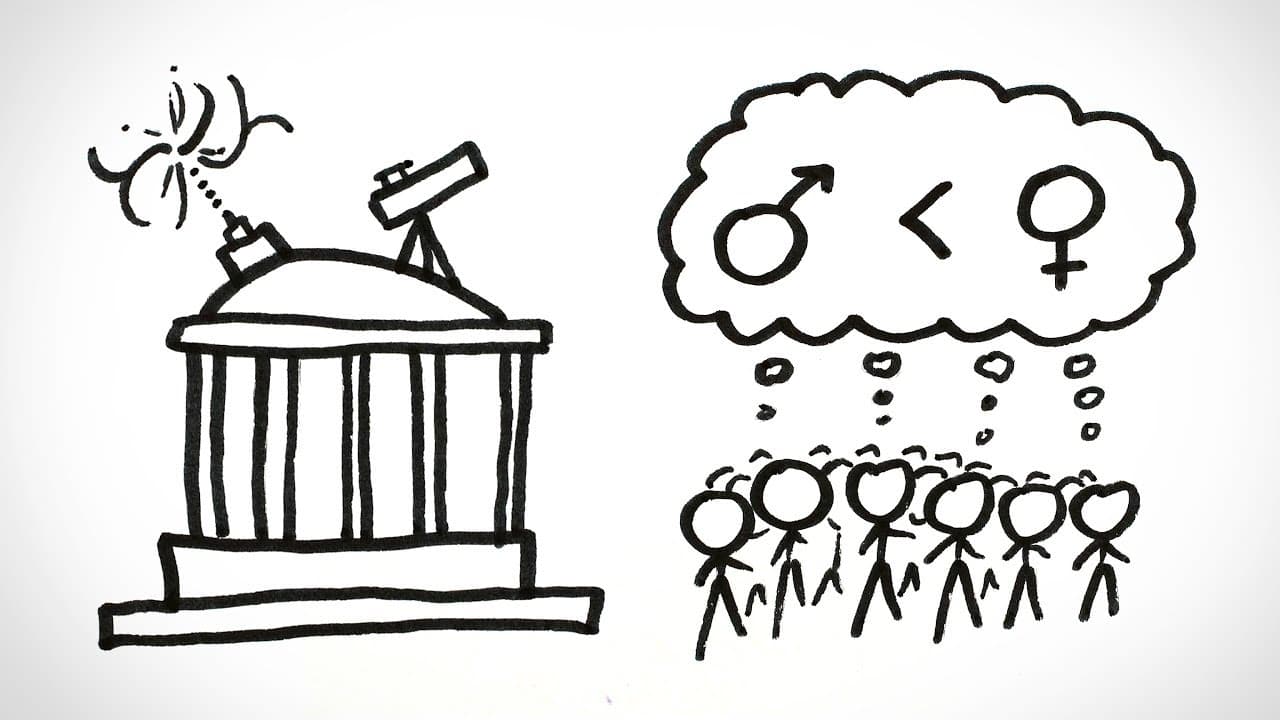
Despite seemingly biased acceptance rates, a careful analysis reveals that the unequal distribution of applicants across departments leads to disparities in acceptance rates at the university level.
Transcript
Imagine a future cat-topia where both cats and people are applying to the physics and astronomy departments. In astronomy, 2 cats are accepted and 2 are rejected, while 1 human is accepted and 1 is rejected. In physics 1 cat gets in and 2 don't, while 2 humans get in 4 don't. So, overall at the university, 3 cats are accepted and 4 rejected for a 4... Read More
Key Insights
- ☠️ The acceptance rates at the university level may appear biased, but a deeper analysis reveals that the departmental imbalance in applicants is the primary cause.
- 🧑🏭 Gender disparities in admissions can result from factors such as societal biases, department reputations, and applicant preferences.
- 🥺 Simpson's statistical paradox highlights how the distribution of applicants across departments can lead to unequal representation at the university level.
Install to Summarize YouTube Videos and Get Transcripts
Explore YouTube Video Summarizer or Get YouTube Transcript Extractor
Questions & Answers
Q: Is the university discriminating against humans in its application process?
No, the university is not discriminating against humans. The apparent unfairness in acceptance rates is due to the difference in the number of cats and humans applying to each department.
Q: What caused the unequal distribution of women and men across departments?
The unequal distribution of women and men across departments can be caused by various factors, such as department reputations, societal biases, and the preferences of applicants based on gendered career stereotypes.
Q: How did Simpson's paradox come into play at Berkeley in the 1970s?
In the 1970s, Berkeley realized it was admitting a higher percentage of men than women. However, careful analysis revealed that women tended to apply to departments with fewer places, while men applied to less competitive departments. This resulted in an unequal distribution of women and men at the university overall.
Q: What did the Berkeley study conclude about gender bias in admissions?
The study concluded that while there was no bias in the admissions system, biases existed at the departmental and societal level. Women were often directed towards fields with fewer resources and poorer employment prospects, contributing to the unequal opportunities in education and work.
Summary & Key Takeaways
-
Cats and humans applying to the physics and astronomy departments at a university face varying acceptance rates.
-
The apparent unfairness at the university level is due to an imbalance in the number of cats and humans applying to each department.
-
Simpson's statistical paradox is illustrated, highlighting how departmental imbalances can lead to disparities in overall admissions.
Read in Other Languages (beta)
Share This Summary 📚
Summarize YouTube Videos and Get Video Transcripts with 1-Click
Try YouTube Summary with ChatGPT & Claude or YouTube Transcript Generator
Explore More Summaries from minutephysics 📚






Summarize YouTube Videos and Get Video Transcripts with 1-Click
Try YouTube Summary with ChatGPT & Claude or YouTube Transcript Generator