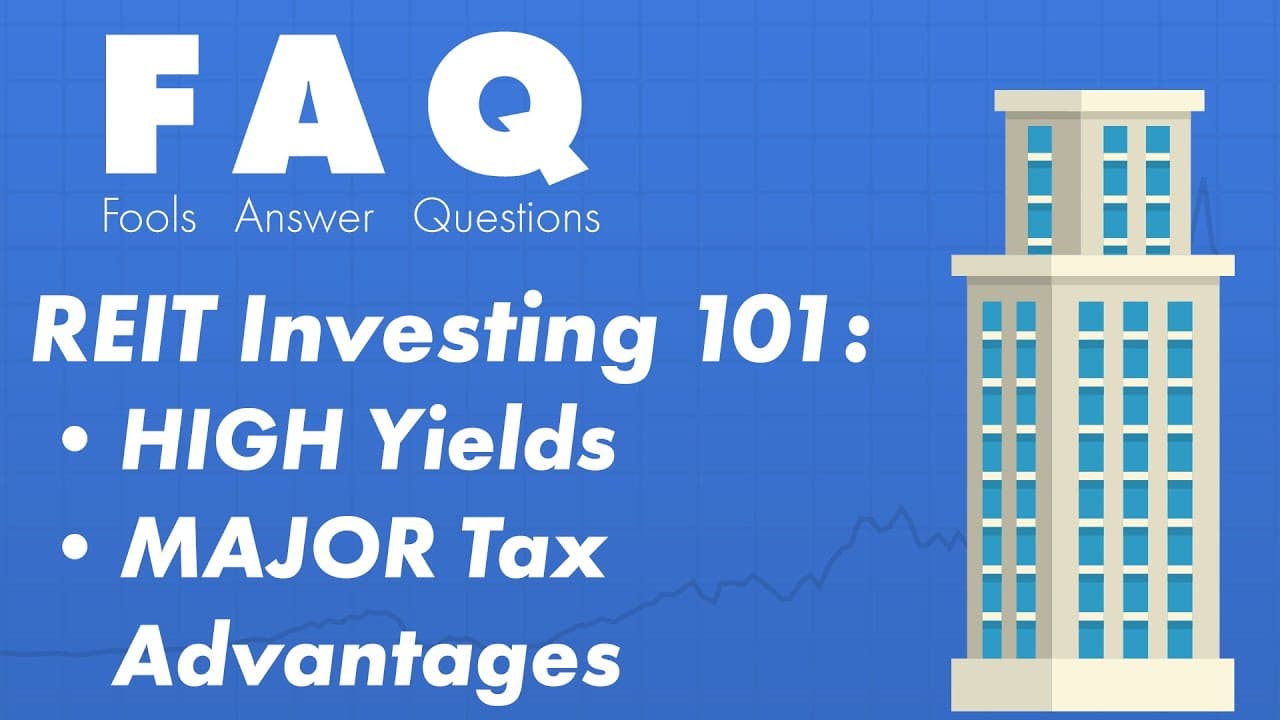
REIT Investing 101: Real Estate + High Yields
TL;DR
REITs are unique investment vehicles that allow investors to pool their money and invest in real estate assets, providing growth, income, and diversification to their portfolios. They offer tax advantages and can be a source of reliable income for long-term investors.
Transcript
Deidre Woollard: You've probably heard the term REIT, but may not know what it is. Real estate investment trusts, or REITs, can be a fantastic way to add growth and income to your overall portfolio while adding diversification at the same time. I'm Deidre Woollard, editor at Millionacres, the real estate investing website created by The Motley Fool... Read More
Key Insights
- 👻 REITs allow everyday investors to access real estate assets and offer the potential for growth, income, and diversification.
- 🔬 They must meet specific criteria to be classified as REITs, including investing primarily in real estate and paying out a significant portion of their taxable income.
- 🚕 REITs enjoy tax advantages, as they are not subject to corporate taxes, making them attractive for income-seeking investors.
- 🅰️ Different types of REITs exist, specializing in various property types, including residential, commercial, healthcare, hospitality, and more.
- 🥳 The evaluation of REIT investments relies on metrics like funds from operation (FFO) and the price-to-FFO ratio.
- ✳️ Risks associated with REIT investing include interest rate risk, oversupply risk, tenant risk, and economic risk during recessions.
Install to Summarize YouTube Videos and Get Transcripts
Explore YouTube Video Summarizer or Get YouTube Transcript Extractor
Questions & Answers
Q: What is a REIT?
A REIT is a type of company that allows investors to pool their money and invest in real estate assets. It operates like a mutual fund for real estate, with professional managers deciding how to invest the pooled money.
Q: How are REITs different from other dividend stocks?
REITs have specific requirements that must be met to be classified as such. They must invest a significant portion of their assets and derive a majority of their income from real estate sources. This distinguishes them from other dividend stocks.
Q: Why do companies choose to be classified as REITs?
REITs enjoy tax advantages as they are not subject to corporate taxes. They are treated as pass-through entities, with only the individual shareholders being taxed on the dividends they receive. This can be a significant benefit for companies.
Q: What are the risks associated with REIT investing?
Some key risks include interest rate risk, oversupply risk in specific property types, tenant risk, and economic risk during recessions. Additionally, the use of debt by REITs can pose a risk if not managed properly.
Summary & Key Takeaways
-
REITs are like mutual funds for real estate, allowing investors to buy shares and contribute money to invest in properties. They offer a way for everyday investors to access real estate assets they otherwise wouldn't be able to.
-
To qualify as a REIT, companies must meet specific requirements, including investing at least three-fourths of their assets in real estate, deriving at least three-fourths of their income from real estate sources, and having at least 100 shareholders.
-
REITs pay out at least 90% of their taxable income, making them attractive for income-seeking investors. They offer stability, diversification, and the potential for long-term total returns.
Read in Other Languages (beta)
Share This Summary 📚
Summarize YouTube Videos and Get Video Transcripts with 1-Click
Try YouTube Summary with ChatGPT & Claude or YouTube Transcript Generator
Explore More Summaries from The Motley Fool 📚


Summarize YouTube Videos and Get Video Transcripts with 1-Click
Try YouTube Summary with ChatGPT & Claude or YouTube Transcript Generator