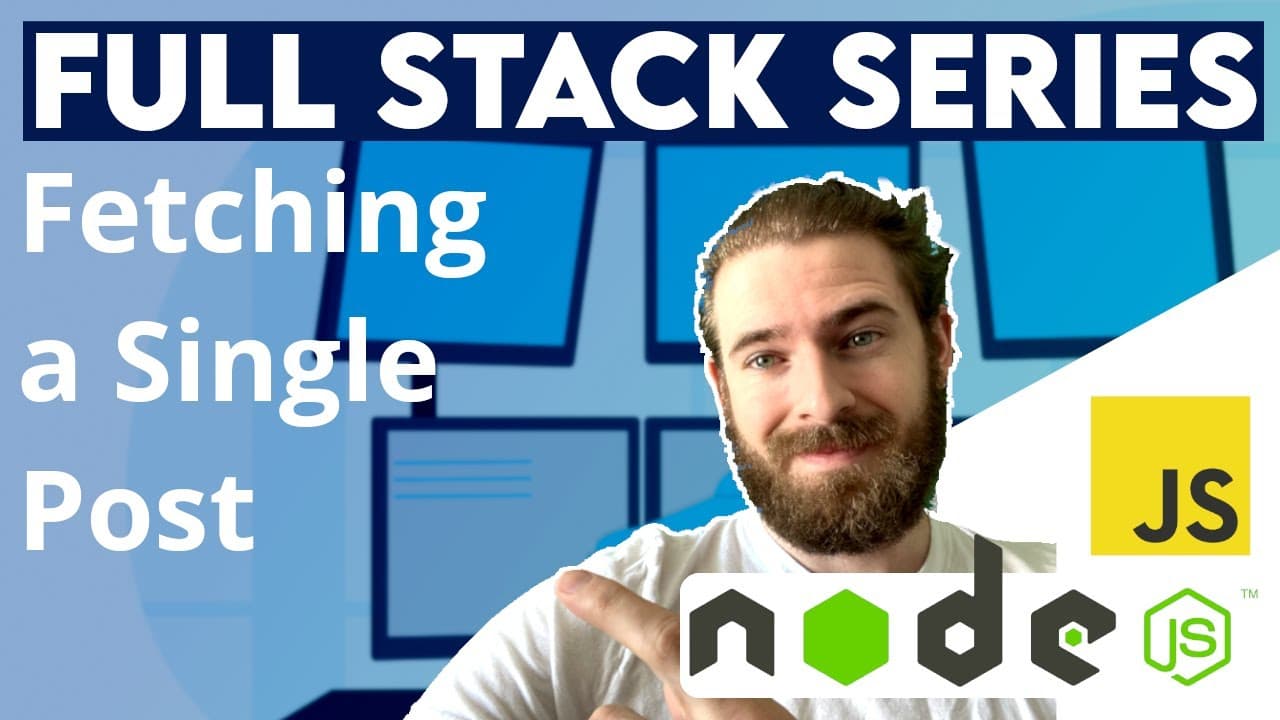
Fetching a Single Post | Begginer's Guide to Full Stack Development
TL;DR
Implementing dynamic blog post pages with backend data fetching and improved UI.
Transcript
all right so there's a lot of different things that we can actually start working on now like we could try to build out an admin dashboard or we could try to build out an individual page of the post and i think i'm gonna go with that approach just do the uh the individual post page so if you remember here if you click on read more these are all har... Read More
Key Insights
- 🍻 Dynamic blog post pages are created by replacing hard-coded links with links embedded with unique post IDs.
- 👻 The query string method allows the frontend to retrieve relevant blog post data dynamically from the backend.
- 👾 CSS enhancements such as flexbox ensure that the blog post previews are well-spaced and visually appealing.
- 🛟 Implementing nodemon improves developer efficiency by automatically restarting the server on file changes.
- 👨💻 Async/await syntax is valuable for writing cleaner, more maintainable asynchronous code.
- ❓ Proper endpoint setup in the backend is crucial for the frontend to fetch the correct data.
- 👨🦱 Each post's data is fetched based on the unique ID provided in the URL, enabling a seamless user experience.
Install to Summarize YouTube Videos and Get Transcripts
Explore YouTube Video Summarizer or Get YouTube Transcript Extractor
Questions & Answers
Q: What is the purpose of the unique ID in the URL?
The unique ID in the URL functions as a query string parameter, allowing the system to fetch specific blog post data from the backend. By including the ID after a question mark in the URL, the frontend can request the relevant post from the backend when a user clicks on a blog post link.
Q: How does CSS flexbox improve the layout of blog posts?
CSS flexbox is utilized to enhance the layout by allowing all direct children of a container to expand and utilize available space evenly. By applying properties like flex grow and margin, the spacing between blog post previews can be adjusted, creating a more aesthetically pleasing and organized appearance.
Q: What is nodemon, and why is it important?
Nodemon is a utility that automatically monitors changes in the source files of a Node.js application and restarts the server when changes are detected. This eliminates the tedious process of manually stopping and restarting the server, thereby streamlining the development workflow and improving efficiency.
Q: Why is async/await preferred over traditional promise chaining?
Async/await simplifies asynchronous code, making it cleaner and more readable by allowing developers to write asynchronous code in a manner similar to synchronous code. This reduces nesting, avoids callback hell, and enhances code maintainability, making it easier to follow the flow and understand the operation of asynchronous processes.
Q: How can we ensure that our frontend fetches data correctly from the backend?
To ensure that the frontend fetches data correctly, it is essential to define proper endpoints in the backend that correspond to the requests sent from the frontend. The frontend should use fetch calls with the correct URLs, including the necessary parameters like the unique ID, to retrieve the relevant post data from the backend.
Q: What initial steps are taken to create an individual post page?
The creation of an individual post page begins by designing a new HTML file (post.html), modifying the JavaScript to dynamically generate URLs with a unique post ID, and implementing CSS styles to improve layout. This establishes the foundation for fetching and displaying dynamic content specific to each post.
Summary & Key Takeaways
-
The content discusses the development of dynamic individual blog post pages, replacing hard-coded links with links that include unique post IDs.
-
It explains the importance of using query strings to fetch specific blog post data from the backend, including setting up necessary endpoints.
-
The tutorial emphasizes improving the user interface using CSS flexbox while exploring backend integration via Node.js and MongoDB.
Read in Other Languages (beta)
Share This Summary 📚
Summarize YouTube Videos and Get Video Transcripts with 1-Click
Try YouTube Summary with ChatGPT & Claude or YouTube Transcript Generator
Explore More Summaries from Web Dev Cody 📚
Summarize YouTube Videos and Get Video Transcripts with 1-Click
Try YouTube Summary with ChatGPT & Claude or YouTube Transcript Generator