Dr. Ted Hildebrandt, New Testament Literature, Lecture 2A
TL;DR
This lecture explores the impact of Alexander the Great's conquests on Greek culture, the spread of the Greek language, and the transition from Greek to Roman rule in Israel.
Transcript
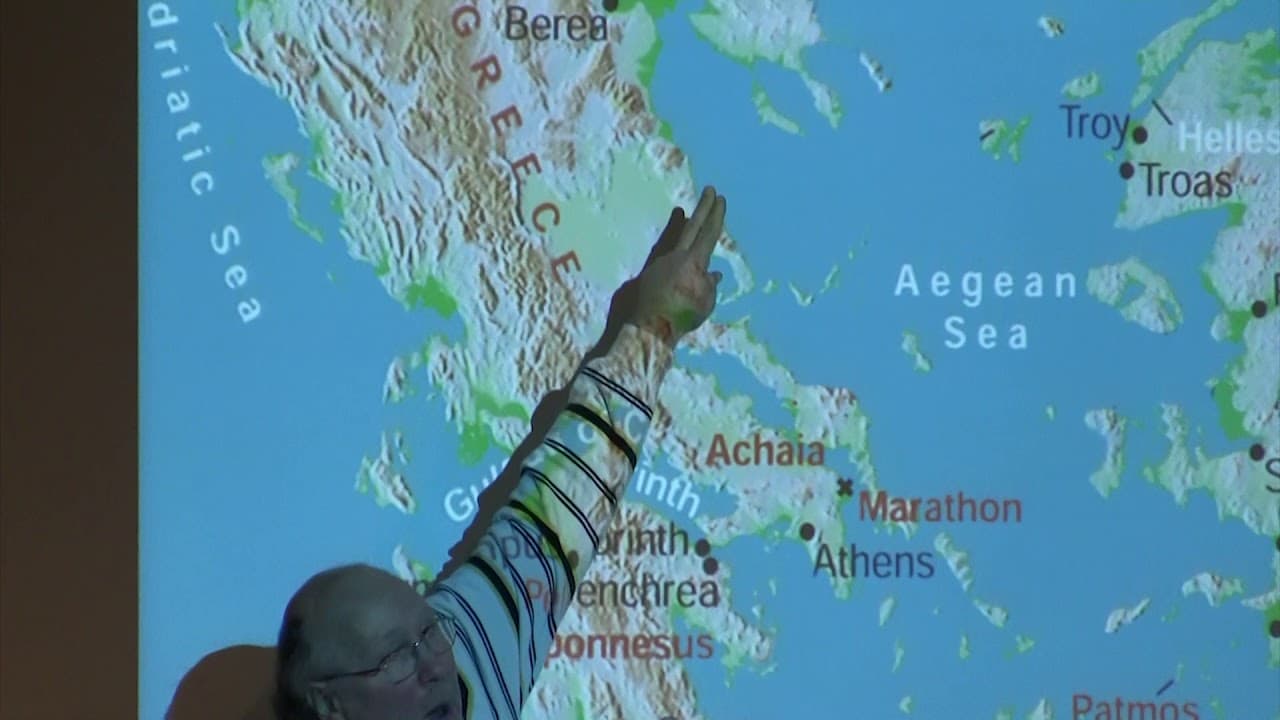
this is dr. Ted Hildebrandt in his New Testament history literature and theology course taught at Gordon College in the spring of 2012 this is lecture number 2 on Alexander hellenism and the Hasmoneans down to the time of Herod the Great alright welcome back we've been discussing so far the Persian Empire and the transition from Babylon actually As... Read More
Key Insights
- 📚 Alexander the Great was a brilliant warrior who conquered the world in just 10 years, starting when he was around 23 years old. His empire fragmented after his death, leading to significant changes in power and influence. [History]
- 🌍 The shift from the Persian Empire to Greek domination was a massive transition of culture from east to west, with Israel being primarily influenced by the Greeks at that time. [Cultural Shift]
- 🇬🇷 Alexander's conquest spread Greek culture and language throughout the world. The New Testament is written in Greek instead of Hebrew, highlighting the influence of Alexander and the Greeks on the region. [Language, Culture]
- 🏛️ The shift from Greek to Roman rule occurred between 333 BC and the time of Jesus, as Rome gradually became the dominant power and universal empire. [Power Shift]
- 💪 Alexander's father, Philip of Macedon, played a crucial role in training him as a warrior and building an army that could fight all year round. Philip's military genius and strategic planning greatly contributed to Alexander's success. [Training, Strategy]
- 🎓 Philip also ensured that Alexander received an excellent education, including being taught by Aristotle, which equipped him with both scholarly and military skills. This combination enabled Alexander to excel as both a military commander and a thinker. [Education, Skill]
- ⚔️ The Maccabees, Jewish warriors who fought against the Syrians in 165 BC, emerged during the time of Alexander's conquest and played a significant role in Jewish history, which is echoed in the New Testament. [Jewish Warriors]
- 🗺️ The power dynamics of ancient empires, such as the Persian and Greek empires, shaped the course of history and influenced the development of different cultures and languages in the region. [Empires, Influence]
Install to Summarize YouTube Videos and Get Transcripts
Explore YouTube Video Summarizer or Get YouTube Transcript Extractor
Questions & Answers
Q: How did Alexander the Great conquer the world in just 10 years?
Alexander's success can be attributed to his military genius, the fighting machine developed by his father Philip of Macedon, and his education under Aristotle, which combined both warrior and scholarly training.
Q: What happened to Alexander's empire after his death?
After Alexander's death, his empire fragmented into five sections, marking the end of the Greek Empire and the rise of successor states. This fragmentation had significant implications for the history of Israel.
Q: Why is the New Testament written in Greek instead of Hebrew?
The New Testament is written in Greek because by the time of Jesus, Greek had become the dominant language due to Alexander's conquests and the spread of Hellenism, making it the lingua franca of the region.
Q: How did the Jews transition from Greek to Roman rule?
The shift from Greek to Roman rule occurred over time, with the Romans gradually asserting their authority over the Greek territories. By the time of Jesus, Israel was under Roman rule, but the influence of Greek culture and language still persisted.
Q: Who were the Maccabees, and what role did they play in Israel's history?
The Maccabees were a Jewish family who led a rebellion against the Syrian Greeks in the 2nd century BC. Their successful revolt, documented in the Apocryphal books of 1st and 2nd Maccabees, had significant implications for religious and political developments in Israel.
Summary & Key Takeaways
-
The lecture discusses the transition from the Persian Empire to the Greek Empire under Alexander the Great.
-
Alexander's conquests led to the spread of Greek culture and the Greek language throughout the world.
-
The lecture also touches on the shift from Greek to Roman rule and the significance of the Maccabees during this period.
Read in Other Languages (beta)
Share This Summary 📚
Summarize YouTube Videos and Get Video Transcripts with 1-Click
Try YouTube Summary with ChatGPT & Claude or YouTube Transcript Generator
Explore More Summaries from Ted Hildebrandt Biblicalelearning 📚
Summarize YouTube Videos and Get Video Transcripts with 1-Click
Try YouTube Summary with ChatGPT & Claude or YouTube Transcript Generator