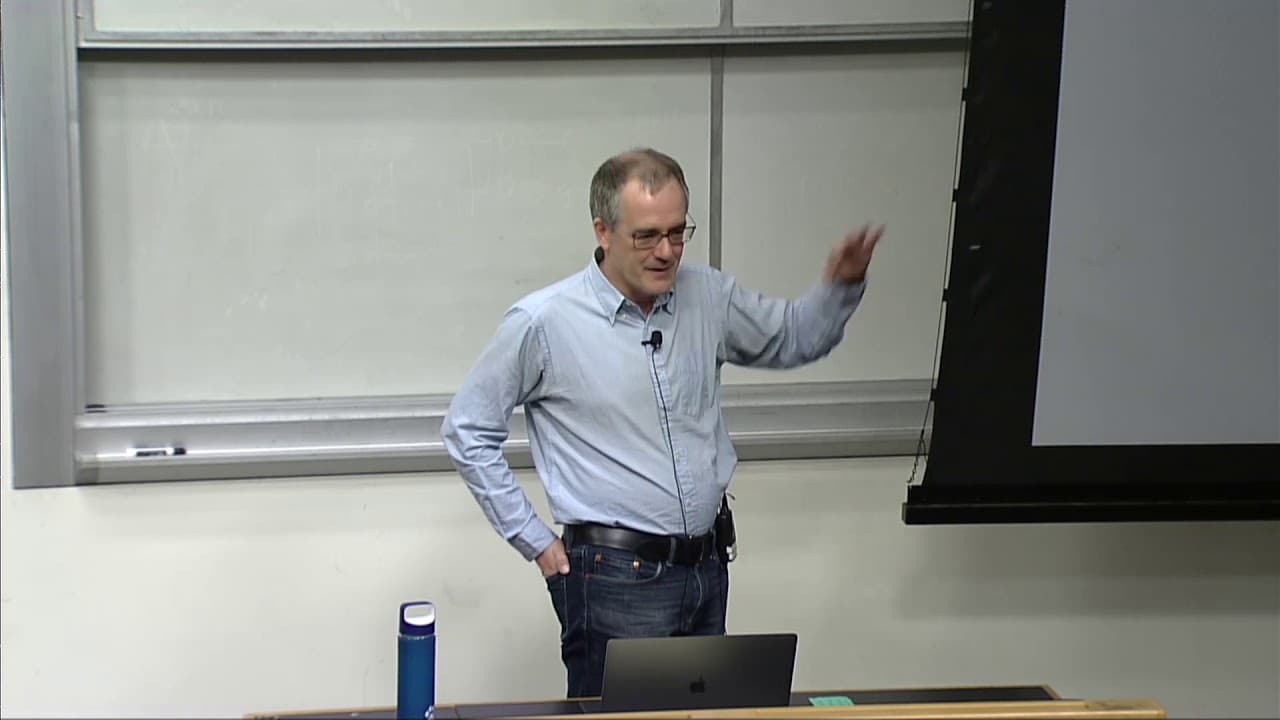
Stanford CS224N: NLP with Deep Learning | Winter 2019 | Lecture 11 – Convolutional Networks for NLP
TL;DR
This analysis explores the use of convolutional neural networks (CNNs) for text classification, showcasing their effectiveness in the task.
Transcript
The plan for today is what I am gonna talk about is the topic of convolutional neural networks. So essentially, um, there's actually quite a lot of content in this lecture of different things that's good to know about, since essentially this is going to be learn about convolutional neural networks in one large bite for NLP. So, um, bit on announcem... Read More
Key Insights
- ❓ CNNs are effective for text classification tasks, capturing local patterns in text data.
- 🚫 Batch normalization and residual blocks are techniques that improve the training and performance of deep CNNs.
- 🎚️ CNNs can be applied to character-level representations, enhancing their ability to capture fine-grained features in text.
Install to Summarize YouTube Videos and Get Transcripts
Explore YouTube Video Summarizer or Get YouTube Transcript Extractor
Questions & Answers
Q: What is the main advantage of using CNNs for text classification?
CNNs in text classification allow for the extraction and learning of features from word or character embeddings, capturing local patterns within the text, resulting in effective representations for classification tasks.
Q: How does batch normalization help in deep convolutional networks?
Batch normalization normalizes the output of a layer by adjusting its mean and standard deviation, ensuring a more stable training process and allowing for larger learning rates, resulting in better performance and faster convergence.
Q: What are residual blocks in CNN architectures?
Residual blocks in CNN architectures allow for the learning of skip connections between layers, enabling the network to learn incremental changes rather than trying to represent the entire output at each layer. This improves the flow of gradients and simplifies training of deeper networks.
Q: How can CNNs be applied to character-level representations?
CNNs can be used at the character-level by mapping characters to embeddings and applying convolutions over these embeddings. This allows for capturing features and patterns at a more granular level, improving the model's ability to capture word-level representations.
Summary & Key Takeaways
-
The paper discusses the use of CNNs for text classification tasks, such as sentiment analysis and question classification.
-
CNNs are shown to be effective in capturing features and patterns in text by using convolutions over word or character embeddings.
-
Batch normalization and residual blocks are introduced as techniques to improve training and increase depth in CNN architectures.
Read in Other Languages (beta)
Share This Summary 📚
Summarize YouTube Videos and Get Video Transcripts with 1-Click
Try YouTube Summary with ChatGPT & Claude or YouTube Transcript Generator
Explore More Summaries from Stanford Online 📚

Summarize YouTube Videos and Get Video Transcripts with 1-Click
Try YouTube Summary with ChatGPT & Claude or YouTube Transcript Generator