What Are Israeli Settlements in the West Bank?
TL;DR
Israeli settlements in the West Bank emerged after the 1967 war when Israeli civilians moved into the territory without government approval. The settlements are viewed internationally as illegal and a significant barrier to peace, complicating plans for a two-state solution. The Oslo Accords divided the West Bank into areas with different levels of control, heavily impacting Palestinian access to resources and economic stability.
Transcript
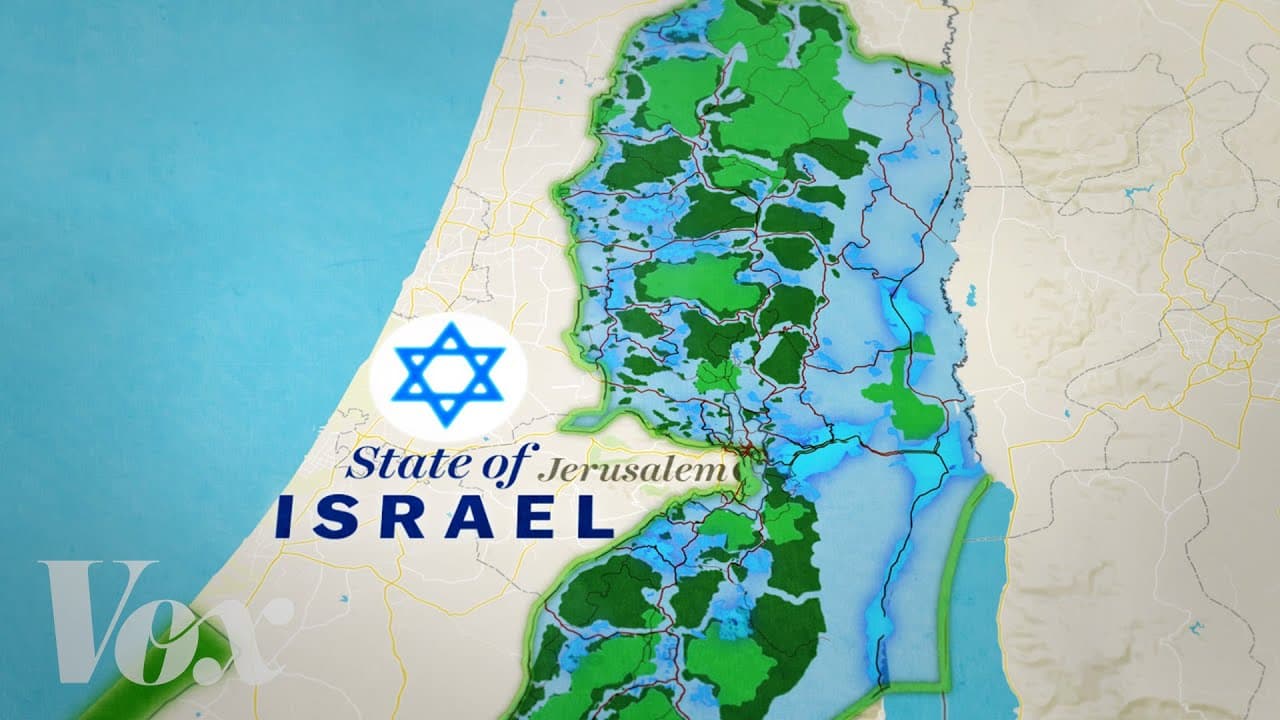
This is me driving in what I think is one of the most bizarre places in the world. I just crossed over from Israel into the West Bank. If you look at a map of where I am right now, you will see a jumbled mess of of Palestinian towns shown here in green, and Israeli settlements, which are blue. Many people think of this territory as Palestine. But o... Read More
Key Insights
- The West Bank is a region with intertwined Israeli and Palestinian territories, resulting in complex geopolitical dynamics.
- Israeli settlements in the West Bank began after the 1967 war, with civilians moving into the area without government approval.
- The international community largely views Israeli settlements as illegal and an obstacle to peace in the Middle East.
- The Oslo Accords in the 1990s divided the West Bank into three areas, each with different levels of Palestinian and Israeli control.
- Area C, controlled by Israel, contains most of the West Bank's resources, affecting the Palestinian economy significantly.
- The settler movement has grown from a fringe group to a state-supported initiative, with developed communities in the West Bank.
- The removal of settlers from the Gaza Strip in 2005 intensified the settler movement in the West Bank.
- A two-state solution becomes increasingly challenging due to the established Israeli settlements in the West Bank.
Install to Summarize YouTube Videos and Get Transcripts
Explore YouTube Video Summarizer or Get YouTube Transcript Extractor
Questions & Answers
Q: What is the historical context of Israeli settlements in the West Bank?
Israeli settlements in the West Bank began after the 1967 war when Israel captured the region. Initially, Israeli civilians moved into the area without government approval, driven by both religious beliefs and geopolitical interests. Over time, the settlements grew into a state-supported initiative, complicating peace efforts.
Q: How does the international community view Israeli settlements?
The international community largely views Israeli settlements as illegal under international law and an obstacle to achieving peace in the Middle East. The United Nations has issued resolutions condemning the settlements, stating they lack legal validity and hinder the peace process between Israelis and Palestinians.
Q: What are the Oslo Accords, and how did they impact the West Bank?
The Oslo Accords were agreements signed in the 1990s that divided the West Bank into three areas with different levels of Palestinian and Israeli control. Area A is under Palestinian control, Area B under mixed control, and Area C under Israeli control. This division impacts Palestinian governance and access to resources.
Q: How do Israeli settlements affect the Palestinian economy?
Israeli settlements, particularly in Area C, restrict Palestinian access to agricultural land, water, and mineral resources, which are crucial for economic development. The division of the West Bank and Israeli control over resources significantly hinder Palestinian economic growth and contribute to the region's economic disparities.
Q: What was the impact of the 2005 Gaza Strip evacuation on the settler movement?
The 2005 evacuation of Israeli settlers from the Gaza Strip intensified the settler movement in the West Bank. The removal of settlers and demolition of homes in Gaza motivated settlers to redouble their efforts in the West Bank, leading to an increase in settlement construction and expansion in the region.
Q: Why is a two-state solution becoming more challenging?
A two-state solution is becoming more challenging due to the extensive development of Israeli settlements in the West Bank. These settlements have grown into well-established communities with infrastructure and services, making it difficult to envision a separate, contiguous Palestinian state without significant territorial adjustments.
Q: What role does the Israeli government play in the settler movement?
The Israeli government plays a significant role in supporting the settler movement. Over the years, it has allocated public resources, granted building permits, and developed infrastructure to support settlements. This state support has transformed the movement from a fringe initiative to an institutionalized part of Israeli society.
Q: How do the settlements affect daily life for Palestinians?
Settlements affect daily life for Palestinians by restricting their movement, access to resources, and economic opportunities. Checkpoints and security measures complicate travel, while Israeli control over Area C limits Palestinians' ability to utilize land and resources, exacerbating economic challenges and contributing to ongoing tensions.
Summary & Key Takeaways
-
The video provides an overview of the Israeli settlements in the West Bank, highlighting the historical context and current geopolitical implications. It explains how the region became a complex mix of Palestinian and Israeli territories, with settlements emerging after the 1967 war.
-
Internationally, Israeli settlements are viewed as illegal and an impediment to peace. The Oslo Accords divided the West Bank into three areas with varying levels of control, affecting Palestinians' access to resources and economic stability.
-
The settler movement has evolved from a civilian initiative to a state-supported project, complicating the prospect of a two-state solution. The video sets the stage for further exploration of life within these settlements in subsequent content.
Read in Other Languages (beta)
Share This Summary 📚
Summarize YouTube Videos and Get Video Transcripts with 1-Click
Try YouTube Summary with ChatGPT & Claude or YouTube Transcript Generator
Explore More Summaries from Vox 📚




Summarize YouTube Videos and Get Video Transcripts with 1-Click
Try YouTube Summary with ChatGPT & Claude or YouTube Transcript Generator