What Are the Challenges of Transitioning to Renewable Energy?
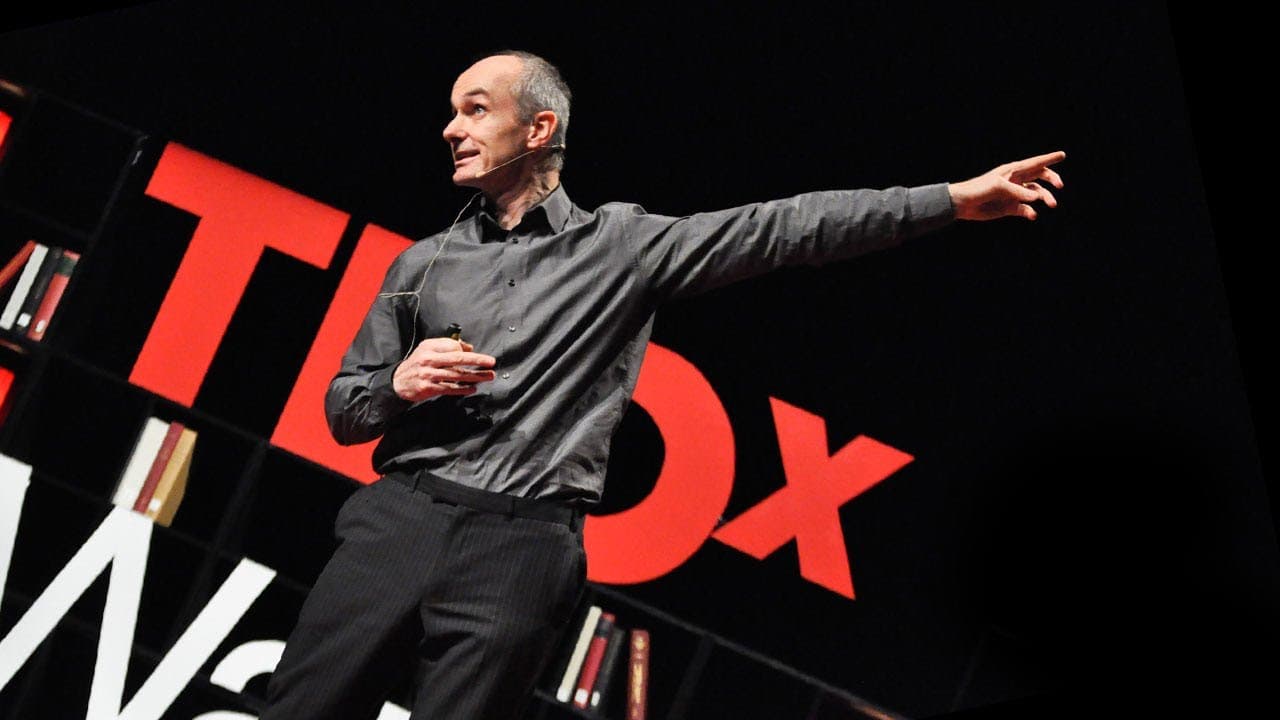
TL;DR
The transition to renewable energy faces significant challenges, including the finite nature of fossil fuels, land area requirements for renewable installations, and public acceptance. Achieving a low-carbon economy necessitates addressing both supply-side options, such as renewables and nuclear power, and demand-side approaches focused on reducing energy consumption.
Transcript
when the Industrial Revolution started the amount of carbon sitting underneath Britain in the form of coal was as big as the amount of carbon sitting under Saudi Arabia in the form of oil and this carbon powered the Industrial Revolution it put the great in Great Britain and led to Britain's temporary world domination and then in 1918 coal producti... Read More
Key Insights
- ⛽ Fossil fuel resources are finite, and the decline in production necessitates a transition to renewable energy sources.
- ❓ Different countries have varying energy consumption patterns and population densities, which influence the feasibility of implementing renewable energy solutions.
- 🍉 Land area requirements for renewable energy installations need to be considered carefully, as they can be substantial and pose challenges in terms of logistics and public acceptance.
- 😘 Transitioning to a low-carbon economy requires addressing both supply-side options (such as renewables and nuclear power) and demand-side options (such as reducing population growth and per capita consumption).
- 😘 Having informed and fact-based conversations is crucial for developing a comprehensive and effective plan for a low-carbon revolution.
- 🏝️ Meeting energy consumption needs solely through renewable energy would require substantial land area coverage.
- ✊ Collaborating with other countries for renewable energy production, as well as exploring other supply-side options like nuclear power, can contribute to a sustainable energy transition.
Install to Summarize YouTube Videos and Get Transcripts
Explore YouTube Video Summarizer or Get YouTube Transcript Extractor
Questions & Answers
Q: What were the factors that led to Britain's temporary world domination during the Industrial Revolution?
Britain's access to large amounts of coal, which powered the Industrial Revolution, played a significant role in its temporary world domination. The abundance of coal resources fueled economic growth and technological advancements.
Q: How has coal production in Britain changed over time?
Coal production in Britain peaked in 1918 and has been declining ever since. As a result, the country has shifted to using oil and gas from the North Sea. However, oil and gas production from the North Sea has also peaked and is now declining.
Q: What are the challenges associated with transitioning to renewable energy sources?
One of the challenges is the finite availability of easily accessible fossil fuels, which necessitates the shift to renewable energy. Additionally, land area requirements for renewable energy installations, such as biofuel plantations, wind farms, and solar parks, pose logistical and feasibility challenges.
Q: Are there variations in energy consumption and population density among different countries?
Yes, there are significant variations in both energy consumption and population density among different countries. European countries, as well as the United Kingdom, have relatively high energy consumption per person and population densities. Countries in Asia, the Middle East, and Africa have varying levels of energy consumption and population densities.
Summary & Key Takeaways
-
The Industrial Revolution in Britain was powered by coal, but coal production peaked in 1918 and has been declining ever since. The country then turned to oil and gas from the North Sea, which is also now on the decline.
-
The finite nature of easily accessible fossil fuels, coupled with the urgency of climate change, motivates the need for a transition to renewable energy sources.
-
Land area requirements for renewable energy, such as biofuel plantations, wind farms, and solar parks, pose challenges in terms of feasibility and scale. Different countries have differing energy consumption patterns and population densities.
Read in Other Languages (beta)
Share This Summary 📚
Summarize YouTube Videos and Get Video Transcripts with 1-Click
Try YouTube Summary with ChatGPT & Claude or YouTube Transcript Generator
Explore More Summaries from TED-Ed 📚



Summarize YouTube Videos and Get Video Transcripts with 1-Click
Try YouTube Summary with ChatGPT & Claude or YouTube Transcript Generator