30 Years After Chernobyl, Nature Is Thriving | National Geographic
TL;DR
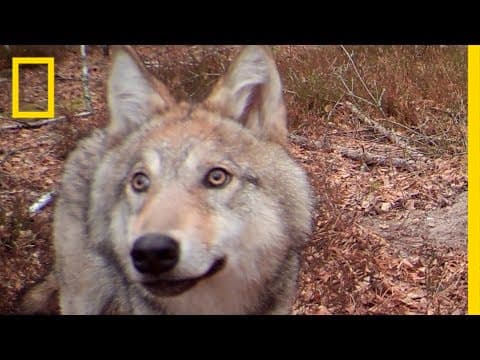
Despite high radiation levels, the absence of humans in the Chernobyl Exclusion Zone has allowed wildlife, including carnivores and ungulates, to thrive.
Transcript
large reason why these animals seem to be persisting in high densities or high abundance within the exclusion zone is because of the absence of humans as you drive around the exclusion zone you're overcome by all the lush nature it's really an eerie reminder of the tragic human impact that occurred there back around 30 years ago the Chernobyl exclu... Read More
Key Insights
- 👻 The absence of humans in the Chernobyl Exclusion Zone has allowed wildlife populations to persist in high densities.
- 😊 The lush nature in the exclusion zone is a reminder of the tragic human impact that occurred there 30 years ago.
- 😋 Large mammals, including carnivores and ungulates, have benefited from good habitat conditions and abundant food and water sources.
- 😘 Human-dominated landscapes tend to have lower animal densities, especially for species that come into conflict with humans.
- 👨🔬 Research focuses on the distribution and relative abundance of wildlife, taking into account radiation contamination levels.
- 😪 The most commonly documented species in the exclusion zone include raccoon dogs, grey wolves, red foxes, Eurasian boars, and Eurasian badgers.
- 🧑⚕️ The research does not address the individual health of the animals, leaving room for further exploration into potential genetic effects of radiation.
Install to Summarize YouTube Videos and Get Transcripts
Explore YouTube Video Summarizer or Get YouTube Transcript Extractor
Questions & Answers
Q: Why is the wildlife population thriving in the Chernobyl Exclusion Zone despite high radiation levels?
The absence of humans has allowed wildlife to flourish, as human-dominated landscapes typically have lower animal densities, especially for species that come into conflict with humans, like wolves.
Q: What are the most commonly documented species in the exclusion zone?
The most commonly documented species include raccoon dogs, grey wolves, red foxes, Eurasian boars, and Eurasian badgers. They have been observed in large numbers through photographs.
Q: Does the abundance of wildlife in Chernobyl imply that they are healthy?
While the wildlife appears healthy on the surface, this research does not examine their individual health. There could be subtle genetic effects due to radiation contamination, which requires further exploration.
Q: How does the distribution of wildlife change with radiation contamination levels?
As radiation contamination levels increase, there may be a subsequent drop-off in the number of species detected. The relative abundance of animals may also vary based on the contamination levels.
Summary & Key Takeaways
-
The Chernobyl Exclusion Zone, a 30-kilometer radius around the nuclear reactor, has seen an increase in wildlife populations due to the absence of humans.
-
Large mammals like carnivores and ungulates have found good habitat conditions in the area, with abundant food sources and water.
-
Research in the exclusion zone focuses on the distribution and relative abundance of wildlife, particularly large mammals, taking into account radiation contamination levels.
Read in Other Languages (beta)
Share This Summary 📚
Summarize YouTube Videos and Get Video Transcripts with 1-Click
Try YouTube Summary with ChatGPT & Claude or YouTube Transcript Generator
Explore More Summaries from National Geographic 📚


Summarize YouTube Videos and Get Video Transcripts with 1-Click
Try YouTube Summary with ChatGPT & Claude or YouTube Transcript Generator