Why Are Supply Chains So Complex Today?
TL;DR
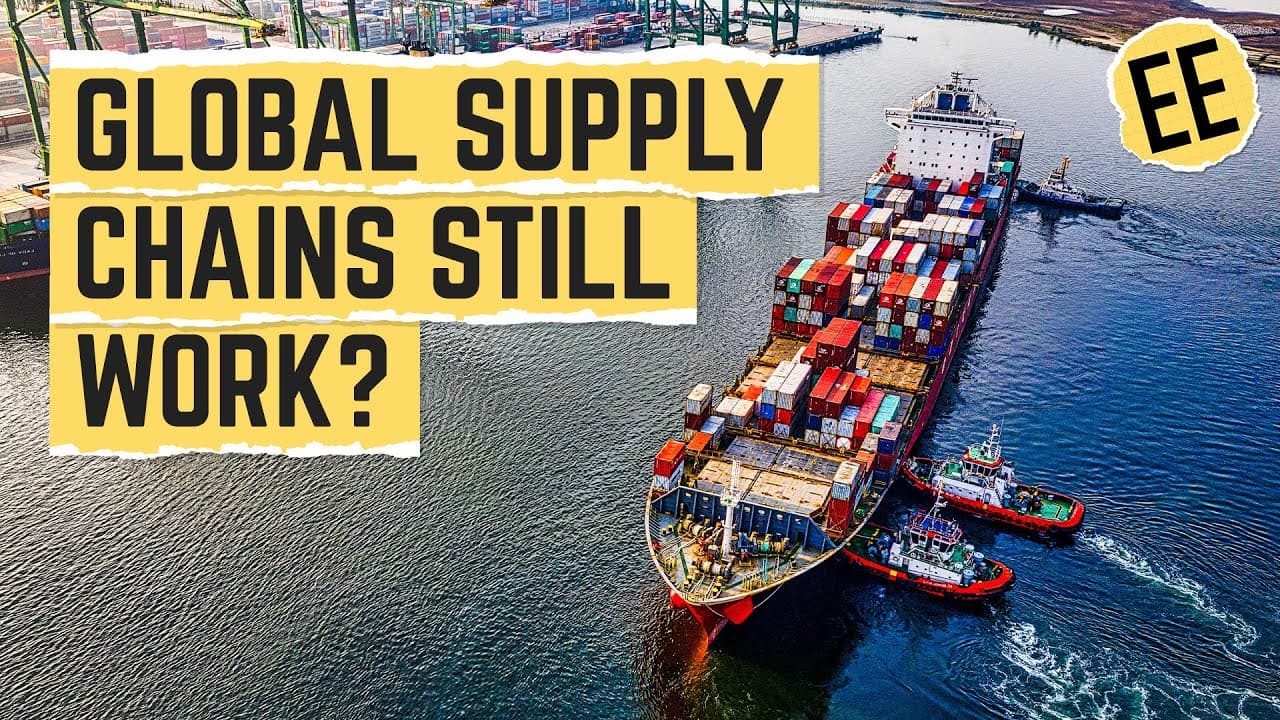
Modern supply chains are complex due to factors like cost efficiency, tax strategies, and political influence. Companies often outsource production to specialized suppliers, navigate international trade agreements, and manage mergers. While complexity can reduce costs, it also poses challenges, especially in a post-COVID world where supply chain resilience is critical.
Transcript
this is apn-311 more commonly known as quasiba a cutting-edge pharmaceutical antibody used to treat complex illnesses in hospitals all over the world this is manufactured by iperium biologics an austrian-based firm the raw medicine is then loaded into a canister like this one and shipped to the netherlands to be packaged then onto ireland for wareh... Read More
Key Insights
- Supply chains are intricate due to outsourcing and specialized suppliers.
- Companies often do not manufacture products from start to finish.
- Tax strategies and trade agreements influence supply chain routes.
- Mergers and acquisitions can complicate supply chains through integration challenges.
- Political considerations can lead to geographically spread supply chains.
- High-value products can afford complex supply chains due to cost density.
- COVID-19 highlighted the need for resilient supply chains.
- Global supply chains balance cost efficiency and logistical challenges.
Install to Summarize YouTube Videos and Get Transcripts
Explore YouTube Video Summarizer or Get YouTube Transcript Extractor
Questions & Answers
Q: Why are modern supply chains so complex?
Modern supply chains are complex due to outsourcing, tax strategies, and political considerations. Companies outsource production to specialized suppliers for cost efficiency and navigate international trade agreements to minimize taxes. Mergers and acquisitions also complicate integration, while political factors can lead to geographically spread supply chains.
Q: How does outsourcing affect supply chains?
Outsourcing affects supply chains by allowing companies to focus on core competencies while relying on specialized suppliers for components. This can reduce production costs but also adds complexity as companies must manage relationships with multiple suppliers across different regions, impacting logistics and coordination.
Q: What role do taxes play in supply chain complexity?
Taxes play a significant role in supply chain complexity as companies design routes to minimize tax liabilities. By leveraging trade agreements and duty-free zones, businesses can reduce import taxes, making certain supply chain paths more financially viable despite the additional logistical complexity involved.
Q: How do mergers and acquisitions impact supply chains?
Mergers and acquisitions impact supply chains by integrating different systems and processes. Vertical integration can streamline supply chains, but horizontal mergers often require maintaining separate supply chains until full integration is possible, leading to increased complexity and logistical challenges.
Q: Why do high-value products have complex supply chains?
High-value products like electronics and pharmaceuticals have complex supply chains because their cost density allows them to absorb shipping costs. This enables companies to produce components in different regions to exploit cost advantages, despite the added logistical complexity of moving products across multiple countries.
Q: How did COVID-19 affect supply chains?
COVID-19 affected supply chains by highlighting vulnerabilities in global logistics. Disruptions from lockdowns and restrictions led to delays and shortages, prompting companies to reassess their supply chain strategies, focusing on resilience and inventory management to mitigate risks of future disruptions.
Q: What is the impact of political considerations on supply chains?
Political considerations impact supply chains by influencing where companies establish operations. Businesses may spread facilities across multiple regions to gain political support or leverage government incentives, leading to geographically dispersed supply chains that prioritize political strategy over logistical efficiency.
Q: What challenges do companies face in post-COVID supply chains?
In post-COVID supply chains, companies face challenges in balancing cost efficiency with resilience. The pandemic exposed vulnerabilities, prompting businesses to reconsider inventory levels and supply chain routes to ensure continuity during disruptions, while also managing costs and maintaining competitive advantage.
Summary & Key Takeaways
-
Supply chains are complex due to outsourcing, tax strategies, and political influence. Companies often outsource production to specialized suppliers, navigate international trade agreements, and manage mergers and acquisitions. These factors can reduce costs but also pose logistical challenges, especially in a post-COVID world where supply chain resilience is critical.
-
High-value products like electronics and pharmaceuticals can afford complex supply chains due to their cost density, allowing them to absorb shipping costs. However, low-margin commodities require more direct supply routes to remain viable. Political considerations and trade agreements also play significant roles in shaping supply chains.
-
COVID-19 disrupted global supply chains, highlighting the need for resilience. Companies face the challenge of balancing cost efficiency with the risks of complex supply chains. The pandemic has prompted businesses to reevaluate their supply chain strategies, considering inventory levels and potential disruptions.
Read in Other Languages (beta)
Share This Summary 📚
Summarize YouTube Videos and Get Video Transcripts with 1-Click
Try YouTube Summary with ChatGPT & Claude or YouTube Transcript Generator
Explore More Summaries from Economics Explained 📚





Summarize YouTube Videos and Get Video Transcripts with 1-Click
Try YouTube Summary with ChatGPT & Claude or YouTube Transcript Generator