3 Activities That Make Thinking Visible
TL;DR
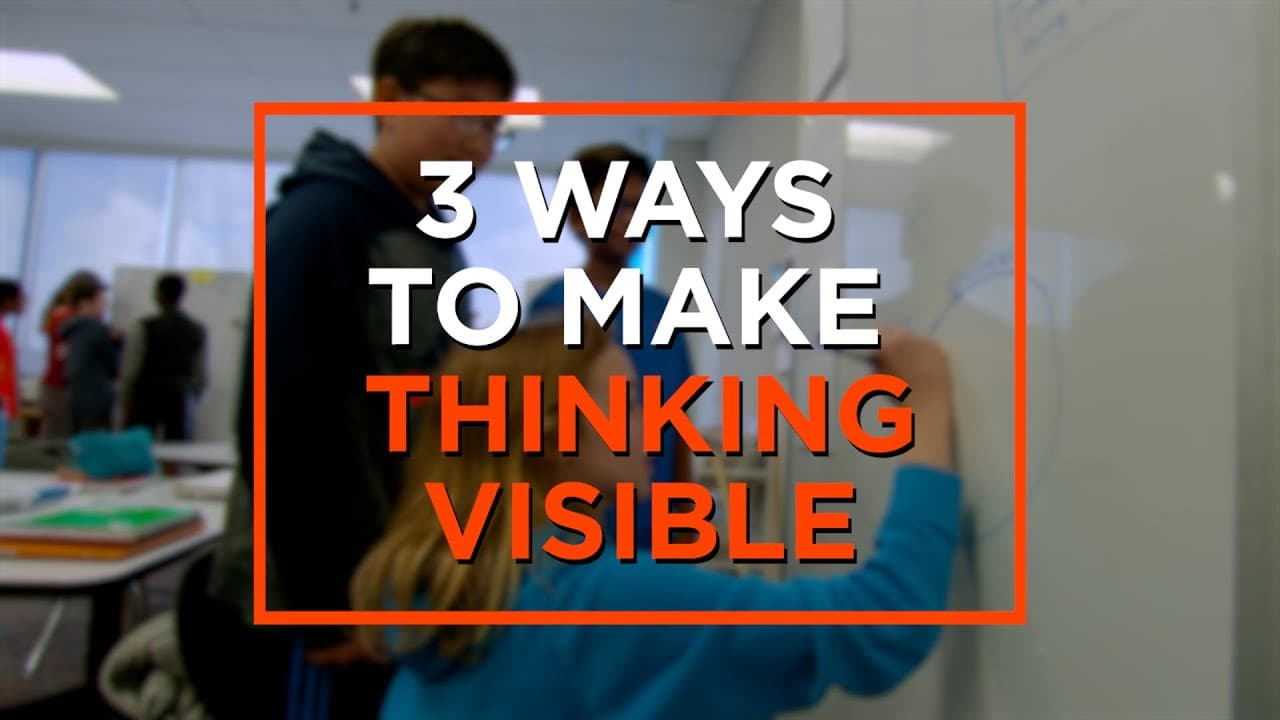
Use vertical learning, fish bowl discussions, and math justification activities to assess students' understanding of a topic.
Transcript
Teacher: It's easy to grade for the right answers but how do you know when your students are really getting it? It's not always obvious how they arrived at their conclusion. But the right activity can give you a window into your students' brains to see their thinking process and find out what they really know and what needs further reinforcement.... Read More
Key Insights
- 💭 Vertical learning provides a window into students' thought process and collaborative skills.
- 🧑🎓 The fish bowl activity helps students learn discussion norms while providing insights into their comprehension.
- 🤔 Math justification activities make students' thinking visible and allow teachers to assess their mathematical understanding.
- 🤪 Assessing students' understanding goes beyond grading right answers and requires observing their thinking process.
- 🤑 Providing rich tasks that allow multiple answers can help assess students' comprehension.
- 🧑🎓 Dividing students into roles, such as scribe, speaker, inquirer, and manager, promotes collaboration and accountability during vertical learning.
- 🧑🎓 Preparing students with readings or prompts before fish bowl discussions helps assess their grasp on the topic.
Install to Summarize YouTube Videos and Get Transcripts
Explore YouTube Video Summarizer or Get YouTube Transcript Extractor
Questions & Answers
Q: What is vertical learning, and how does it enable teachers to assess student thinking?
Vertical learning involves students showcasing their thinking on vertical surfaces. Teachers can observe their thought process, collaboration skills, and level of understanding, as the work is visible to everyone.
Q: How does the fish bowl activity help assess student comprehension?
The fish bowl activity allows a small group of students to have a focused discussion while the rest of the class observes. By noting what students bring up, the textual evidence they use, and the questions they ask, teachers can assess their grasp of the material.
Q: Why is it challenging to get students to explain their mathematical thinking?
Students often feel tempted to simply give the right answer in math. Explaining their thinking requires them to justify their choices and use math vocabulary to make connections to previous learning.
Q: How does the math justification activity make students' thinking visible?
In the math justification activity, students circle the question, write an "I have to" statement, solve the problem, and explain their solution using math words and connections to previous learning. This process helps teachers assess students' level of understanding and knowledge.
Summary & Key Takeaways
-
Vertical learning is a group activity where students showcase their thinking on a vertical surface, allowing the teacher to observe their thought process.
-
The fish bowl activity involves a small group having a focused discussion while the rest of the class observes, giving insights into students' comprehension.
-
Math justification activities require students to explain their thinking and choices in solving math problems, providing a clear understanding of their level of understanding.
Read in Other Languages (beta)
Share This Summary 📚
Summarize YouTube Videos and Get Video Transcripts with 1-Click
Try YouTube Summary with ChatGPT & Claude or YouTube Transcript Generator
Explore More Summaries from Edutopia 📚




Summarize YouTube Videos and Get Video Transcripts with 1-Click
Try YouTube Summary with ChatGPT & Claude or YouTube Transcript Generator