What Are Ionic Formulas for Transition Metals?
TL;DR
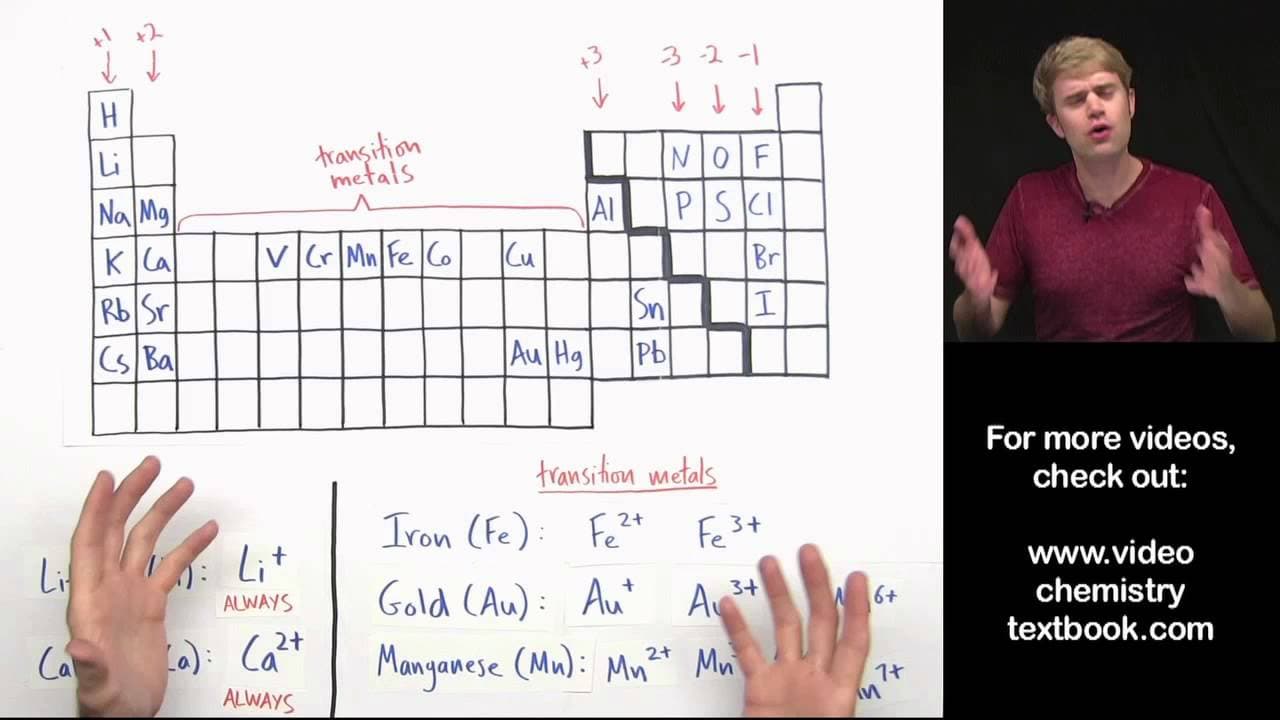
Ionic formulas for transition metals require Roman numerals to indicate the varying charges of their multiple possible ions. Unlike non-transition metals that have fixed charges based on their periodic table position, transition metals can form ions with different charges due to their unique electron arrangements. This variability necessitates a specific naming convention to accurately reflect the ionic charge in formulas.
Transcript
let's talk about transition metals in ionic formulas so the transition metals are the elements in this part of the periodic table here and when we write formulas for ionic compounds that contain transition metals the formulas look like this with these Roman numerals here in the middle so this might be a little bit different from other types of chem... Read More
Key Insights
- 💁 Transition metals in the periodic table can form multiple types of ions with different charges.
- 👻 The electron arrangement in the orbitals of transition metals allows them to give away varying numbers of electrons.
- 😑 Roman numerals are used to indicate the charge of the transition metal ion in ionic compounds.
Install to Summarize YouTube Videos and Get Transcripts
Explore YouTube Video Summarizer or Get YouTube Transcript Extractor
Questions & Answers
Q: Why are transition metals able to make different types of ions?
Transition metals have a more flexible electron arrangement in their orbitals, allowing them to give away varying numbers of electrons and form ions with different charges.
Q: How are transition metals ions named in ionic compounds?
Transition metal ions in ionic compounds are named using Roman numerals to indicate their charge. For example, Fe2+ is called iron(II), and Fe3+ is called iron(III).
Q: What is the difference between transition metals and non-transition metals in terms of ion formation?
Transition metals can form multiple types of ions with different charges, while non-transition metals have fixed charges for their ions based on their location in the periodic table.
Q: When writing formulas for compounds with transition metals, when do we use Roman numerals?
Roman numerals are used in formulas with transition metals to indicate the charge of the metal ion. They are not used in formulas without transition metals, as the charge can be determined from the metal's position in the periodic table.
Summary & Key Takeaways
-
Transition metals in the periodic table can form more than one type of ion with varying charges.
-
Ionic compounds with transition metals require the use of Roman numerals to indicate the charge of the metal ion.
-
Non-transition metals have fixed charges for their ions based on their location in the periodic table.
Read in Other Languages (beta)
Share This Summary 📚
Summarize YouTube Videos and Get Video Transcripts with 1-Click
Try YouTube Summary with ChatGPT & Claude or YouTube Transcript Generator
Explore More Summaries from Tyler DeWitt 📚




Summarize YouTube Videos and Get Video Transcripts with 1-Click
Try YouTube Summary with ChatGPT & Claude or YouTube Transcript Generator