Inside Japan's big physics | Part two : KAGRA
TL;DR
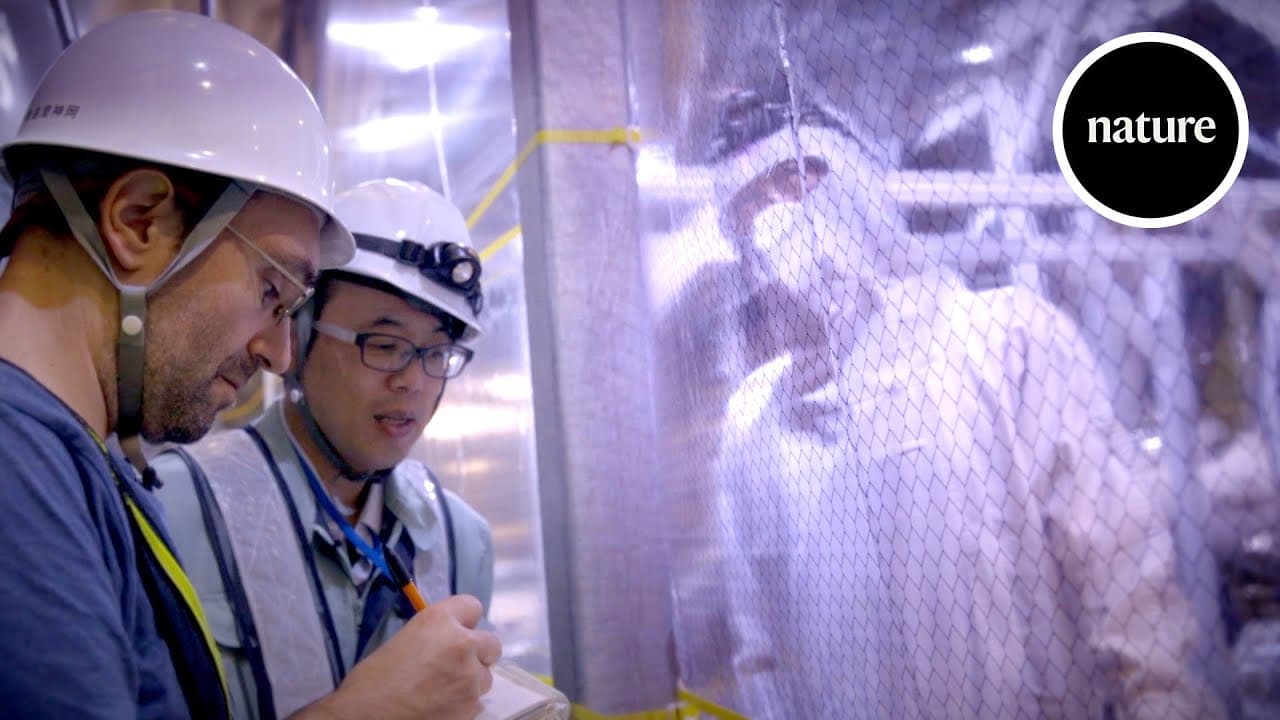
Japan's KAGRA aims to detect gravitational waves using advanced technology and cryogenics.
Transcript
it's 40 watts it's a quite a powerful laser yes for more than 50 years Japan has been at the forefront of big physics creating experiments of such size and the mission that they need to be seen to be believed my name is Davide Castel Vickie and I am one of nature's physics reporters in this series I will be traveling to Japan to visit three of its ... Read More
Key Insights
- 👋 KAGRA aims to advance gravitational wave detection technology to explore cosmic phenomena.
- 👾 The facility utilizes a laser system designed for high precision and sensitivity to capture subtle space-time fluctuations.
- 👻 Cryogenic technology plays a crucial role in reducing noise levels, allowing KAGRA to achieve higher accuracy.
- 👋 Collaboration with global detectors is vital for comprehensive gravitational wave astronomy and eliminating detection gaps.
- 🥺 KAGRA’s ability to detect gravitational waves could lead to significant cosmic discoveries, including supernovae events.
- 👷 The construction and operation of KAGRA involve rigorous cleanliness protocols to maintain experimental integrity.
- 🤗 Understanding gravitational waves potentially opens new avenues in astrophysics, enhancing human knowledge of the universe.
Install to Summarize YouTube Videos and Get Transcripts
Explore YouTube Video Summarizer or Get YouTube Transcript Extractor
Questions & Answers
Q: What is the primary purpose of the KAGRA facility?
The primary purpose of KAGRA is to detect gravitational waves, which are ripples in space-time caused by massive cosmic events. KAGRA endeavors to do this with extreme precision, aiming to capture the subtle variations that occur when gravitational waves pass through its detectors. Built under a mountain, this facility employs advanced technology and techniques developed over decades that allow scientists to explore the universe more profoundly.
Q: How does KAGRA detect gravitational waves?
KAGRA employs a laser system that sends beams of light down two 3-kilometer long arms. When a gravitational wave passes through, it stretches or squeezes these arms, altering the light waves. The beams from the two arms are then combined, and if they no longer align perfectly, this change indicates the presence of a gravitational wave. This technology allows KAGRA to measure distortions smaller than the diameter of a proton.
Q: What advancements does KAGRA incorporate compared to other detectors?
KAGRA introduces cryogenic technology to reduce thermal vibrations in its mirrors, enhancing its sensitivity. While other detectors like LIGO and Virgo have similar suspension systems, KAGRA's cryogenic approach allows for cooling the mirrors significantly without transmitting vibrations, which is a critical factor for accurate measurements. This advancement positions KAGRA at the forefront of gravitational wave detection technology.
Q: Why is the location of KAGRA significant?
KAGRA is built underground under Mount Edo to minimize environmental noise from seismic activity and human interference, crucial for the accurate detection of gravitational waves. This location reduces vibrations that could affect the mirrors' stability, ensuring that KAGRA can measure the minute changes caused by gravitational waves with the greatest sensitivity.
Q: What collaborative role does KAGRA play in global gravitational wave astronomy?
KAGRA collaborates with other gravitational wave detectors like LIGO and Virgo to enhance the overall sensitivity and accuracy of gravitational wave observations. By integrating KAGRA into this network, scientists can reduce blind spots in detection and improve the triangulation of gravitational wave sources, facilitating a more comprehensive understanding of cosmic events across the universe.
Summary & Key Takeaways
-
KAGRA, located underground in Japan, is designed to detect tiny ripples in space-time known as gravitational waves, which were predicted by Einstein.
-
The detector utilizes a powerful laser system and sophisticated technology to ensure high sensitivity and low noise levels, allowing it to measure space-time distortions with extreme precision.
-
By collaborating with other global detectors like LIGO and Virgo, KAGRA enhances the scientific community's ability to triangulate the sources of gravitational waves and hopes to capture significant cosmic events, such as supernovae.
Read in Other Languages (beta)
Share This Summary 📚
Summarize YouTube Videos and Get Video Transcripts with 1-Click
Try YouTube Summary with ChatGPT & Claude or YouTube Transcript Generator
Explore More Summaries from nature video 📚




Summarize YouTube Videos and Get Video Transcripts with 1-Click
Try YouTube Summary with ChatGPT & Claude or YouTube Transcript Generator