113-1 EMI Teaching ER:Inquires and Solutions_Dr. Yeu-Ting Liu
TL;DR
Exploring effective EMI teaching strategies and overcoming language barriers.
Transcript
um can you do me a favor if possible could you please turn on the camera and um so that I can have a better interaction with you to see if you know what I'm talking about will bring a big question mark to your face all right so um if possible could you please turn on the camera thank you very much and um along me to introduce myself um my n... Read More
Key Insights
- EMI teaching requires a balance between verbal and non-verbal inputs, focusing on structured communication to enhance student understanding.
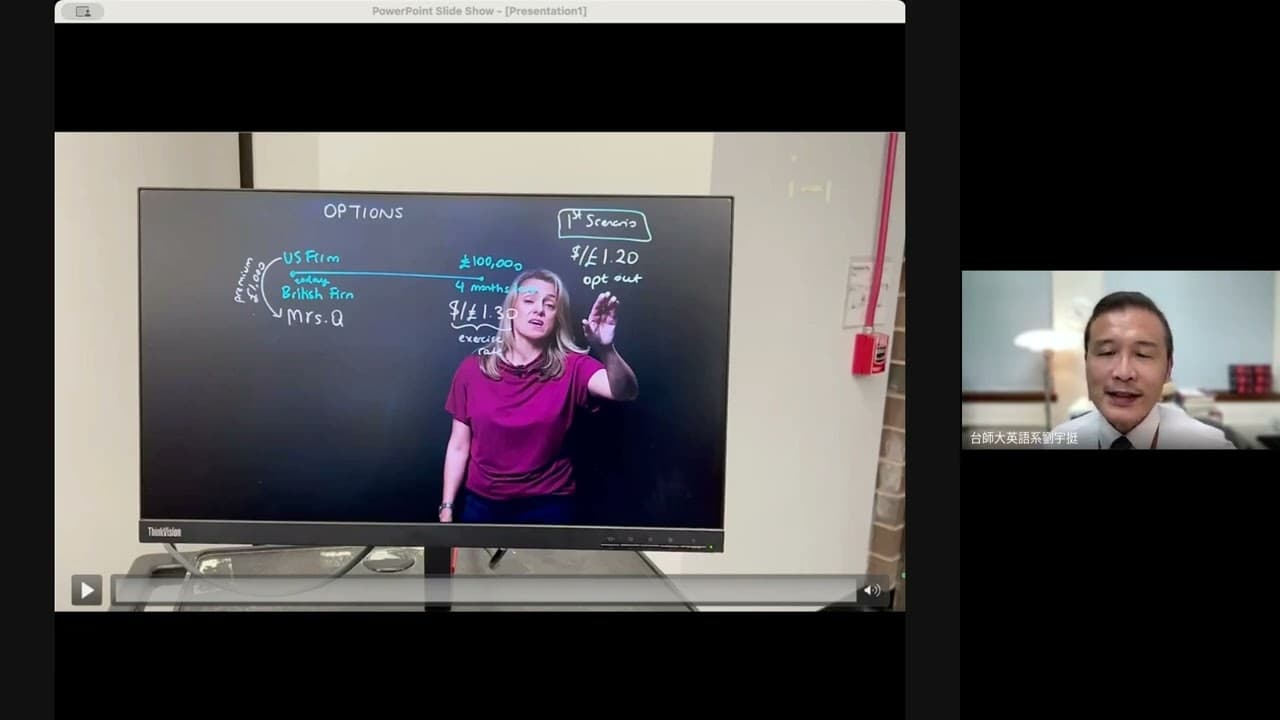
- Translanguaging, which involves integrating non-verbal elements, can significantly aid in teaching complex concepts.
- Interactive classroom activities, such as using visual aids for thinking rather than just comprehension, can enhance student engagement.
- The organization of class content, with clear progression and structured input, is crucial for effective EMI instruction.
- Differentiated roles in group activities can accommodate students of varying English proficiency, ensuring equitable participation.
- Language proficiency should not be the primary concern; instead, focus on creating linguistically manageable but cognitively challenging classes.
- Warm-up exercises, like speaking aloud for three minutes, can help instructors maintain fluency in English.
- Student motivation can be enhanced by making them active participants in the learning process, such as through video assignments and peer feedback.
Install to Summarize YouTube Videos and Get Transcripts
Explore YouTube Video Summarizer or Get YouTube Transcript Extractor
Questions & Answers
Q: How can EMI instructors overcome language proficiency concerns?
Instructors should focus on structured communication and using non-verbal inputs to aid understanding. Differentiated roles in group activities can help accommodate students with varying English proficiency, ensuring everyone can participate effectively.
Q: What is translanguaging, and how is it applied in EMI teaching?
Translanguaging involves integrating non-verbal elements, such as visual aids, to explain complex concepts. It allows students to engage with the material beyond language, making it a valuable tool in EMI classrooms.
Q: How can instructors make EMI classes more interactive?
Instructors can use visual aids as thinking devices, organize class content with clear progression, and create activities that require students to engage in critical thinking. Encouraging peer interaction and feedback also enhances interactivity.
Q: What role does class organization play in EMI teaching?
Class organization is crucial for effective EMI teaching. It involves structuring content with clear progression and ensuring that each concept builds on the previous one. This helps students understand and retain information more effectively.
Q: How can instructors maintain fluency in English for EMI teaching?
Instructors can perform warm-up exercises, such as speaking aloud in English for three minutes, to stay in the English mode. This practice helps maintain fluency and reduces the influence of their native language during teaching.
Q: How can student motivation be increased in EMI classes?
Student motivation can be increased by involving them actively in the learning process. This can be achieved through video assignments, peer feedback, and creating a classroom environment where students feel comfortable participating and engaging with the material.
Q: What are the benefits of using visual aids in EMI teaching?
Visual aids can be used as thinking devices, helping students engage with the material beyond language comprehension. They encourage critical thinking and can make complex concepts more accessible, especially for students with varying English proficiency.
Q: How can instructors address the challenge of different English proficiency levels in students?
Instructors can design differentiated roles in group activities to accommodate students with different proficiency levels. By assigning roles that match their abilities, all students can contribute meaningfully to the class, enhancing their learning experience.
Summary & Key Takeaways
-
Dr. Yeu-Ting Liu discusses effective strategies for EMI teaching, emphasizing the importance of balancing verbal and non-verbal inputs to improve student comprehension. He highlights the role of structured communication and translanguaging in teaching complex subjects.
-
Interactive activities, such as using visual aids for thinking, and organizing class content with clear progression are essential. Differentiated roles in group activities allow students of varying English proficiency to participate effectively.
-
Dr. Liu advises focusing on linguistically manageable but cognitively challenging classes, using warm-up exercises to maintain fluency, and involving students actively in the learning process to boost their motivation and engagement.
Read in Other Languages (beta)
Share This Summary 📚
Summarize YouTube Videos and Get Video Transcripts with 1-Click
Try YouTube Summary with ChatGPT & Claude or YouTube Transcript Generator
Explore More Summaries from NTNURCEMI 📚
Summarize YouTube Videos and Get Video Transcripts with 1-Click
Try YouTube Summary with ChatGPT & Claude or YouTube Transcript Generator