113-1 Collaborative Construction of Knowledge Through EMI(20241025 DAY 1)
TL;DR
Symposium explores collaborative knowledge construction via EMI with a focus on language and participatory research.
Transcript
okay we have two welcom so I'm going to cut the the welcome and the thanking short because of the time so the purpose of this introductory um session is just to provide an overview of the theme to highlight the theme of this Symposium and also to to raise some questions for all of us to think about and if you look at the format of this this... Read More
Key Insights
- The symposium aims to build a community of scholars exchanging ideas, emphasizing discussions over traditional Q&A sessions.
- The theme is 'collaborative construction of knowledge,' focusing on the relationship between language and knowledge in EMI research.
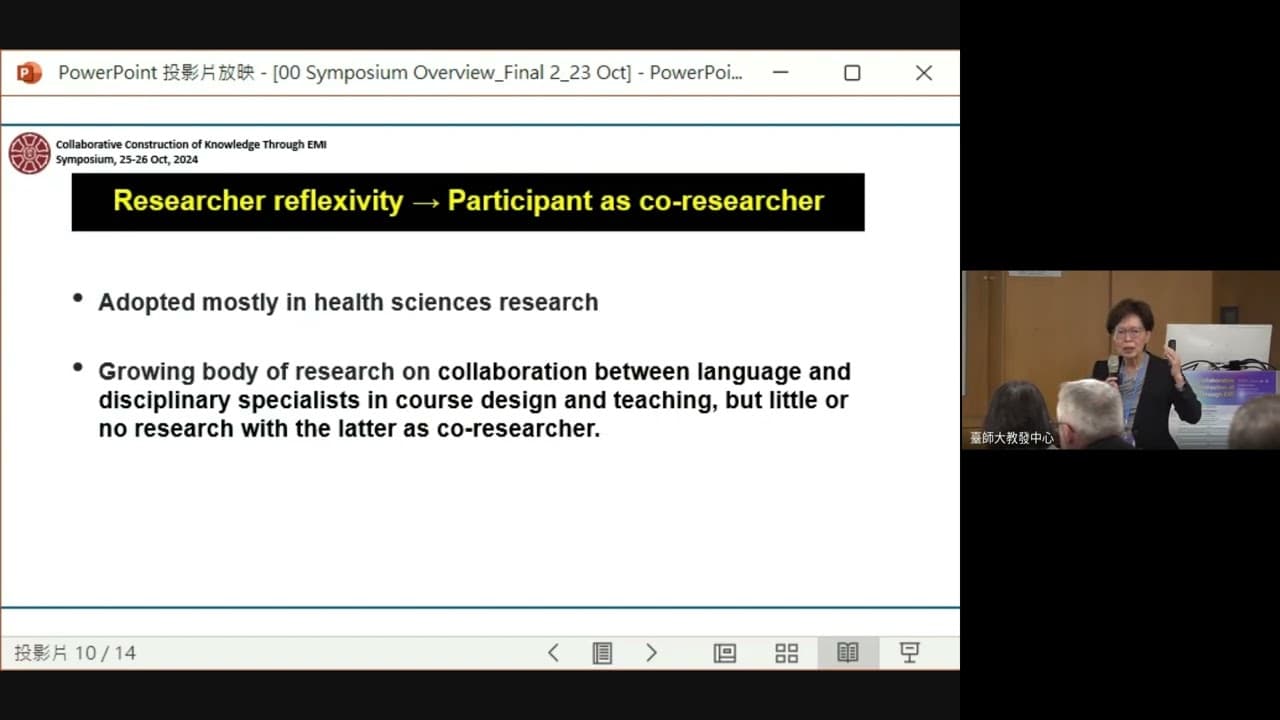
- A participatory research approach is highlighted, where participants act as co-researchers, contributing to data analysis and research direction.
- Different disciplines exhibit varying knowledge structures; sciences often have hierarchical structures while humanities have horizontal structures.
- Language plays a crucial role in knowledge construction, with disciplinary knowledge being influenced by the language of instruction.
- The symposium includes diverse disciplines like chemistry, ecology, history, and musicology, each with unique approaches to EMI.
- Scaffolding, both conceptual and linguistic, is essential in EMI to facilitate understanding and engagement among students.
- The psychological impact of learning through EMI, such as language anxiety, needs to be addressed to enhance student participation and learning outcomes.
Install to Summarize YouTube Videos and Get Transcripts
Explore YouTube Video Summarizer or Get YouTube Transcript Extractor
Questions & Answers
Q: What is the main purpose of the symposium?
The main purpose of the symposium is to provide an overview of the theme 'collaborative construction of knowledge through EMI,' to build a community of scholars exchanging ideas, and to highlight the importance of discussions over traditional Q&A sessions. It aims to explore the relationship between language and knowledge and to promote participatory research approaches.
Q: How does the symposium approach the concept of disciplinary knowledge?
The symposium approaches disciplinary knowledge by examining how different disciplines exhibit varying knowledge structures. Sciences tend to have hierarchical knowledge structures, where new knowledge integrates with prior knowledge, while humanities often have horizontal structures, introducing new perspectives. The role of language in shaping disciplinary knowledge is also a key focus.
Q: What is the participatory research approach discussed in the symposium?
The participatory research approach discussed involves participants acting as co-researchers, meaning that students and teachers shape the direction of research studies and contribute to data analysis. This approach is contrasted with traditional research, where the researcher holds authority over knowledge. It promotes equal power structures and acknowledges participants' rights to contribute to defining and generating knowledge.
Q: How does language influence knowledge construction in EMI contexts?
Language influences knowledge construction in EMI contexts by affecting how disciplinary knowledge is understood and communicated. The symposium highlights the importance of linguistic scaffolding, where language is used to facilitate understanding and engagement among students. The interaction between language and knowledge is crucial, as it can either support or hinder conceptual change and learning.
Q: What challenges are associated with learning through EMI?
Challenges associated with learning through EMI include language anxiety, where students may feel psychological pressure due to language barriers. Understanding lectures, expressing themselves in English, and technical vocabulary are noted difficulties. The symposium discusses the importance of addressing these challenges through scaffolding and creating a supportive learning environment.
Q: What role does scaffolding play in EMI?
Scaffolding plays a crucial role in EMI by providing the necessary support and guidance for students to achieve understanding and learning. It involves both conceptual and linguistic scaffolding, where teachers help students bridge the gap between prior knowledge and new concepts, and assist with language comprehension and expression. Scaffolding is essential for facilitating conceptual change and reducing language-related challenges.
Q: How are different disciplines represented in the symposium?
The symposium includes a diverse range of disciplines such as chemistry, ecology, history, musicology, and more. Each discipline presents unique approaches to EMI, reflecting their specific knowledge structures and attitudes towards language use. The symposium explores how these disciplines integrate EMI into their teaching and research, highlighting the interdisciplinary nature of knowledge construction.
Q: What insights does the symposium offer regarding language anxiety in EMI?
The symposium offers insights into language anxiety by highlighting its psychological impact on students learning through EMI. It emphasizes the need to understand students' anxieties and create a supportive environment that encourages participation. Techniques such as scaffolding, flexible language policies, and peer support are discussed as ways to alleviate language anxiety and enhance learning outcomes.
Summary & Key Takeaways
-
The symposium focuses on collaborative knowledge construction through EMI, emphasizing the relationship between language and knowledge. It aims to foster a community of scholars exchanging ideas, with discussions replacing traditional Q&A sessions.
-
Key themes include the participatory research approach, where participants contribute as co-researchers, and the varied disciplinary knowledge structures, highlighting differences between sciences and humanities.
-
Language's role in knowledge construction is explored, with emphasis on scaffolding and addressing language anxiety in EMI contexts. The symposium covers diverse disciplines, each with unique approaches to EMI.
Read in Other Languages (beta)
Share This Summary 📚
Summarize YouTube Videos and Get Video Transcripts with 1-Click
Try YouTube Summary with ChatGPT & Claude or YouTube Transcript Generator
Explore More Summaries from NTNURCEMI 📚
Summarize YouTube Videos and Get Video Transcripts with 1-Click
Try YouTube Summary with ChatGPT & Claude or YouTube Transcript Generator