NVIDIA CES 2015 press conference: Material Rendering Simulation (part 4)
TL;DR
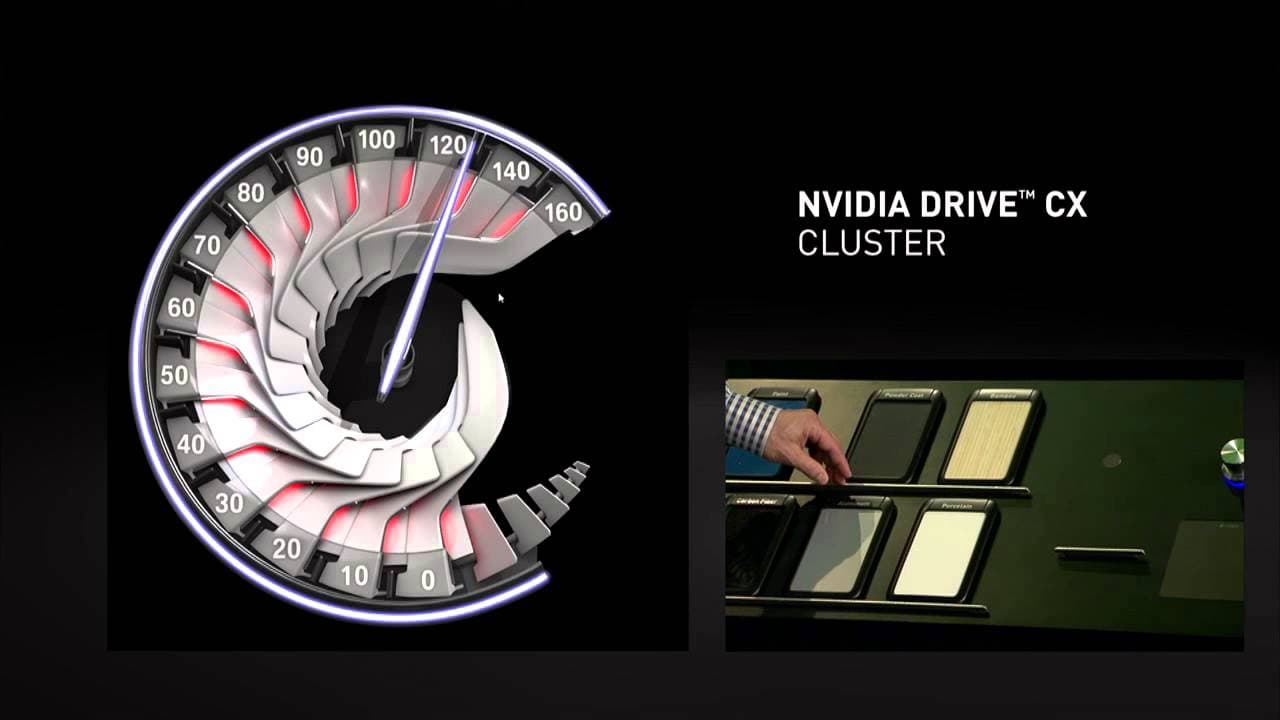
This video showcases the ability to customize material rendering for digital dashboards, allowing car designers to simulate various materials such as bamboo, aluminum, and carbon fiber with accurate reflectivity and light responses.
Transcript
so one thing I think is really important that you the point that you made was that we can customize this to look like other things it doesn't just have to look like this in this case we've got you know physically based aluminum being represented here but I think it's interesting to explore what's possible in terms of material and so the so the the ... Read More
Key Insights
- 😨 Digital dashboards can be customized with a wide variety of materials, allowing car designers to create unique and personalized user experiences.
- 🖌️ Material rendering for digital dashboards requires simulating complex materials like car paint, carbon fiber, and brushed copper accurately.
- 🙂 The GPU computes mathematical equations to simulate light reflections, refractions, and scattering for realistic material rendering.
- 🪛 Customization of material rendering can extend to different drive modes and recognition systems, enhancing the overall driving experience.
Install to Summarize YouTube Videos and Get Transcripts
Explore YouTube Video Summarizer or Get YouTube Transcript Extractor
Questions & Answers
Q: How can car designers customize material rendering for digital dashboards?
Car designers can import their desired geometry and use real-time material rendering to simulate various materials, including bamboo, aluminum, car paint, and carbon fiber. The accurate reflectivity and light responses convey the subtlety and craftsmanship of the materials.
Q: Why is material rendering for digital dashboards complicated?
Materials like car paint, carbon fiber, and brushed copper have complex reflectivity and responses to light. Simulating these materials accurately requires advanced techniques such as simulating light passing through layers, refraction, and scattering. The GPU computes these mathematical equations in real-time.
Q: What is the significance of simulating materials like bamboo and aluminum for digital dashboards?
Simulating materials like bamboo and aluminum allows car designers to experiment with different looks and customize the digital dashboard to match their vision. It helps convey the desired aesthetic and enhances the overall user experience.
Q: How can the customization of material rendering be applied in real-life scenarios?
With personalized modes and recognition systems, car interiors can adapt based on the driver's preferences. For example, different drive modes can have specific lighting and material settings, bringing customization and joy to the driving experience.
Summary & Key Takeaways
-
The video demonstrates the power of real-time material rendering for digital dashboards, showcasing the ability to simulate complex materials such as car paint, brushed copper, and carbon fiber.
-
Different materials have specific reflectivity and responses to light, making material rendering a crucial aspect of conveying the subtlety and craftsmanship of a car.
-
The digital dashboard can be customized with a wide variety of materials, allowing car designers to create a personalized and unique user experience.
Read in Other Languages (beta)
Share This Summary 📚
Summarize YouTube Videos and Get Video Transcripts with 1-Click
Try YouTube Summary with ChatGPT & Claude or YouTube Transcript Generator
Explore More Summaries from NVIDIA 📚




Summarize YouTube Videos and Get Video Transcripts with 1-Click
Try YouTube Summary with ChatGPT & Claude or YouTube Transcript Generator