Need a new idea? Start at the edge of what is known | Vittorio Loreto
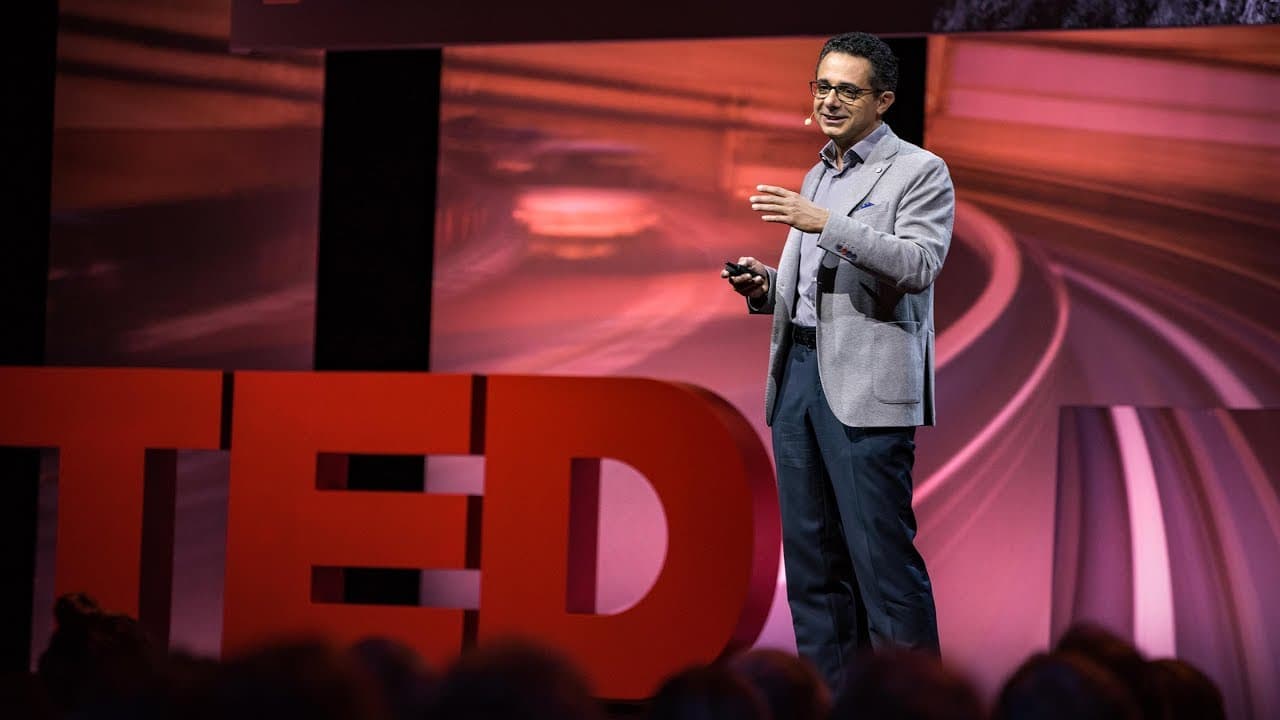
TL;DR
This content discusses the concept of the adjacent possible and its role in innovation and creativity.
Transcript
We have all probably wondered how great minds achieved what they achieved, right? And the more astonishing their achievements are, the more we call them geniuses, perhaps aliens coming from a different planet, definitely not someone like us. But is that true? So let me start with an example. You all know the story of Newton's apple, right? OK. Is t... Read More
Key Insights
- 🍏 Newton's apple and Einstein's theory of relativity were not incomprehensible leaps, but rather built upon existing knowledge and small steps.
- 🌍 The concept of the "new" can be personal or global, and experiencing it can be both exciting and frightening.
- 🔎 The space of possibilities is difficult for humans to comprehend, as we are trying to envision something completely new.
- 📊 Predicting the future based on past events is not always effective, as complexity often makes it unpredictable.
- 🚗 Self-driving cars can struggle when faced with unfamiliar and unexpected situations, highlighting the limitations of current artificial intelligence and machine learning.
- 🔑 The concept of the adjacent possible suggests that novelties are one step away from what already exists and can be achieved through incremental modifications. ⏰ The rate of innovation is predicted to decrease over time, becoming more difficult as progress is made.
- 🌊 Waves of novelties are observed in various systems, with evergreens and new hits coexisting. The balance between exploration and exploitation is crucial for innovation.
Install to Summarize YouTube Videos and Get Transcripts
Explore YouTube Video Summarizer or Get YouTube Transcript Extractor
Questions & Answers
Q: How did Newton come up with his theory of universal gravitation?
The video suggests that there were specific conditions and stepping stones in place that made universal gravitation not impossible to conceive for Newton. While the story of the apple might not be completely accurate, there were likely factors that made the discovery of universal gravitation possible for Newton.
Q: Was Einstein's theory of relativity a completely unique and incomprehensible idea?
The video proposes that Einstein's theory of relativity was not an entirely unprecedented leap in the history of ideas. Instead, it suggests that it was a result of small steps and Einstein's particular scientific path. While it may have been difficult for others to conceive, the video implies that the path to relativity was there and accessible to Einstein.
Q: How do we grasp the origins of great ideas and the ways in which new concepts enter our lives?
The video emphasizes that posing the right questions is crucial in understanding the origin of great ideas and the ways in which novelty and innovation manifest. It suggests that having a conceptual framework and understanding the space of possibilities can aid in grasping the deep meaning of words like novelty, innovation, and creativity.
Q: How do novelties and new ideas enter our lives?
According to the video, novelties and new ideas can enter our lives in various ways, both on a personal and global scale. This could include meeting new people, reading new books, listening to new music, or experiencing global innovations such as new theories or technologies. The video also acknowledges that experiencing the new can be frightening, but it highlights the importance of exploring the space of possibilities.
Q: Why is it difficult for us to conceive the space of possibilities for new ideas?
The video suggests that it is challenging for us to grasp the space of possibilities because it involves trying to conceive something that has never occurred before. The video proposes that one way to approach this is by looking at the future with the eyes of the past, using past events as a basis for predicting the future. However, the video acknowledges that this approach may not always be reliable.
Q: How do we predict and model the occurrence of new ideas and phenomena?
The video explains that for complex phenomena, like weather forecasting, predictions and modeling must be based on creating synthetic models of the system and simulating it to project into the future. The video also mentions the potential challenges of relying on past data to predict the future, highlighting that even machines can struggle with this, as seen in the example of self-driving cars encountering kangaroos.
Q: What is the concept of the adjacent possible?
The video introduces the concept of the adjacent possible, which refers to all the things, ideas, molecules, or technological products that are one step away from what currently exists. It can be achieved through incremental modifications and recombinations of existing material. The adjacent possible is continuously shaped and reshaped by our actions and choices, expanding the space of possibilities.
Q: What predictions were made in the theory of the adjacent possible?
The video mentions several predictions made in the theory of the adjacent possible. One prediction concerns the pace of innovation, suggesting that the rate of innovation should follow a universal curve and gradually decrease over time, making innovation more difficult as time progresses. Other predictions include the existence of correlated novelties, where one novelty leads to another, and the presence of waves of novelties where new ideas coexist with established classics.
Summary & Key Takeaways
-
The speaker discusses the concept of the "adjacent possible," which refers to ideas, technologies, and possibilities that are one step away from what currently exists.
-
The rate of innovation is predicted to decrease over time, and novelties are correlated, meaning one thing leads to another in many different systems.
-
Waves of novelties occur, where new ideas continuously arise and coexist with already established classics. Scientists now have tools to investigate and understand the space of possibilities and how individuals explore it.
Read in Other Languages (beta)
Share This Summary 📚
Summarize YouTube Videos and Get Video Transcripts with 1-Click
Try YouTube Summary with ChatGPT & Claude or YouTube Transcript Generator
Explore More Summaries from TED 📚

Summarize YouTube Videos and Get Video Transcripts with 1-Click
Try YouTube Summary with ChatGPT & Claude or YouTube Transcript Generator