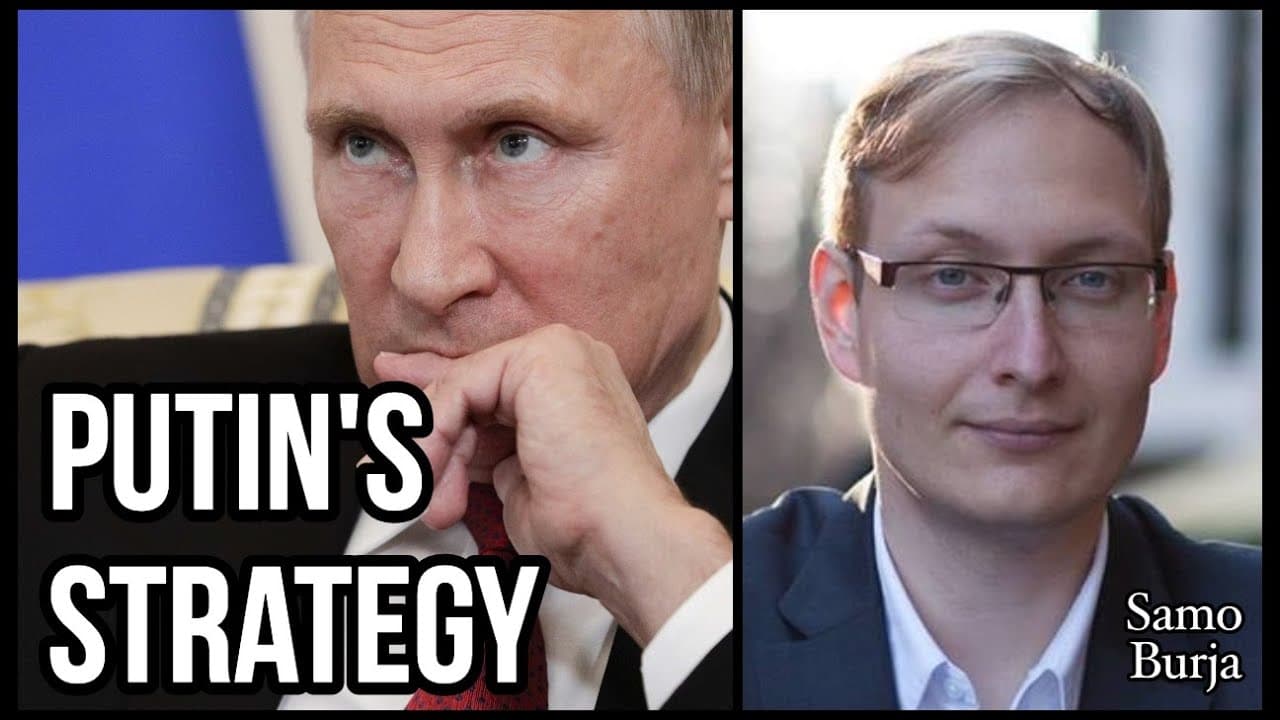
Putin's Strategy
TL;DR
Putin's rise to power and his strategies in consolidating the Russian state and pursuing foreign policy in a changing geopolitical landscape.
Transcript
Vladimir Putin called the collapse of the Soviet Union the greatest geopolitical catastrophe of the 20th century he's right there are a few times in world history when a great power has been humbled so quickly he witnessed the fall of the Soviet empire firsthand stationed in East Germany as a KGB agent he was quickly trying to destroy documents bef... Read More
Key Insights
- 🪈 Putin's firsthand experience during the collapse of the Soviet Union influenced his desire for stability and order in the Russian Federation.
- 🇺🇸 Navigating a multipolar world with a strong China and a declining United States is a strategic priority for Russia.
- 💪 Maintaining a strong nuclear arsenal and investing in anti-ballistic weapons and air defenses are crucial for Russia's sovereignty.
- 👻 Russia's interventions in neighboring countries have allowed it to assert its influence and maintain strategic advantages.
- 🫱 Syria serves as a significant example of Russia's successful proxy war and geopolitical influence.
- ✋ The sustainability of high oil prices is crucial for Russia's ability to fund advanced nuclear weaponry and delivery systems.
- 🌍 The question of whether we are headed towards a multipolar world or a China-dominated world is a significant consideration.
Install to Summarize YouTube Videos and Get Transcripts
Explore YouTube Video Summarizer or Get YouTube Transcript Extractor
Questions & Answers
Q: How did Putin's experience with the collapse of the Soviet Union shape his rise to power?
Putin's experience witnessing the downfall of the Soviet Union motivated him to undertake measures to consolidate the Russian state and remove political opposition. He sought to restore order and stability, driven by personal ambition and patriotism.
Q: What are the main factors influencing Putin's foreign policy?
Putin's foreign policy is shaped by a changing global landscape, where China's growing economy and the stagnant growth of the United States play significant roles. Navigating a multipolar world with a strong China and a declining United States is a priority for Russia.
Q: What advantages does Russia still possess from the Soviet Union?
Russia's nuclear arsenal remains a key advantage passed on from the Soviet Union. Upgrading and maintaining this arsenal, along with investments in anti-ballistic weapons and air defenses, are essential for ensuring sovereignty and countering the United States' air supremacy.
Q: How has Russia been asserting its influence in neighboring countries?
Russia's interventions in neighboring countries, such as the annexation of Crimea and support for breakaway republics in eastern Ukraine, have demonstrably shifted the strategic balance in its favor. Russia has also attracted pro-Russian states to join the Eurasian Economic Union as an alternative to Western-led trading and economic orders.
Summary & Key Takeaways
-
Putin witnessed the downfall of the Soviet Union firsthand and has since worked to consolidate and remove political opposition in the Russian Federation.
-
The pillars of Putin's foreign policy include navigating a multipolar world with a strong China, a declining United States, and a weak Russia.
-
The Soviet Union's nuclear arsenal remains a key advantage for Russia, and investments in anti-ballistic weapons and air defenses have been crucial.
Read in Other Languages (beta)
Share This Summary 📚
Summarize YouTube Videos and Get Video Transcripts with 1-Click
Try YouTube Summary with ChatGPT & Claude or YouTube Transcript Generator
Explore More Summaries from Samo Burja 📚


Summarize YouTube Videos and Get Video Transcripts with 1-Click
Try YouTube Summary with ChatGPT & Claude or YouTube Transcript Generator