What Are Blue-Green Deployments and How Do They Work?
TL;DR
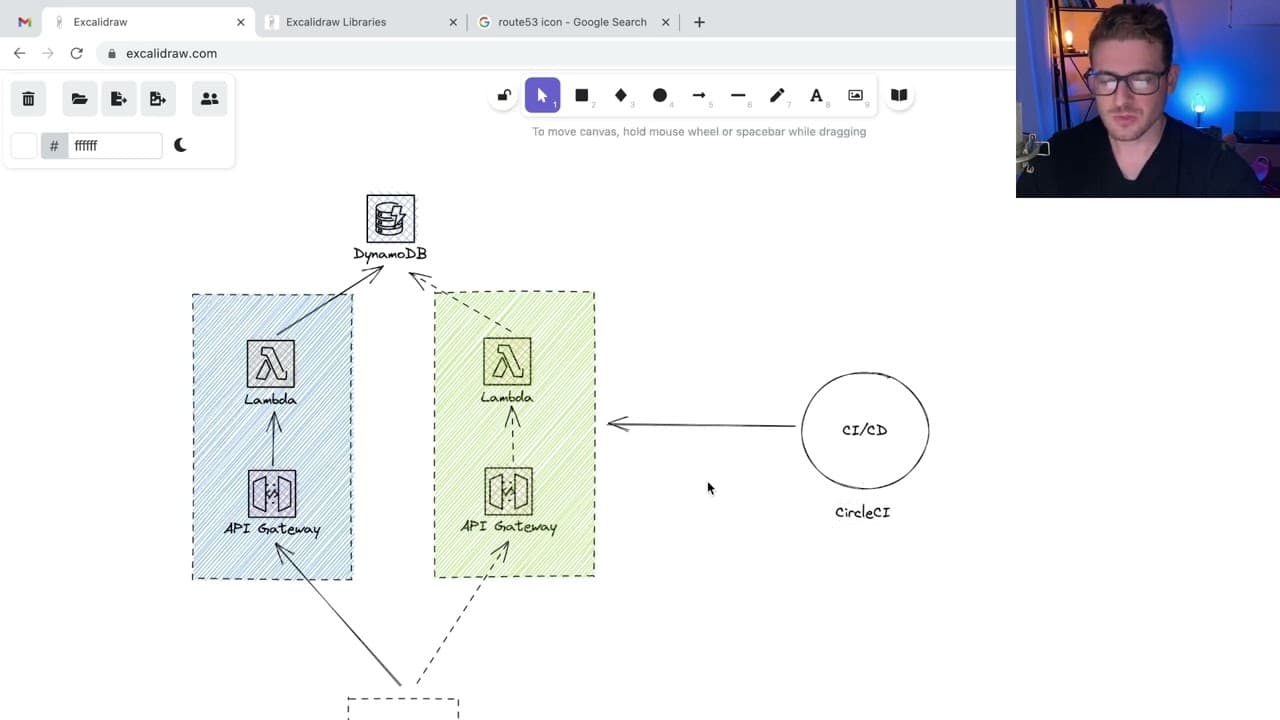
Blue-green deployments involve running two simultaneous versions of an application — one live and one idle — which allows seamless updates without downtime. By routing traffic from the active version to the new one after thorough testing, this strategy enhances user experience and minimizes service disruption during deployments.
Transcript
all right how's it going so i want to have a little talk about what blue green deployments are and how you can use them on your production system to basically give you some more flexibility about when and how you do deployments uh this is something that we do at my current project at work and i kind of wanted to share with you our setup this isn't ... Read More
Key Insights
- 👻 Blue-green deployments facilitate zero-downtime updates by allowing simultaneous operation of two application versions.
- 👤 This technique enhances user experience as it minimizes service disruption during deployments and updates.
- 🖐️ Route 53 DNS management plays a crucial role in directing traffic between active and idle application versions.
- 👻 Tools like Terraform allow developers to define application infrastructure as code, streamlining environment management.
- 👶 Automated testing, such as smoke tests, is critical before rerouting traffic to confirm stability of the new deployment.
- 👨💻 The CI/CD process, managed by platforms like CircleCI, ensures that code changes are integrated smoothly and efficiently.
- 💚 Effective planning is essential for database migrations in blue-green deployments to prevent data consistency issues.
Install to Summarize YouTube Videos and Get Transcripts
Explore YouTube Video Summarizer or Get YouTube Transcript Extractor
Questions & Answers
Q: What are blue-green deployments, and how do they work?
Blue-green deployments are a deployment strategy that involves running two versions of an application simultaneously: the "blue" version currently serving users and the "green" version updated and ready to go live. When the green version is deployed and tested, traffic is switched from blue to green, ensuring minimal downtime and smooth transitions.
Q: What are the advantages of using blue-green deployments in production?
The primary advantage of blue-green deployments is the reduction of downtime during updates. Users can continue accessing the live application while the new version is being deployed and tested. This strategy also allows for easy rollbacks if the new version encounters issues, since the previous version remains intact.
Q: What tools and services are mentioned for implementing blue-green deployments?
The content mentions using AWS services like Lambda, API Gateway, and DynamoDB for hosting applications, as well as Route 53 for managing DNS records. It also highlights Terraform for infrastructure as code to set up and manage different environments and CircleCI for automating the deployment process.
Q: What challenges come with database migrations during blue-green deployments?
Database migrations can complicate blue-green deployments, as they may require careful planning to ensure that old and new versions of the application interact correctly with shared data. Issues could arise if the new version's data model changes require updates that the old version cannot manage, potentially leading to data inconsistencies.
Q: How does the testing process work before switching traffic to the new version?
Before switching traffic to the new version, a series of smoke tests are performed to ensure the deployment runs correctly. These tests often automate user interactions to check functionality, such as logging in and performing key tasks within the application. Only after these tests pass is traffic shifted to the new version.
Q: How does Route 53 facilitate the blue-green deployment process?
Route 53 acts as a DNS management service that routes user requests to either the blue or green version of the application based on the current deployment state. When the new version is ready, Route 53 can switch user traffic to the green version, maintaining seamless application access.
Q: What role does CircleCI play in the CI/CD pipeline for blue-green deployments?
CircleCI automates the build, test, and deployment processes for applications. It watches for code changes, triggers builds, and runs tests, subsequently deploying the updated version of the application to the inactive environment (either green or blue) while leaving the active one untouched until the switch is made.
Q: In what way can developers optimize their blue-green deployment strategy?
Developers can optimize blue-green deployments by refining their CI/CD processes, improving testing protocols, and ensuring robust rollback plans in case of deployment failures. They could also explore better tooling and AWS services to streamline infrastructure management and automate deployment workflows more effectively.
Summary & Key Takeaways
-
Blue-green deployments allow developers to run two application environments simultaneously—one active and one idle—enabling seamless updates by routing traffic between them.
-
This strategy reduces downtime during deployments, as users continue to access the operational version while a new one is prepared and tested.
-
The presentation includes insights on using AWS services and tools like Terraform and CircleCI to manage the deployment process effectively.
Read in Other Languages (beta)
Share This Summary 📚
Summarize YouTube Videos and Get Video Transcripts with 1-Click
Try YouTube Summary with ChatGPT & Claude or YouTube Transcript Generator
Explore More Summaries from Web Dev Cody 📚

Summarize YouTube Videos and Get Video Transcripts with 1-Click
Try YouTube Summary with ChatGPT & Claude or YouTube Transcript Generator