What Can We Learn From Origami in Mathematics and Engineering?
TL;DR
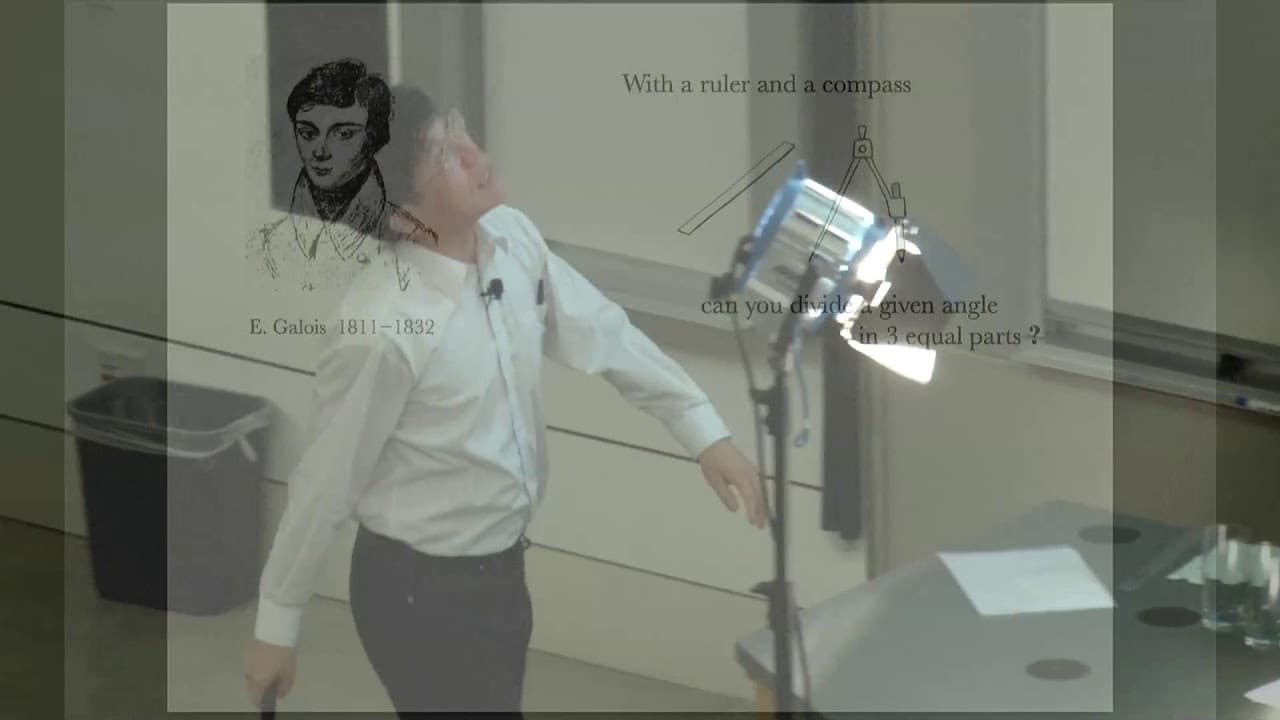
Origami serves as a powerful tool for understanding mathematical concepts like dimensionality and angle trisection, while also informing engineering applications. Techniques like the Miura-ori fold enable efficient deployment of structures, and materials exhibiting a negative Poisson ratio present new possibilities for innovative designs with unique mechanical properties.
Transcript
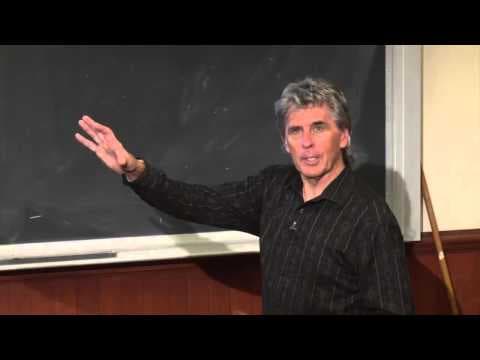
Stanford University I'd like to welcome you all to this evenings lecture my name is Brian white and I'm chair of the Stanford mathematics department this lecture is one in a series of public lectures organized by Stanford's mathematics Research Center and by the Friends of Stanford mathematics today Oh in fact if you're interested in coming to such... Read More
Key Insights
- 🔺 Origami offers a unique platform for exploring mathematical concepts, such as dimensionality and trisection of angles.
- 😋 The Miura-ori fold has revolutionized the field of deployable structures, allowing for compact storage and efficient unfolding of objects like solar panels on satellites.
- 🥳 Negative Poisson ratio, a property exhibited by certain folded structures, has tremendous potential in engineering applications to create materials with unique mechanical properties.
Install to Summarize YouTube Videos and Get Transcripts
Explore YouTube Video Summarizer or Get YouTube Transcript Extractor
Questions & Answers
Q: What is the significance of the negative Poisson ratio in origami and its applications?
The negative Poisson ratio is a unique property of certain folded structures in origami. It allows materials to expand in multiple directions when compressed, providing potential applications in fields such as robotics, aerospace engineering, and architecture.
Q: How does origami solve the problem of storing solar panels on satellites?
Origami-inspired designs, such as the Miura-ori fold, allow solar panels to be stored in a compact form during launch and automatically unfold to maximize sunlight exposure in space. This eliminates the risk of jamming or damage during deployment.
Q: How can buckling and folding be applied in other fields outside of origami?
Buckling and folding phenomena in materials have wide-ranging applications. For example, in engineering, they can be used to create structures with negative Poisson ratios for improved mechanical properties, or in fabricating micro-scale devices with intricate designs.
Q: Can the principles of negative Poisson ratio and folding be applied to other material systems, such as polymers or biological tissues?
Yes, the principles of negative Poisson ratio and folding can be applied to various material systems. By understanding the underlying mechanisms, scientists can design materials with desired properties, such as enhanced elasticity, in a range of applications from medical devices to drug delivery systems.
Summary & Key Takeaways
-
The lecture begins by introducing Professor Tadashi Tokiada, a leading expert in applied mathematics and an origami enthusiast.
-
Professor Tokiada demonstrates the concept of dimensionality and shows how a coaster can pass through a smaller hole by exploiting the interplay between extrinsic and intrinsic dimensions.
-
The lecture then delves into the mathematical properties of origami, including the ability to trisect angles and construct regular polygons, using only ruler and compass.
Read in Other Languages (beta)
Share This Summary 📚
Summarize YouTube Videos and Get Video Transcripts with 1-Click
Try YouTube Summary with ChatGPT & Claude or YouTube Transcript Generator
Explore More Summaries from Stanford 📚

Summarize YouTube Videos and Get Video Transcripts with 1-Click
Try YouTube Summary with ChatGPT & Claude or YouTube Transcript Generator