What Are Leveraged and Inverse ETFs and How Do They Work?
TL;DR
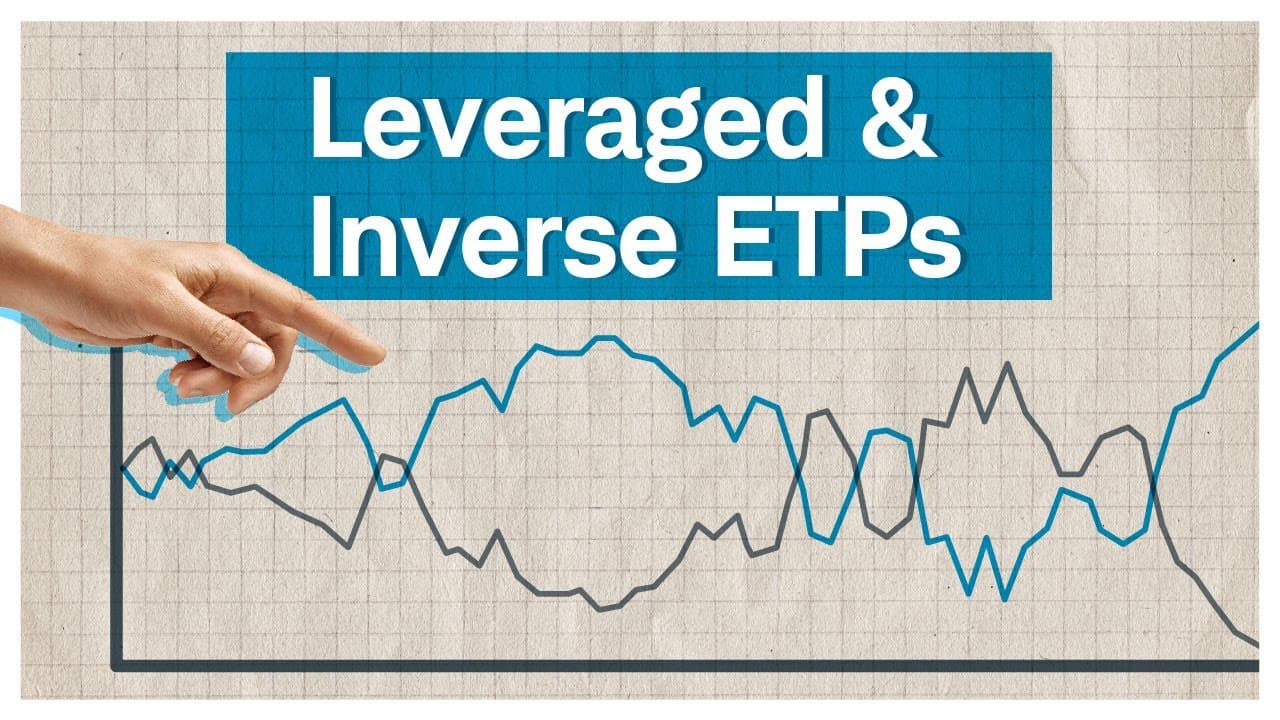
Leveraged and inverse ETFs aim to amplify returns or provide the opposite performance of an index, designed for short-term trading only. While they can yield significant gains, they also bear substantial risks, including potential losses from volatility and fund closures. Understanding their structure and risks is crucial before investing.
Transcript
Leveraged and inverse ETFs and ETNs are types of ETPs, or exchanged-traded products, that seek to provide a multiple and/or the opposite performance of a certain index or benchmark. For example, an investor might buy a leveraged ETP in an attempt to potentially boost returns on a stock index they think will go up or an inverse ETP in an attempt to ... Read More
Key Insights
- ✋ Leveraged ETPs seek to provide amplified returns, using swaps, futures, and options contracts, but they come with high risks due to leverage.
- 🫰 Inverse ETPs aim to provide performance opposite of the underlying index and can be leveraged as well.
- 😒 These complex products are designed for short-term use and are not suitable for most investors as they reset daily and are subject to price volatility and fund closures.
- ✳️ ETNs, structured as debt instruments, closely track underlying index performance but carry additional risks such as credit risk and closure risk.
- 👨🔬 Investors should thoroughly research and understand the product, its objectives, risks, costs, and fees before trading leveraged or inverse ETPs.
- 😷 Checking bid-ask spreads and considering tax implications are essential factors to consider.
Install to Summarize YouTube Videos and Get Transcripts
Explore YouTube Video Summarizer or Get YouTube Transcript Extractor
Questions & Answers
Q: How do leveraged ETPs work, and what risks do they carry?
Leveraged ETPs aim to provide multiple times the returns of an index for one day. They use swaps, futures, and options contracts, but their leverage can lead to significant gains and losses. Investors should be aware of the risks, including the possibility of losing more than their initial investment.
Q: What are inverse ETPs, and how do they perform opposite of the index?
Inverse ETPs seek to provide returns opposite of the underlying index. For example, if the index falls, the inverse ETP should rise, and vice versa. These products can also be leveraged, amplifying potential gains and losses.
Q: What are the risks associated with leveraged and inverse ETPs?
Leveraged and inverse ETPs are subject to various risks. Price volatility can lead to losses, and extreme movements in the underlying index can force fund closures. Additionally, leveraged ETPs may fall below a predetermined minimum value, leading to potential closure and major losses for investors.
Q: How are ETNs different from ETFs, and why is it important to understand their structure?
ETNs are debt instruments issued by financial institutions, while ETFs represent ownership in a basket of securities. ETNs promise returns linked to an index and have a maturity date, introducing credit and closure risks. Understanding these differences is crucial to assessing the risks associated with ETNs.
Summary & Key Takeaways
-
Leveraged ETPs aim to provide multiple times the returns of an underlying index, using swaps, futures, and options contracts. They can lead to large gains and losses due to leverage.
-
Inverse ETPs seek to provide returns opposite of the underlying index, and they can also be leveraged. They can be used as short-term hedges or bets against a falling market.
-
Leveraged and inverse ETPs are designed for short-term performance and are not meant for long-term investments. Their strategies reset daily, and price volatility and fund closures can result in unexpected losses.
Read in Other Languages (beta)
Share This Summary 📚
Summarize YouTube Videos and Get Video Transcripts with 1-Click
Try YouTube Summary with ChatGPT & Claude or YouTube Transcript Generator
Explore More Summaries from Charles Schwab 📚





Summarize YouTube Videos and Get Video Transcripts with 1-Click
Try YouTube Summary with ChatGPT & Claude or YouTube Transcript Generator