Sloped armor: A simple feature that saved many lives
TL;DR
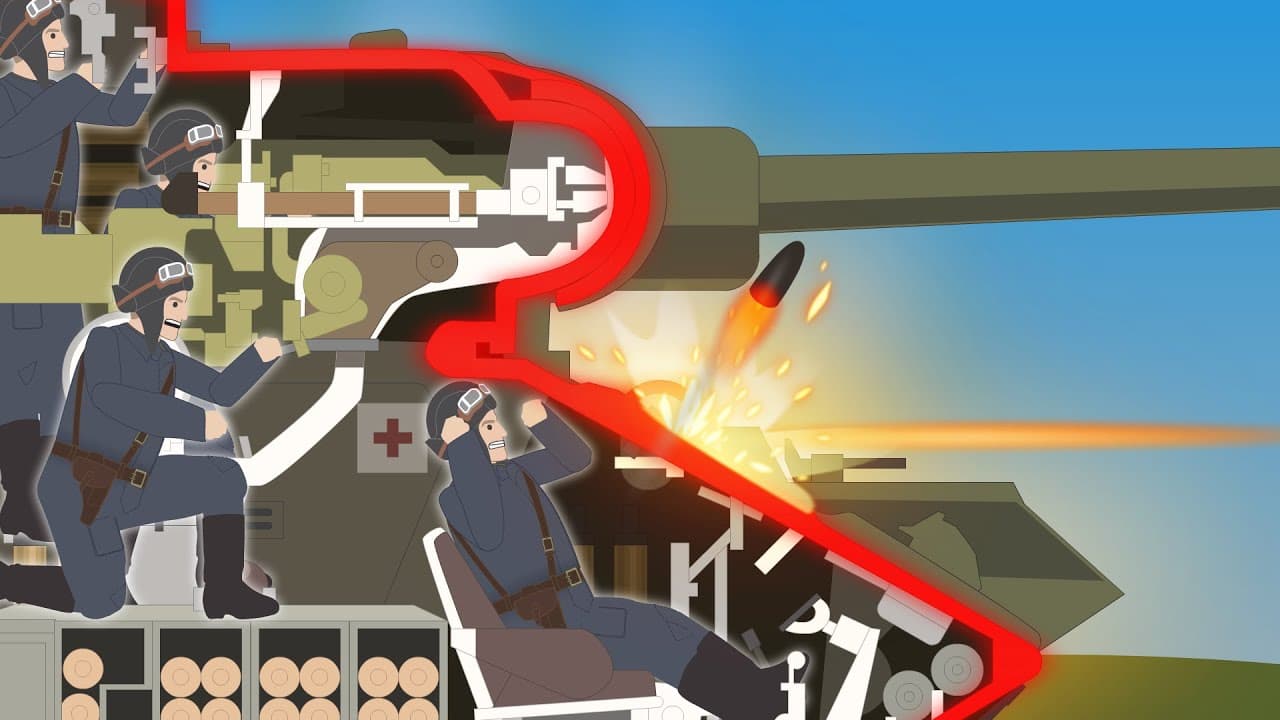
Sloped armor revolutionized tank warfare by providing increased protection and saving on weight and materials.
Transcript
sloped armor the history of tanks during the first world war tanks appeared as a new type of weapon designed to break the stalemate on the battlefields of the western front even though they failed to meet the task tanks brought about a revolution in warfare during world war ii 21 years later since they first appeared it was apparent tanks would bec... Read More
Key Insights
- 🍳 Tanks revolutionized warfare by breaking the stalemate on the Western Front in World War I and becoming a dominant force in World War II.
- 🏋️ Sloped armor provided increased protection by increasing the relative thickness of the armor and reducing the weight and materials required.
- 👶 The introduction of sloped armor forced tank designers to develop new materials and designs to counter the advancements in anti-armor weapons.
- 💯 The Soviet T-34 tank was an example of nearly perfect utilization of sloped armor, providing groundbreaking protection during World War II.
- 😮 The effectiveness of sloped armor impressed the Germans, who implemented it in their tank designs, such as the Tiger II.
- 🚙 Allies also used sloped armor in their armored vehicle designs, but its advantages diminished as improved anti-tank weapons were developed.
- 👶 New types of armor, such as ceramic, composite, and reactive armor, were introduced to counter the advancements in anti-tank weapons.
Install to Summarize YouTube Videos and Get Transcripts
Explore YouTube Video Summarizer or Get YouTube Transcript Extractor
Questions & Answers
Q: Why were tanks introduced in World War I?
Tanks were designed to break the stalemate on the Western Front by providing a new type of weapon that could navigate the difficult terrain and overcome enemy defenses.
Q: How did tanks revolutionize warfare in World War II?
Tanks became a dominant force on the battlefield, forcing the enemy to develop better anti-armor weapons. This led to the race between tank construction and anti-armor weapon development.
Q: How did sloped armor improve tank protection?
Sloped armor increased the relative thickness of the armor, making it harder for kinetic energy penetrators to penetrate the tank. It also provided material savings and reduced the interior volume of the tank.
Q: What were the disadvantages of sloped armor?
The design of sloped armor made the interior of tanks more cramped, especially in Soviet tanks. Additionally, as weapon technology progressed, sloped armor became less effective against improved anti-tank guns.
Summary & Key Takeaways
-
Tanks were introduced in World War I to break the stalemate on the Western Front, and despite initial failures, they revolutionized warfare in World War II.
-
As anti-armored weapons became more effective, tank designers had to improve the protection of tanks by making the armor thicker and harder to penetrate.
-
Sloped armor provided multiple benefits, including increased armor thickness, material savings, reduced interior volume, and the ability to deflect projectiles.
Read in Other Languages (beta)
Share This Summary 📚
Summarize YouTube Videos and Get Video Transcripts with 1-Click
Try YouTube Summary with ChatGPT & Claude or YouTube Transcript Generator
Explore More Summaries from Simple History 📚


Summarize YouTube Videos and Get Video Transcripts with 1-Click
Try YouTube Summary with ChatGPT & Claude or YouTube Transcript Generator