Why the market for skin whitening is growing
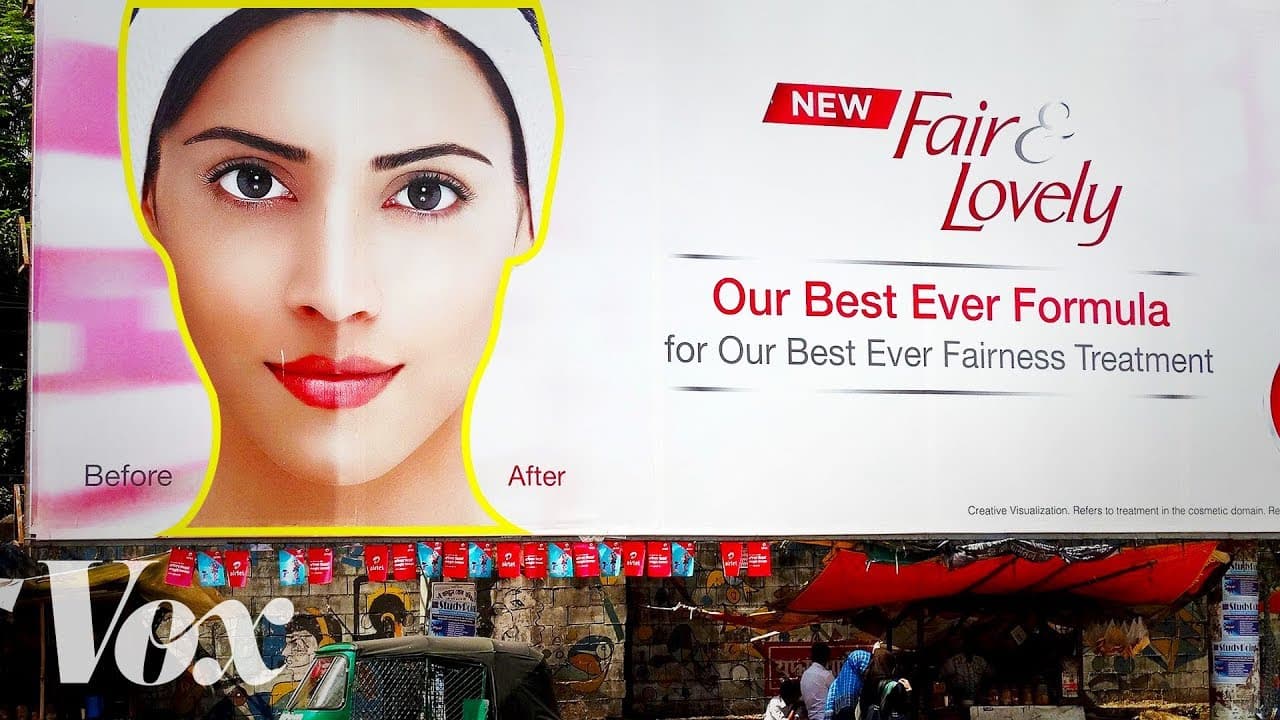
TL;DR
Skin whitening market is booming despite its harmful effects.
Transcript
It's a care package for my mom back home in Los Angeles. It's always filled with everyday items and a bunch of Filipino goodies. Instant noodles in here, sinigang soup packet, fruit from my mom's backyard, toothpaste But then there's this skin whitening products Skin whiteners are a big business. More than four hundred million dollars worth of skin... Read More
Key Insights
- The skin whitening market is experiencing significant growth, expected to reach $31.2 billion by 2024, driven by globalization and rising middle-class demands, particularly in Asia-Pacific.
- Advertisements play a crucial role in promoting skin whitening products, reinforcing societal beauty standards that favor lighter skin, and perpetuating colorism globally.
- Colorism is a form of discrimination that privileges lighter-skinned individuals over darker-skinned people, affecting societal perceptions and opportunities in various sectors.
- Historical context shows that skin whitening products and advertisements have roots in colonial ideologies that associate whiteness with cleanliness and superiority.
- Skin whitening products pose physical health risks, including irreversible skin damage, due to harmful ingredients like hydroquinone, which is regulated in some countries but still accessible through illegal means.
- The practice of skin whitening is deeply ingrained in societal norms, with subtle messages in media and beauty standards continuing to promote lighter skin as more desirable.
- Efforts to counteract colorism include media campaigns and inclusive beauty lines celebrating dark skin, yet societal preferences for lighter skin remain prevalent.
- The debate over skin whitening versus tanning highlights the complexity of personal choice versus societal pressure, emphasizing the need for awareness and understanding of underlying motivations.
Install to Summarize YouTube Videos and Get Transcripts
Explore YouTube Video Summarizer or Get YouTube Transcript Extractor
Questions & Answers
Q: What is driving the growth of the skin whitening market?
The growth of the skin whitening market is driven by globalization, rising middle-class demands, especially in the Asia-Pacific region, and the influence of advertisements that promote lighter skin as more desirable. The market is expected to reach $31.2 billion by 2024, indicating significant consumer demand despite the harmful effects of these products.
Q: How do advertisements contribute to the popularity of skin whitening products?
Advertisements play a crucial role in the popularity of skin whitening products by reinforcing societal beauty standards that favor lighter skin. They perpetuate the idea that lighter skin is associated with beauty, success, and social acceptance, thus influencing consumer behavior and increasing demand for skin whitening products globally.
Q: What is colorism, and how does it relate to skin whitening?
Colorism is a form of discrimination that privileges lighter-skinned individuals over darker-skinned people. It is closely related to skin whitening as these products and their marketing reinforce the societal preference for lighter skin, affecting perceptions of beauty, intelligence, and social status. This discrimination is deeply ingrained in historical and societal contexts.
Q: What are the historical roots of skin whitening products?
The historical roots of skin whitening products lie in colonial ideologies that associated whiteness with cleanliness and superiority. Advertisements from the past promoted the idea that darker skin was unclean and could be 'washed away' by using certain products. These ideologies have persisted, influencing current societal beauty standards and the demand for skin whitening products.
Q: What are the health risks associated with skin whitening products?
Skin whitening products pose significant health risks, including irreversible skin damage, due to harmful ingredients like hydroquinone. This chemical, used in photo processing and rubber manufacturing, can cause conditions such as ochronosis and cystic acne. Despite being regulated in some countries, it remains accessible through illegal means, posing a threat to consumers' health.
Q: How do societal norms influence the practice of skin whitening?
Societal norms influence the practice of skin whitening by promoting lighter skin as more desirable through subtle messages in media and beauty standards. These norms are deeply ingrained, affecting individuals' perceptions of beauty and prompting them to use skin whitening products to conform to societal expectations, despite the associated risks and criticisms.
Q: What efforts are being made to counteract colorism?
Efforts to counteract colorism include media campaigns and the development of inclusive beauty lines that celebrate dark skin. These initiatives aim to challenge societal beauty standards and promote diversity. However, despite these efforts, preferences for lighter skin remain prevalent, highlighting the need for continued advocacy and awareness to address the issue effectively.
Q: What is the debate surrounding skin whitening versus tanning?
The debate surrounding skin whitening versus tanning centers on the complexity of personal choice versus societal pressure. While some argue that skin whitening is a personal choice, similar to tanning, it is important to understand the underlying motivations. Skin whitening is often influenced by societal norms and colorism, making it different from tanning, which is typically a cosmetic preference.
Summary & Key Takeaways
-
The skin whitening market is rapidly expanding, with projected growth to $31.2 billion by 2024, driven by globalization and rising middle-class demands. Despite its harmful effects, the industry thrives, fueled by advertisements and societal beauty standards favoring lighter skin.
-
Colorism, a form of discrimination privileging lighter-skinned individuals, is perpetuated by skin whitening products and advertisements. Historical and societal contexts show a preference for whiteness, affecting opportunities and perceptions of intelligence and beauty.
-
Efforts to challenge colorism include media campaigns and inclusive beauty lines, yet societal preferences for lighter skin persist. The debate over skin whitening versus tanning highlights the complexity of personal choice versus societal pressure, emphasizing awareness and understanding.
Read in Other Languages (beta)
Share This Summary 📚
Summarize YouTube Videos and Get Video Transcripts with 1-Click
Try YouTube Summary with ChatGPT & Claude or YouTube Transcript Generator
Explore More Summaries from Vox 📚




Summarize YouTube Videos and Get Video Transcripts with 1-Click
Try YouTube Summary with ChatGPT & Claude or YouTube Transcript Generator