Every piece of art you've ever wanted to see -- up close and searchable | Amit Sood
TL;DR
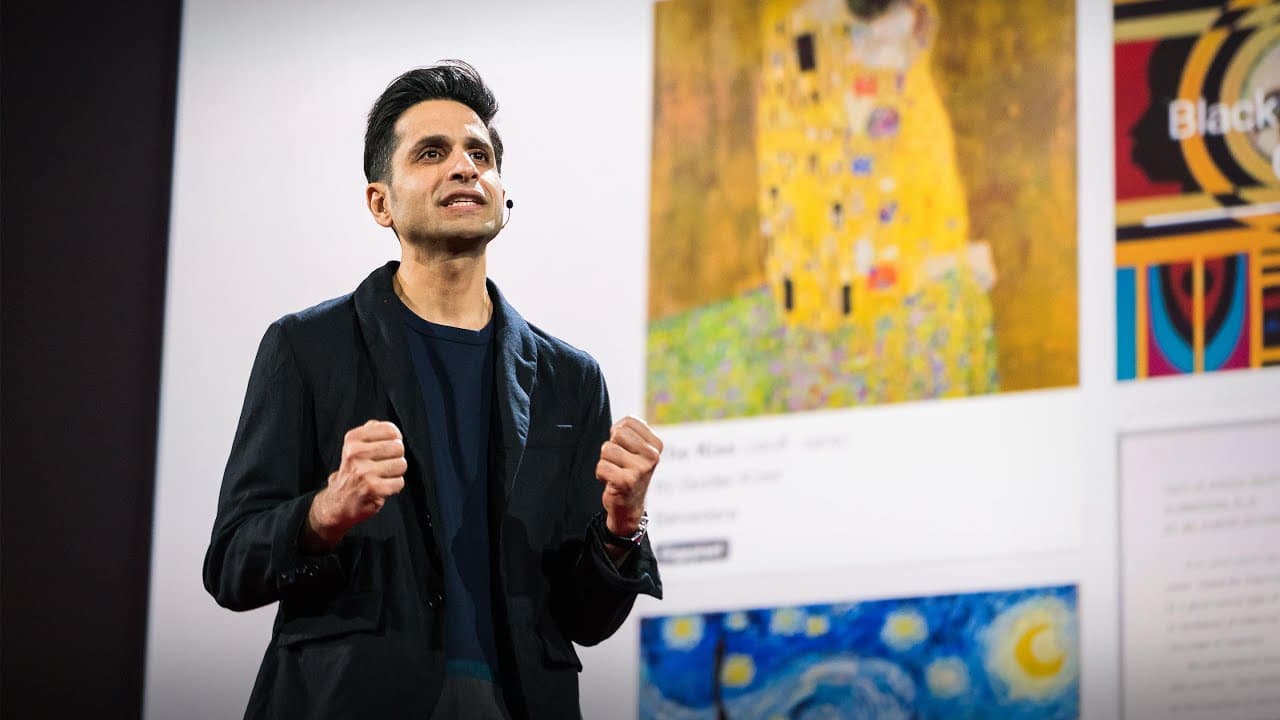
In this talk, the speaker discusses the importance of accessibility to art and culture, and showcases a platform that allows users to explore museums and artworks virtually.
Transcript
The world is filled with incredible objects and rich cultural heritage. And when we get access to them, we are blown away, we fall in love. But most of the time, the world's population is living without real access to arts and culture. What might the connections be when we start exploring our heritage, the beautiful locations and the art in this wo... Read More
Key Insights
- 🌍 Access to arts and culture is limited for much of the world's population, but technology can provide virtual access to museums and artworks, allowing people to explore and learn about diverse cultures and history.
- 🖼️ The Google Arts & Culture platform offers a wide range of content, including curated exhibitions on topics like Black History and Japanese craftsmanship, showcasing the diversity of art and heritage.
- 📱 The platform is accessible on mobile phones and laptops, providing high-definition detail of thousands of museums and objects. It allows users to virtually travel to institutions and experience architectural masterpieces like The Guggenheim Museum. ⏳ The platform provides the building blocks for an exciting future of accessibility in arts and culture, allowing people to explore and connect with art and history on a global scale.
- 🎨 Using metadata, machine learning, and visual recognition, connections can be made between artworks, creating a virtual curator's table to explore the relationships and stories behind cultural artifacts.
- 🔬 The Cultural Institute has over six million curated cultural artifacts, providing the opportunity to travel through time, understand society, and appreciate contributions in art, history, and culture from different decades.
- 🖌️ Technology can engage and excite people, even those who may not traditionally be interested in art, through interactive experiences like the portrait matcher and the ability to explore different categories of artworks and objects.
- 😊 The goal is to bring happiness and emotion through experiencing art and culture, and technology can bridge the gap between physical access and virtual exploration.
- 💻 People are encouraged to utilize technology to access art and culture, supporting the efforts of archivists, historians, and curators who dedicate their lives to preserving and sharing our cultural heritage.
Install to Summarize YouTube Videos and Get Transcripts
Explore YouTube Video Summarizer or Get YouTube Transcript Extractor
Questions & Answers
Q: What is the purpose of the speaker's talk in the video?
The purpose of the speaker's talk is to showcase Google's platform that provides access to thousands of museums and objects, as well as explore the connections between arts, culture, and heritage.
Q: What kind of content can be found on Google's platform?
The platform offers a diverse range of content, including European paintings, modern art, exhibitions on Black History and Japanese craftsmanship, and even Japanese dolls.
Q: How does Google's platform allow people to virtually visit museums?
The platform allows users to virtually travel to various institutions and explore their collections in high-definition detail. This means that individuals, even those who may not have the opportunity to physically visit a museum, can still have access to arts and culture.
Q: How does the speaker demonstrate the accessibility of art through Google's platform?
The speaker showcases various features of the platform, such as the ability to explore artwork from different institutions, view exhibitions virtually, and even travel through time to understand different artistic contributions throughout history.
Q: What is one of the experiments showcased in the video that incorporates machine learning?
One of the experiments involves using machine learning to create visual clusters of artwork, without relying on any metadata. This allows for the automatic categorization and tagging of artworks based solely on their visual characteristics, creating interesting clusters such as portraits and horses.
Summary & Key Takeaways
-
The world's population often lacks access to arts and culture, but technology can bridge that gap and provide virtual exploration of museums and art objects.
-
Google's current platform allows users to explore thousands of museums and objects in high-definition detail, with diverse content including exhibitions focused on Black History and craftsmanship in Japan.
-
Google's Cultural Institute is constantly working on new ways to make art and culture more accessible, including visualizing connections between cultural artifacts, creating virtual curator's tables, and using machine learning to categorize and analyze art.
Read in Other Languages (beta)
Share This Summary 📚
Summarize YouTube Videos and Get Video Transcripts with 1-Click
Try YouTube Summary with ChatGPT & Claude or YouTube Transcript Generator
Explore More Summaries from TED 📚



Summarize YouTube Videos and Get Video Transcripts with 1-Click
Try YouTube Summary with ChatGPT & Claude or YouTube Transcript Generator