How To Calculate The Return on Investment (ROI) of Real Estate & Stocks
TL;DR
Learn how to calculate return on investment (ROI) for real estate properties and stocks, as well as the annual ROI.
Transcript
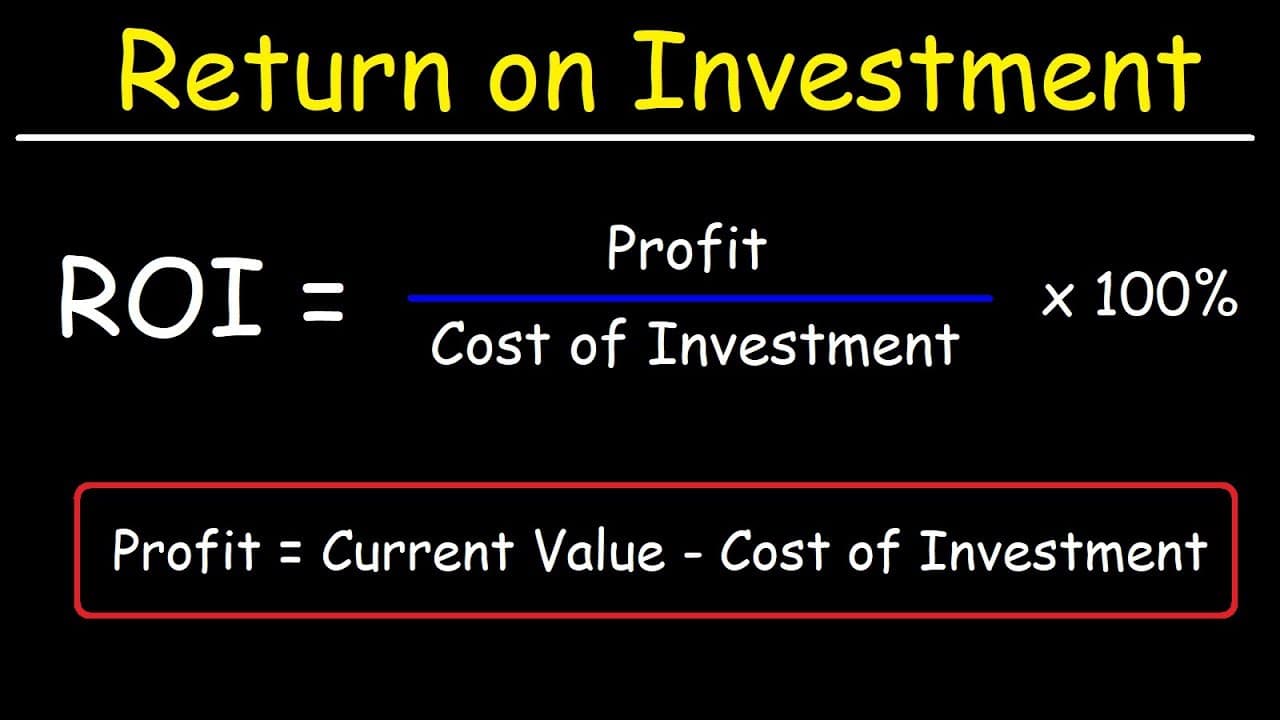
in this video we're going to talk about how to calculate the return on investment so let's start with this problem john purchases a home for 250 000 in 2019. five years later he sells it for 325 000. what is john's return on investment to calculate the roi or the return on investment it's equal to the profit divided by the cost of the investment an... Read More
Key Insights
- 🗂️ ROI is calculated by dividing profit by investment cost and multiplying by 100.
- 🥐 Annual ROI can be estimated by dividing the ROI over the investment period by the number of years.
- 🥺 Diversifying investments can lead to higher annual ROI, as seen in James' case.
- 🥐 Rental income and property appreciation contribute to the total ROI for real estate investments.
- ✋ Susan's rental income and property appreciation resulted in a high total ROI of 250%.
Install to Summarize YouTube Videos and Get Transcripts
Explore YouTube Video Summarizer or Get YouTube Transcript Extractor
Questions & Answers
Q: How is return on investment (ROI) calculated?
ROI is calculated by dividing the profit by the cost of the investment and multiplying the result by 100. Profit is determined by subtracting the initial investment cost from the current value.
Q: What is the annual ROI for John's real estate investment?
To estimate the annual ROI, divide the 30% ROI over the five-year period by five. This means John's investment value increased by 6% annually on average.
Q: How is ROI calculated for Karen's stock investment?
Karen's ROI is calculated by dividing the $3,500 profit by the $10,000 investment cost and multiplying by 100. This results in a 35% ROI for the three-month period.
Q: How can James achieve a higher annual ROI compared to Luke?
James purchased four condos, resulting in a larger monthly profit. By diversifying his investment, James earns a 48% annual ROI, while Luke earns a 12% ROI from a single condo.
Q: What is Susan's total ROI from rental income only?
Susan's rental income generated a profit of $120,000 over 10 years. With an initial investment of $80,000, her ROI from rental income only is 150%.
Q: What is Susan's ROI from the sale of her property?
Susan's ROI from selling the property is 100%, as the condo's value doubled from $80,000 to $160,000.
Q: How is the total ROI calculated for Susan?
By adding the profits from rental income ($120,000) and the sale of the property ($80,000), Susan's total profit is $200,000. Dividing this by the initial investment of $80,000 and multiplying by 100 gives a total ROI of 250%.
Q: What is the average annual ROI for Susan?
The average annual ROI for Susan is 25% when considering both the rental income and property appreciation over a 10-year period.
Summary & Key Takeaways
-
John purchased a home for $250,000 and sold it for $325,000 five years later, resulting in a 30% ROI.
-
Karen bought 500 shares of stock at $20 and sold them at $27, earning a 35% ROI in three months.
-
Luke invested $100,000 in a condo, earning a $1,000 monthly profit, resulting in a 12% annual ROI.
-
James purchased four condos for $100,000, earning a $4,000 monthly profit, resulting in a 48% annual ROI.
-
Susan's condo generated a $120,000 profit in rental income over 10 years, resulting in a 150% ROI. The condo also appreciated from $80,000 to $160,000, resulting in a 100% ROI.
Read in Other Languages (beta)
Share This Summary 📚
Summarize YouTube Videos and Get Video Transcripts with 1-Click
Try YouTube Summary with ChatGPT & Claude or YouTube Transcript Generator
Explore More Summaries from The Organic Chemistry Tutor 📚


Summarize YouTube Videos and Get Video Transcripts with 1-Click
Try YouTube Summary with ChatGPT & Claude or YouTube Transcript Generator